Best Books on AI Harness
AI Engineering (Chip Huyen) and LLM Engineer's Handbook (Paul Iusztin, Maxime Labonne) turn “AI ideas” into deployed systems: practical engineering discipline, not hype, across MLOps and LLM ops.
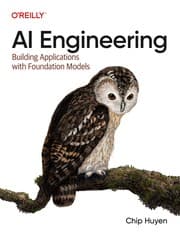
AI Engineering
Chip Huyen
AI Engineering treats AI projects like production software: design data flows, engineer evals, and operationalize failures before scale makes them expensive.
Evals are part of the product, not a side quest.
Where many AI books stop at modeling, this one pushes engineering decisions that keep systems stable in the real world. For AI harnessing, it builds the habits and trade-offs behind getting from prototypes to maintained AI.
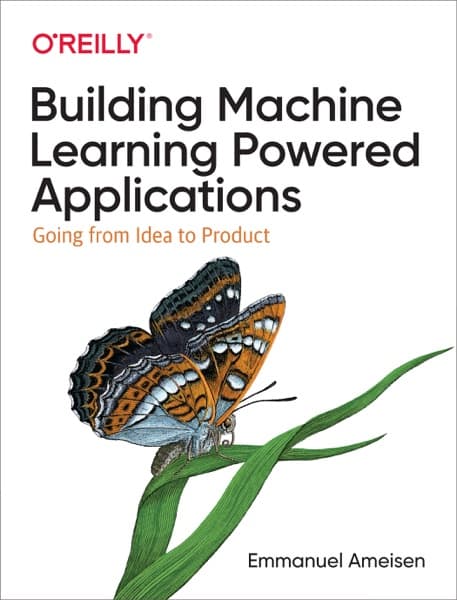
Building Machine Learning Powered Applications
Emmanuel Ameisen
Building Machine Learning Powered Applications reframes ML apps as end-to-end systems: define the problem, measure outcomes, and only then choose models.
Start with problem framing and success metrics.
It gives you a roadmap for harnessing AI by starting from business goals and constraints, then iterating with evidence. That keeps your AI from becoming a demo and turns it into a deliverable you can improve.
Machine Learning Design Patterns
Valliappa Lakshmanan, Sara Robinson, Michael Munn
Machine Learning Design Patterns replaces “try a model” with reusable patterns for robustness, scalability, and safer system behavior.
Use patterns to turn ML into an engineering discipline.
Harnessing AI depends on repeatability: when your requirements change, patterns help you evolve solutions instead of restarting from scratch. This book offers a practical vocabulary for production-style ML.
Practical MLOps
Noah Gift, Alfredo Deza
Practical MLOps makes deployment and monitoring feel like core engineering, not a separate afterthought for ML.
Monitoring closes the loop on model drift and failures.
If your goal is to harness AI responsibly, MLOps is where reliability is won or lost. This book focuses on workflow automation, visibility, and operational control so your models keep behaving after release.
Reliable Machine Learning
Cathy Chen, Niall Richard Murphy, Kranti Parisa, D. Sculley, Todd Underwood
Reliable Machine Learning turns “accuracy” into a broader reliability story: tests, monitoring, and safety practices for dependable ML operation.
Treat ML as a reliability engineering problem.
AI harnessing needs trust under edge cases, not just strong metrics in a single benchmark. This book helps you design the guardrails that keep ML systems dependable in production.
Generative AI on AWS
Chris Fregly, Antje Barth, Shelbee Eigenbrode
Generative AI on AWS anchors LLM projects in real deployment patterns: from serving to governance so the model can actually run in your stack.
Operationalize genAI with AWS-native patterns and controls.
Harnessing generative AI is less about prompting brilliance and more about operationalizing it. This book ties modern LLM application needs to AWS-oriented practices for building and operating systems.
Start with problem framing and success metrics.
Hands-On Large Language Models
Jay Alammar, Maarten Grootendorst
Hands-On Large Language Models translates core LLM ideas into practical tooling and application building steps.
Learn LLMs by building and experimenting with tools.
It helps you harness LLMs without losing the plot: understanding what matters, then applying it. This makes it a strong bridge between concepts and the first working applications.
Can we tailor this list for you?
Type your question in the bar below and the AI will tailor a fresh set of picks just for you.