Best Books on AI and Jobs
AI and Jobs books that sharpen your lens: “Prediction Machines” reframes workplace decisions as forecasts, while “The Second Machine Age” and “Only Humans Need Apply” show what automation does to work and wages.
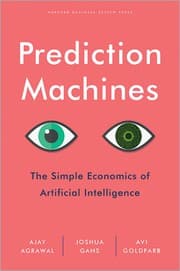
Prediction Machines
Ajay Agrawal, Joshua Gans, Avi Goldfarb
AI succeeds at work when it replaces prediction steps, not whole jobs.
Jobs change where decisions depend on predictions
It breaks down why modern AI is mainly good at forecasting: patterns in data translate into decisions. That lens makes “AI and jobs” feel concrete because you can map which parts of a role are prediction-heavy and which remain human judgment, trust, and responsibility.
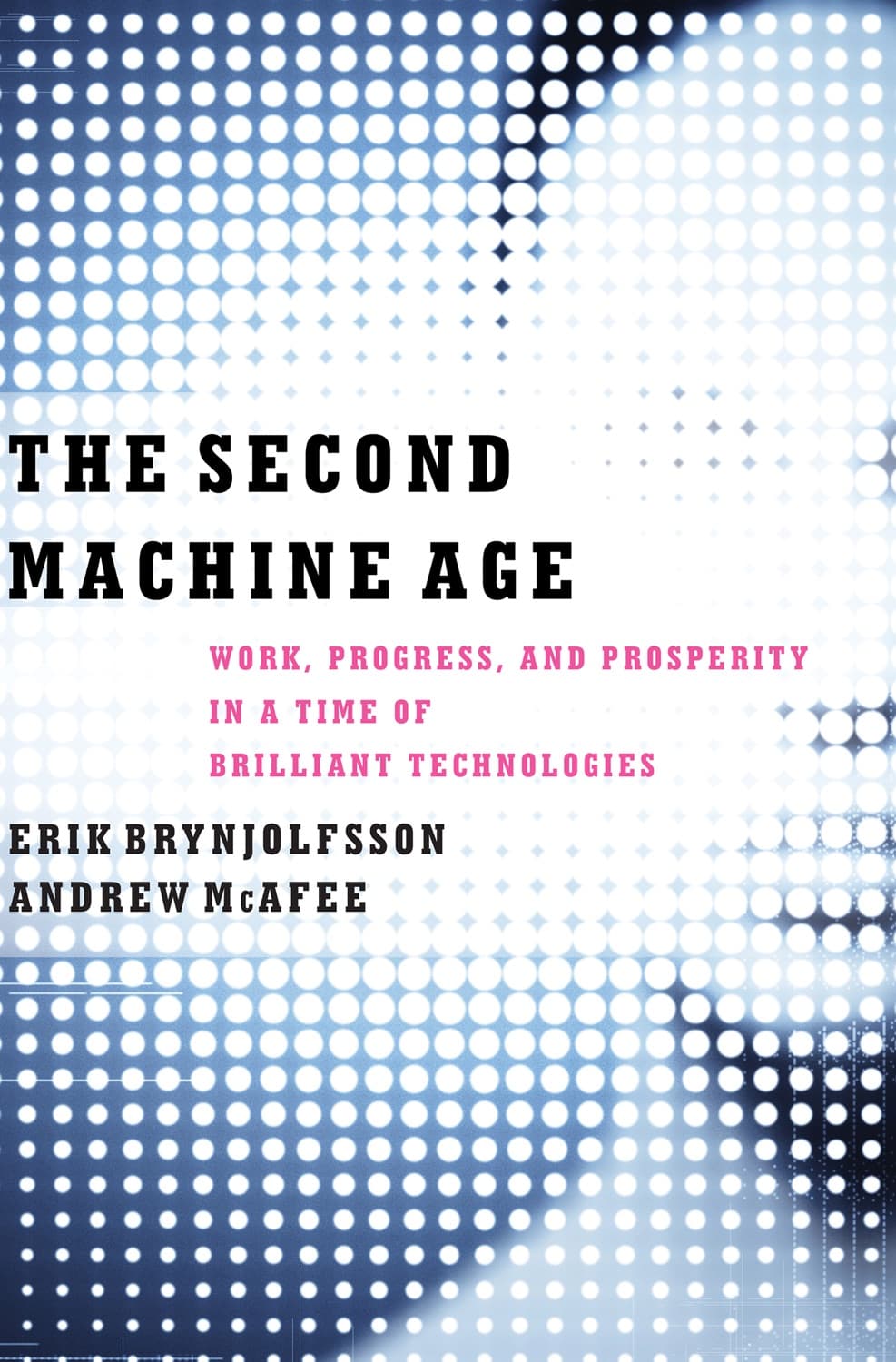
The Second Machine Age
Erik Brynjolfsson, Andrew McAfee
Productivity gains from digital tech reshape inequality and bargaining power before you notice the shift.
Digital tech can widen inequality through pay and power
This book connects AI and automation to productivity, job polarization, and social stratification. It matters for “AI and jobs” because it treats employment outcomes as a system, not just a list of occupations at risk.
Race Against the Machine
Erik Brynjolfsson, Andrew McAfee
Automation pushes faster than institutions adapt, so wages and employment can lag behind technology.
The lag is the problem, not just the invention
Written to be accessible, it argues that the labor market is adjusting while technology keeps accelerating. For AI and jobs, the payoff is emotional clarity: the uncertainty is structural, and the “what now” depends on how firms, workers, and policy respond.
The Future of the Professions
Richard E. Susskind, Daniel Susskind
AI pressures professional work by turning expertise into scalable services, not individual craft.
Expertise gets unbundled into components
It shows how technology changes expert services by unbundling tasks and enabling new delivery models. That directly sharpens “AI and jobs” if your interest includes lawyers, consultants, analysts, and other knowledge work roles where authority and workflow design are on the table.
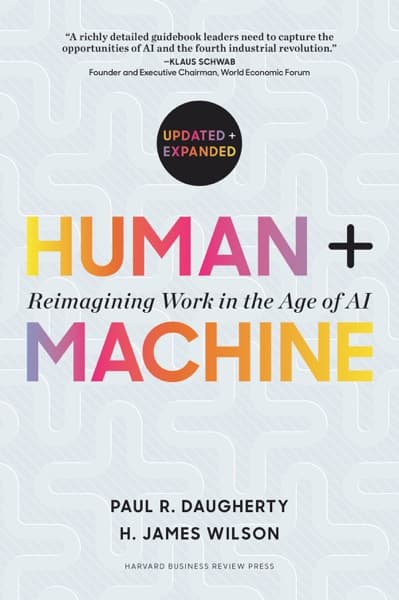
Human + Machine
Paul R. Daugherty, H. James Wilson
The best outcomes come from designing collaboration between people and AI, not just automating decisions.
Aim for augmentation, not replacement-only automation
This book gives a practical framework for where humans add value alongside machine recommendations. For your “AI and jobs” theme, it helps you think beyond displacement: it’s a roadmap for augmentation, responsibility, and workflow ownership in real organizations.
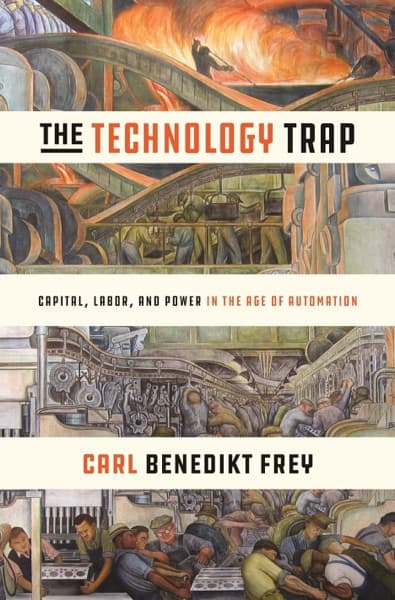
The Technology Trap
Carl Benedikt Frey
Work dislocation is not evenly distributed: some tasks become obsolete while others are protected or transformed.
Task-based disruption beats job-based guesses
Frey emphasizes historically grounded evidence on automation and the adjustment problem. It fits AI and jobs because it anchors the discussion in labor-market mechanics and what actually changes when technology meets institutions and worker transitions.
Digital tech can widen inequality through pay and power
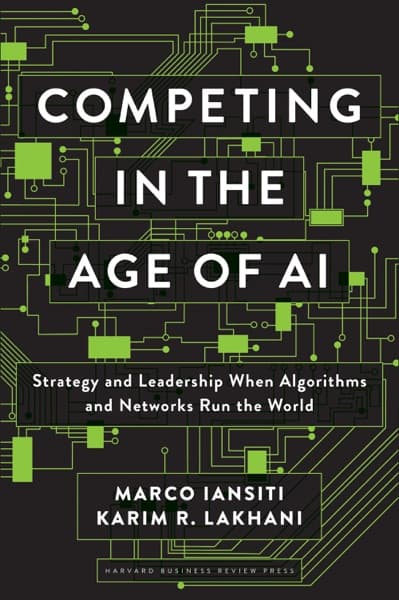
Competing in the Age of AI
Marco Iansiti, Karim R. Lakhani
AI advantage comes from operating-model changes, not just deploying tools.
AI requires operating-model redesign
It explains how organizations redesign workflows, data, and decision rights to capture AI value. For “AI and jobs,” the value is translation: you can see how roles shift inside firms when AI becomes embedded in products, processes, and management routines.
Power and Prediction
Ajay Agrawal, Joshua Gans, Avi Goldfarb
Prediction turns into power because the best forecasts change who controls decisions and leverage.
Better predictions shift power in organizations
As a sequel focused on forecasting, it pushes beyond “AI can predict” to “prediction creates institutional advantage.” That matters for AI and jobs because it reframes employment impacts as a bargaining story: who gets to use predictions, and who gets left with the costs.
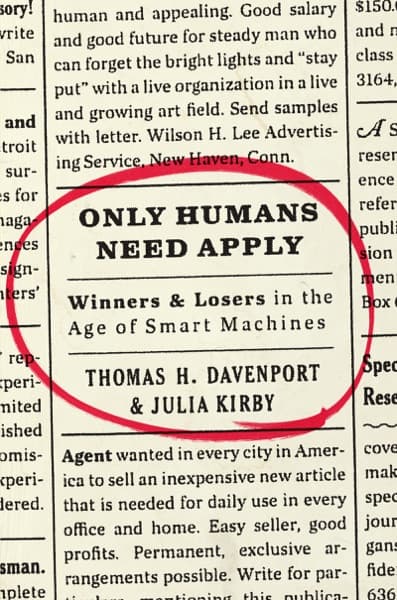
Only Humans Need Apply
Thomas H. Davenport, Julia Kirby
Automation hits routine work, but human judgment and empathy determine which roles keep value.
Human strengths survive where context and empathy matter
It focuses directly on workplace augmentation and which capabilities remain hard to replicate. For AI and jobs, you get a calmer, actionable framing: prepare for changing tasks by building skills around oversight, relationship, and decision accountability.
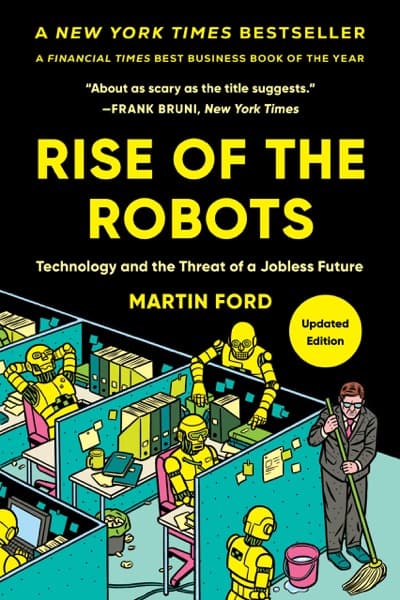
Rise of the Robots
Martin Ford
When robots scale cheaply, the wage pressure can land on workers faster than society can re-train.
Cost declines can outpace job creation
Ford popularizes the automation threat to employment with a broad lens on AI-driven productivity. It fits your topic because it confronts the tension head-on: the technology story is real, but the human consequences depend on labor-market adaptation and policy choices.
Can we tailor this list for you?
Type your question in the bar below and the AI will tailor a fresh set of picks just for you.