Best Books on the Attention Economy
The Attention Merchants and The Shallows turn “attention span” into a market with incentives: whoever owns the feed shapes what you notice. That shared thread helps you spot manipulation, not just distraction.
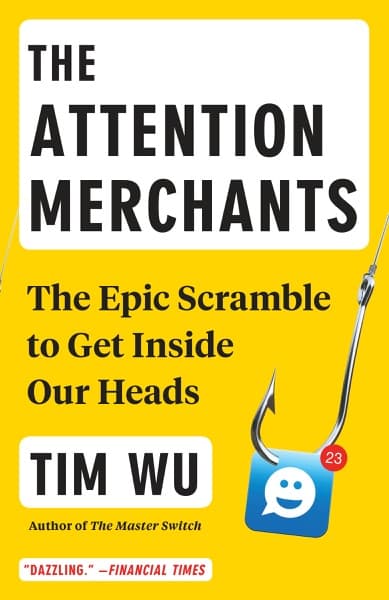
The Attention Merchants
Tim Wu, Tim Wu
After The Attention Merchants, you stop treating distraction as personal weakness and start seeing it as an industrial business model that tracks, packages, and sells your mind.
Attention is monetized by measuring and reselling it.
Wu traces attention capture from earlier media industries into today’s platforms, so you can recognize the same extraction logic wearing new interfaces. It fits the attention economy lens by focusing on incentives and monetization, not productivity tips.
The Shallows
Nicholas G. Carr
The Shallows argues the internet doesn’t just distract you: it changes how your brain learns, shifting deep thinking toward constant scanning.
Use patterns can reshape thinking, not just mood.
Carr connects device use to cognition and learning patterns, giving you a sharper way to evaluate “what the web trains.” For attention economy concerns, it explains why the environment you live in can rewire attention itself.
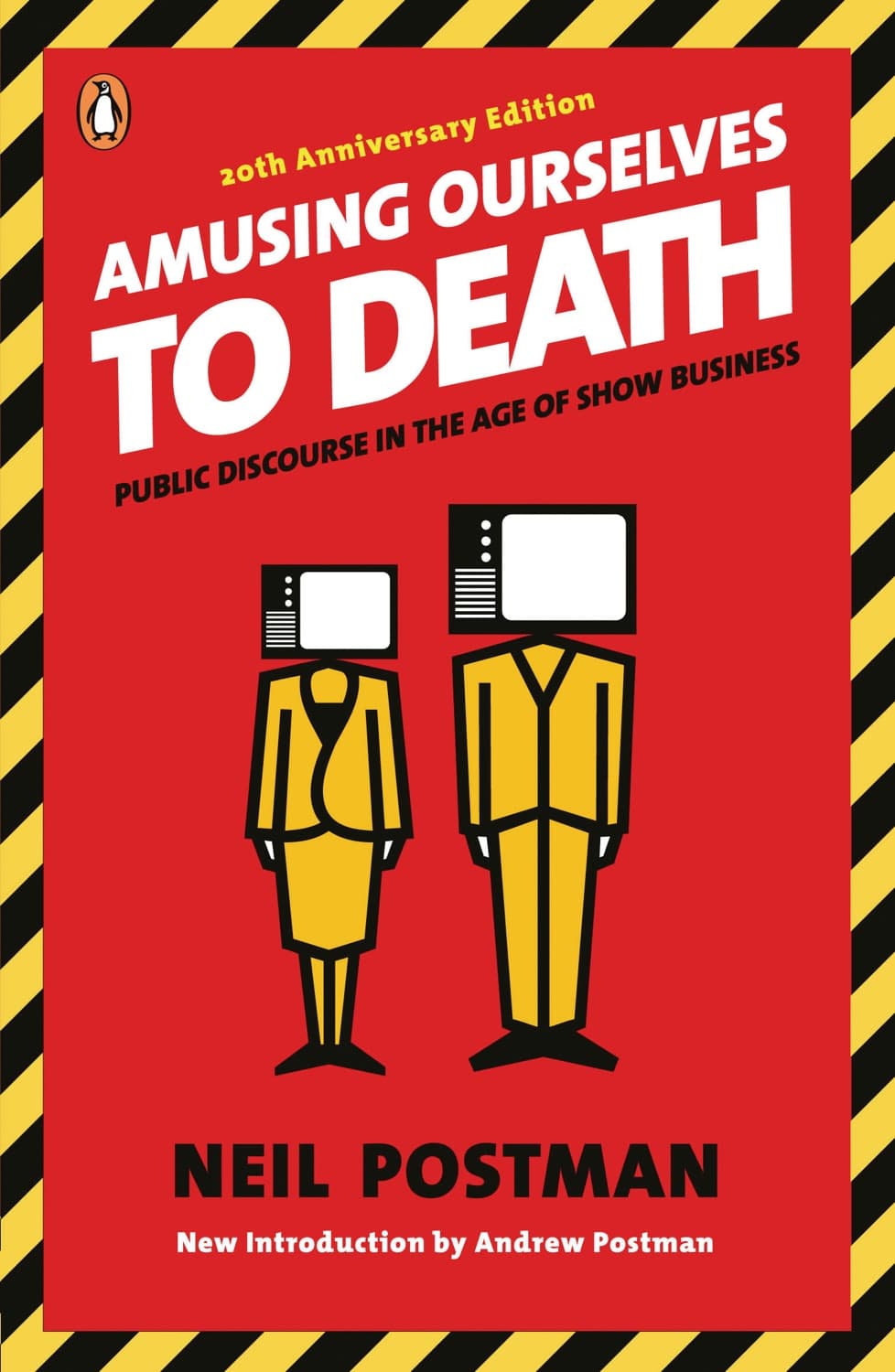
Amusing Ourselves to Death
Neil Postman, Neil Postman
Amusing Ourselves to Death shows entertainment logic can quietly hollow out public conversation: the medium trains attention toward amusement, not meaning.
We drown in entertainment, not information.
Postman’s critique helps you name the cultural mechanism behind attention capture, not only the technology. It matters because the attention economy thrives when discourse is optimized for engagement and novelty.
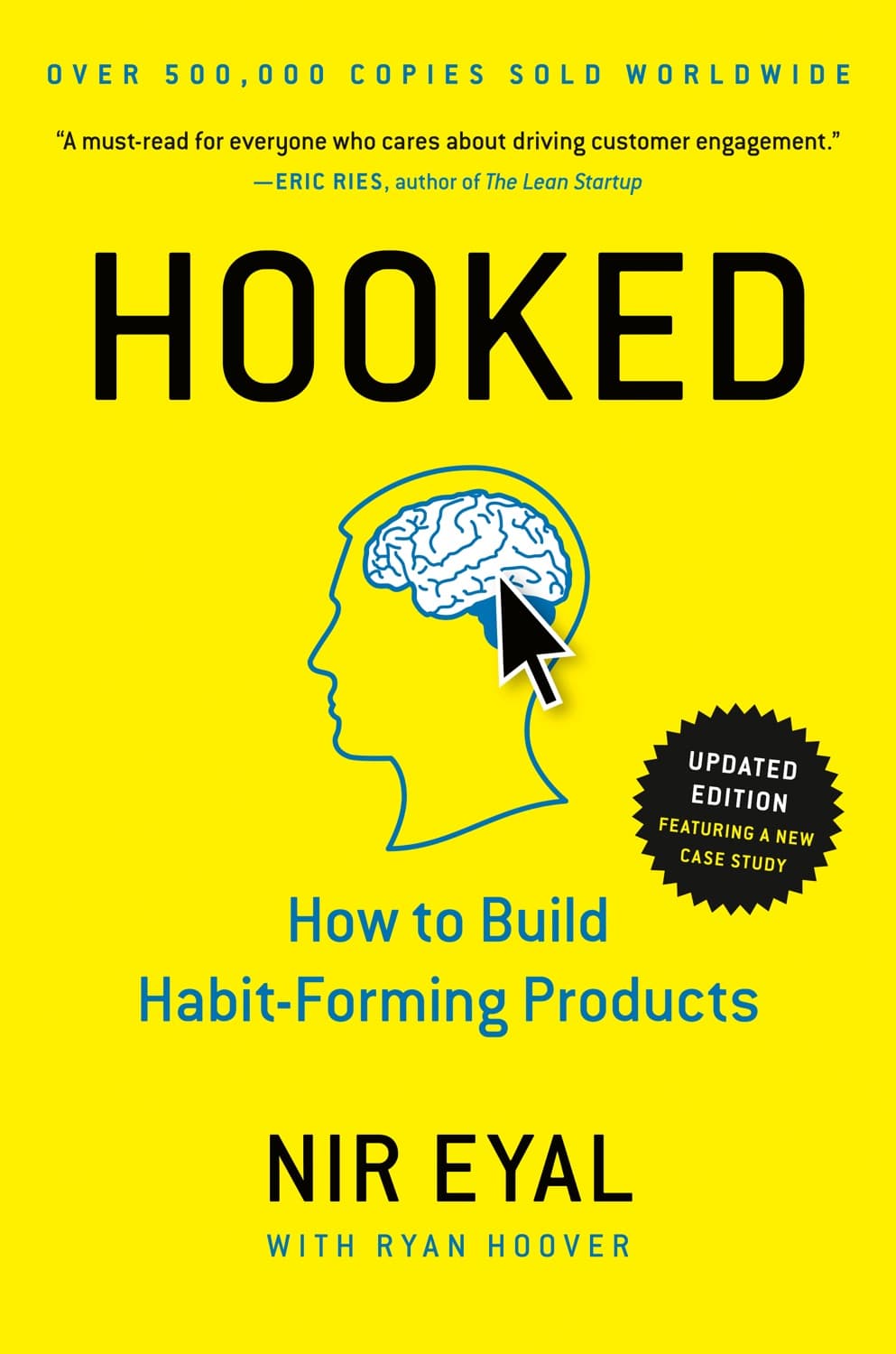
Hooked
Nir Eyal
Hooked teaches how products engineer habit loops so carefully that “wanting” becomes a designed outcome, not a spontaneous choice.
Hook model: trigger, action, variable reward, investment.
Eyal translates attention capture into actionable mechanisms for behavior and repetition, so you can see the loop behind infinite scrolling. In an attention economy frame, it gives you a vocabulary to audit design incentives.
Irresistible
Adam Alter
Irresistible reframes device addiction as something closer to behavioral engineering, where cues, rewards, and frictionless access do the heavy lifting.
Variable rewards amplify compulsive checking.
Alter synthesizes research into an approachable account of why apps and platforms keep pulling attention back. That makes it useful when you want to understand attention economy effects as behavioral conditioning, not mere self-control failure.
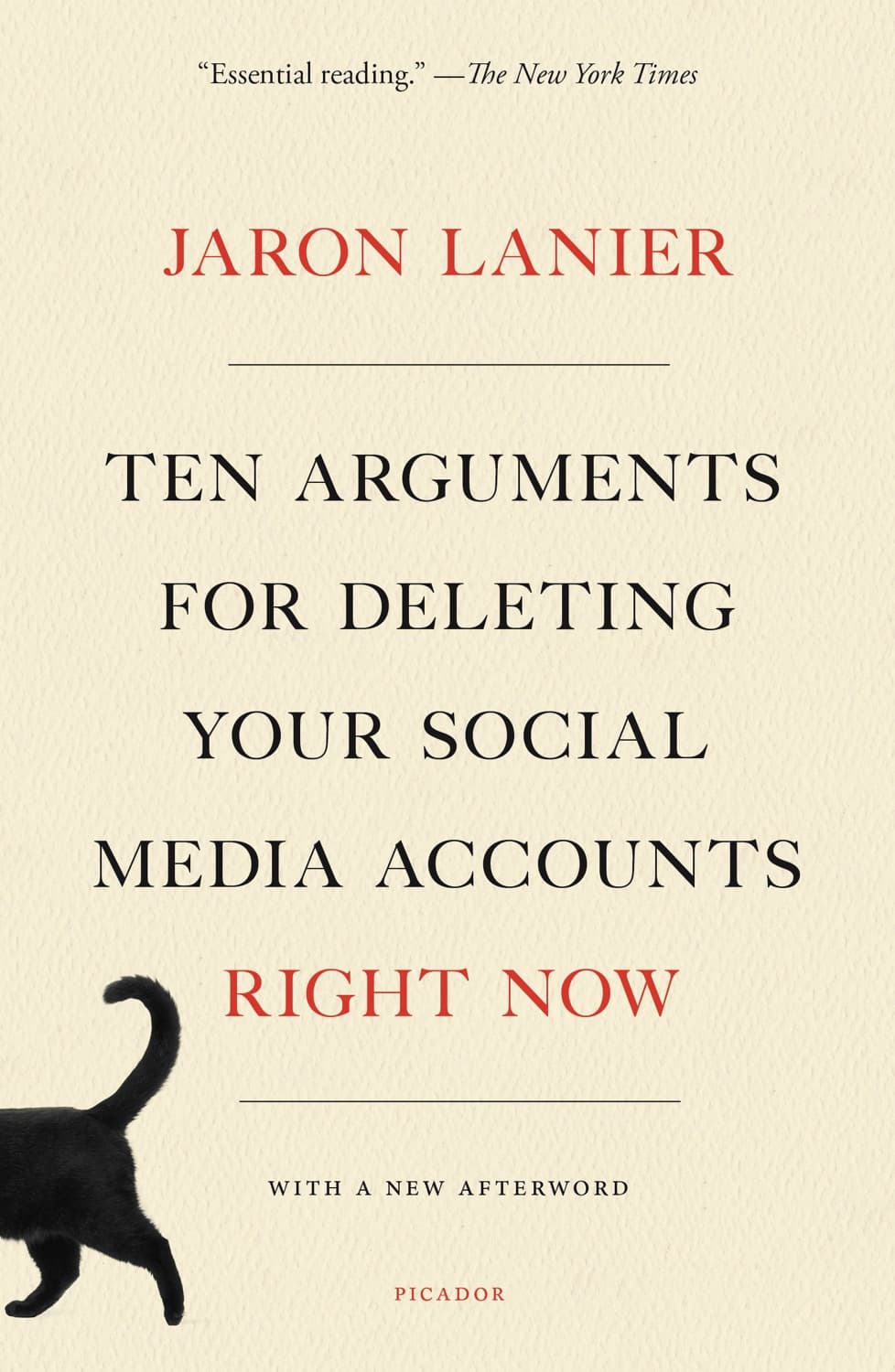
Ten Arguments for Deleting Your Social Media Accounts Right Now
Jaron Lanier
Lanier argues that social platforms monetize you by converting your participation into raw material for prediction and control.
Your data feeds prediction engines that profit from you.
His critique targets the attention economy at the business-model level, not the user-level “try harder” level. It helps you connect what you feel while scrolling to what platforms are optimizing.
Use patterns can reshape thinking, not just mood.
Digital Minimalism
Cal Newport
Digital Minimalism reframes technology from daily noise into a set of choices you can govern with explicit values and boundaries.
Choose tools by values, then set constraints.
Newport offers a concrete framework for reducing attention extraction pressure while still living in the digital world. For the attention economy, it’s the counter-skill: how to design your life around deliberate use rather than engagement loops.
Stolen Focus
Johann Hari
Stolen Focus argues attention theft is a system that combines environment, incentives, and personal strain to keep you perpetually “almost present.”
Attention loss is shaped by systems, not just willpower.
Hari connects individual outcomes to broader structural pressures, which makes the attention economy feel less like a personal failing and more like a context you can change. It’s especially aligned with your focus because it pairs narrative empathy with explanatory causes.
Can we tailor this list for you?
Type your question in the bar below and the AI will tailor a fresh set of picks just for you.