Best Books on Organizational Change
Organizational change books that actually stick: Kotter’s Leading Change for transformation structure, Bridges’ Managing Transitions for the human shift. Pair them to align strategy with morale and behavior.
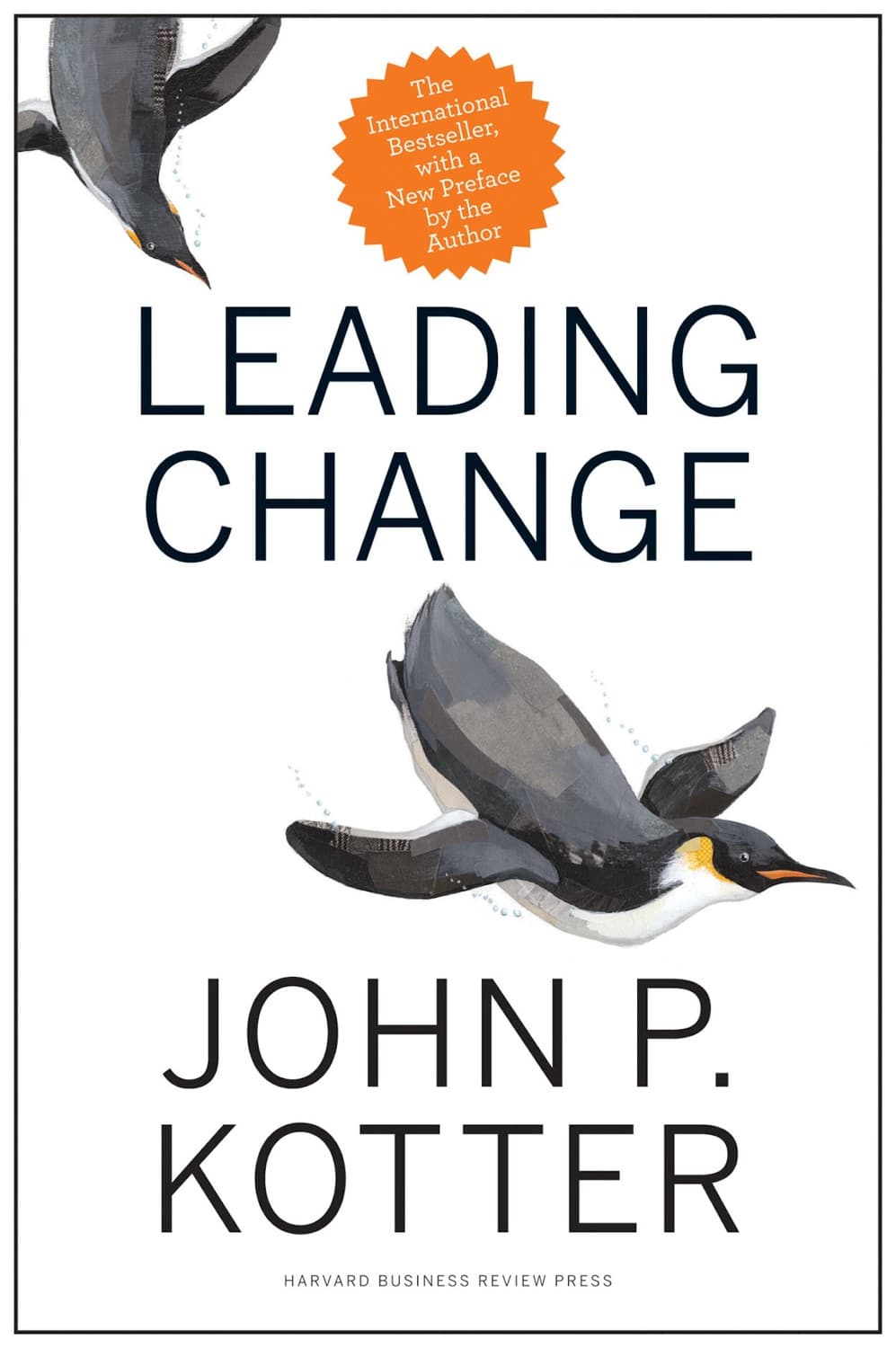
Leading Change
John P. Kotter
Kotter turns organizational change into a repeatable sequence, so the work is less about “inspiration” and more about building momentum that survives setbacks.
Eight steps create momentum for lasting change.
Leading Change is different in how explicitly it maps the leadership moves needed for large-scale transformation. That matters for organizational change because it addresses the common failure mode: strategy without the urgency, coalition, and consolidation to make it real.
Managing Transitions
William Bridges
Managing Transitions separates the event of change from the emotional work of letting go, which is why teams often resist even when the plan looks rational.
Change happens, transitions happen inside people.
Bridges’ core difference is its focus on the internal experience of change, not just the organizational mechanics. For organizational change efforts, that lens helps you plan for grief, uncertainty, and rebuilding, so implementation stops feeling like a power struggle.
Switch
Chip Heath
Switch treats behavior change like a system of three levers, making “people problems” measurable and addressable instead of blame-based.
Direct the Rider, motivate the Elephant, shape the Path.
Switch stands out for translating psychology into practical guidance for organizational change. That matters because organizational change succeeds when you align what people feel like doing with what they actually do under pressure.
The Change Monster
Jeanie Daniel Duck
The Change Monster helps you name the hidden dynamics of enterprise change, so chaos becomes a pattern you can manage rather than an ambush you endure.
Change breeds resistance through uncertainty and meaning.
Duck differs by treating change as messy, political, and emotionally loaded, not a clean project plan. For organizational change, that realism helps leaders anticipate confusion, rumor, and conflicting narratives that derail even well-designed initiatives.
Crucial Conversations
Kerry Patterson, Joseph Grenny, Ron McMillan, Al Switzler, Stephen R. Covey
Crucial Conversations gives you a way to keep high-stakes dialogue productive, even when people are upset, defensive, or politically constrained.
Start with heart: learn, then advocate.
Its unique strength is a concrete communication toolkit tailored to emotionally charged moments during organizational change. That matters because organizational change often stalls on what people refuse to say openly.
Organization Development & Change
Christopher Worley, THOMAS. WORLEY CUMMINGS (CHRISTOPHER. DONOVAN, PAUL.), Paul Donovan
Organization Development & Change consolidates the field’s main models and interventions, so you can choose an approach instead of improvising one-off “fixes.”
Pick interventions from established OD models.
This book is different for organizational change because it synthesizes established change practices into a broader, usable repertoire. That matters when you need to connect diagnostics, design choices, and implementation methods under real organizational constraints.
Change happens, transitions happen inside people.
Reengineering the corporation
Michael Hammer
Reengineering the corporation challenged organizations to redesign processes from scratch, forcing leaders to confront where “efficiency” actually lives: in the work, not the org chart.
Start with processes, not departments.
Hammer’s landmark contribution is its hard pivot toward process redesign as the engine of major transformation. For organizational change, it’s a useful counterweight when teams only tinker with structure or messaging while the underlying workflow stays the same.
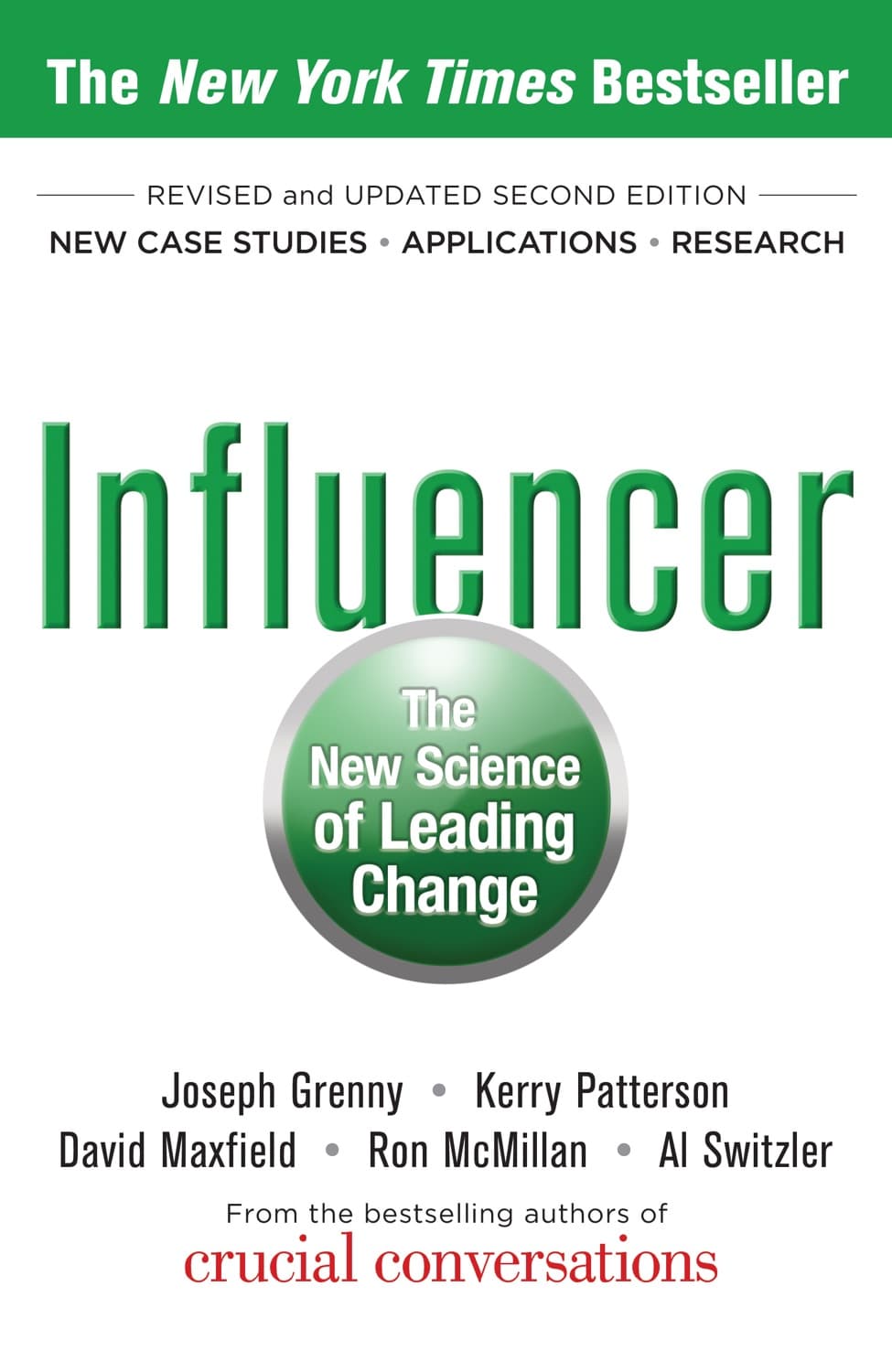
Influencer: The New Science of Leading Change, Second Edition (Paperback)
Joseph Grenny, Kerry Patterson, David Maxfield, Ron McMillan, Al Switzler
Influencer reframes leading change as shaping behavior in specific social contexts, turning resistance into something you can strategically design around.
Change behavior by directing the context.
What makes it distinct is its behavior-focused toolkit for shifting what people do, not just what they believe. For organizational change, that matters because entrenched practices usually persist when the surrounding incentives, norms, and support are left untouched.
Can we tailor this list for you?
Type your question in the bar below and the AI will tailor a fresh set of picks just for you.