Best Books on History of Hacking
Hacking history comes alive through Steven Levy’s Hackers and Brian Krebs’s Spam Nation: culture, networks, and criminal ecosystems, mapped from MIT to botnets. These picks honor the timeline while contrasting myths with documented cases.
Hackers
Steven Levy
Hackers turns “hacker” from a stereotype into a technical and cultural identity, following MIT to working systems and community rules.
“Access to computers and anything that might teach you.”
Levy’s oral-history approach preserves the original ethos: curiosity, play, and building over breaking. For a history-of-hacking search, it gives the cultural timeline that later cybercrime narratives presuppose.
Where Wizards Stay Up Late
Matthew Lyon, Katie Hafner
Where Wizards Stay Up Late frames ARPANET as a human network: researchers, deadlines, and improvisation more than equations.
ARPANET lets distant systems cooperate via packets.
This book anchors hacking history in the origins of packet-switched networking and the practices that made tinkering possible. If your goal is a historical lens, it shows how tools, norms, and connectivity emerged before today’s cybercrime became plausible at scale.
The Cuckoo's Egg
Cliff Stoll
Cliff Stoll finds a network intruder by noticing billing and behavior anomalies, then follows the trail across systems.
Anomalies in logs beat assumptions.
It’s a standout for hacking history because it treats intrusion as investigation, not mystique. You get a ground-level model of how early intrusions were detected and traced, which sharpens how you read later hacker and law-enforcement stories.
The Masters of Deception
Michele Slatalla
The Masters of Deception documents how 1990s phone phreaks built reliable tactics from systems, not folklore.
Phreaking exploits protocols, not just phones.
Slatalla captures a transitional era in hacking history: communications networks, underground tradecraft, and the shift from “hacker” as experimenter to hacker as persistent threat. It matters because many modern cybercrime pathways started with these telecom capabilities.
The Hacker Crackdown
Bruce Sterling
The Hacker Crackdown tracks how public panic and aggressive enforcement reshaped the hacker underworld in the early 1990s.
Enforcement pressure changes hacker behavior.
Sterling’s angle is historical and political: how institutions responded, how rhetoric hardened, and how that changed the ecosystem. If you want hacking history beyond gadgets, this shows the feedback loop between crime, media attention, and policy.
Ghost in the Wires
Kevin David Mitnick, William L Simon
Ghost in the Wires turns a notorious fugitive’s life into a study of social leverage: trust, urgency, and manipulation.
People are the easiest vulnerability to exploit.
For history-of-hacking, this is less about exploits and more about human technique operating inside early Internet-era constraints. It helps you understand why many “hacks” were practical persuasion workflows long before sophisticated malware dominated headlines.
ARPANET lets distant systems cooperate via packets.
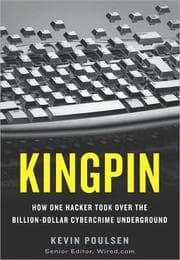
Kingpin
Kevin Poulsen
Kingpin follows a real carding ecosystem where access, reputations, and forum power determined who could profit and who got burned.
Forums are marketplaces: identity is currency.
This book documents a pivot point in hacking history: commerce and fraud networks moving online, with players running services rather than lone stunts. It matters if your thread is the evolution from early network tinkering to organized cybercrime.
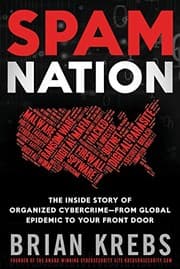
Spam Nation
Brian Krebs
Spam Nation explains botnets and spam logistics as an operating system: infrastructure, pricing, and churn.
Botnets run like businesses with supply chains.
Krebs brings investigative rigor to criminal hacking history, focusing on the machinery that keeps attacks running. If you want the modern arc of hacking, this connects the “how” of compromised systems to the “why” of criminal business models.

Underground
Julian Assange, Suelette Dreyfus
Underground maps how global hacker subcultures formed across borders before the web made everything feel centralized.
Hacker networks scale through shared knowledge.
This is directly aligned with a global, historical view: it traces networks of people, capabilities, and ideals as they travel. It helps you see hacking history as an evolving international conversation, not just isolated incidents.
Can we tailor this list for you?
Type your question in the bar below and the AI will tailor a fresh set of picks just for you.