Best Books for DevOps Engineers
DevOps is less a job title than a way of running software: shipping changes fast without lighting production on fire. These books skip the tool manuals that expire and teach the ideas underneath: why small batches beat big releases, why reliability is engineered rather than hoped for, and how the shape of a team decides the shape of its systems.
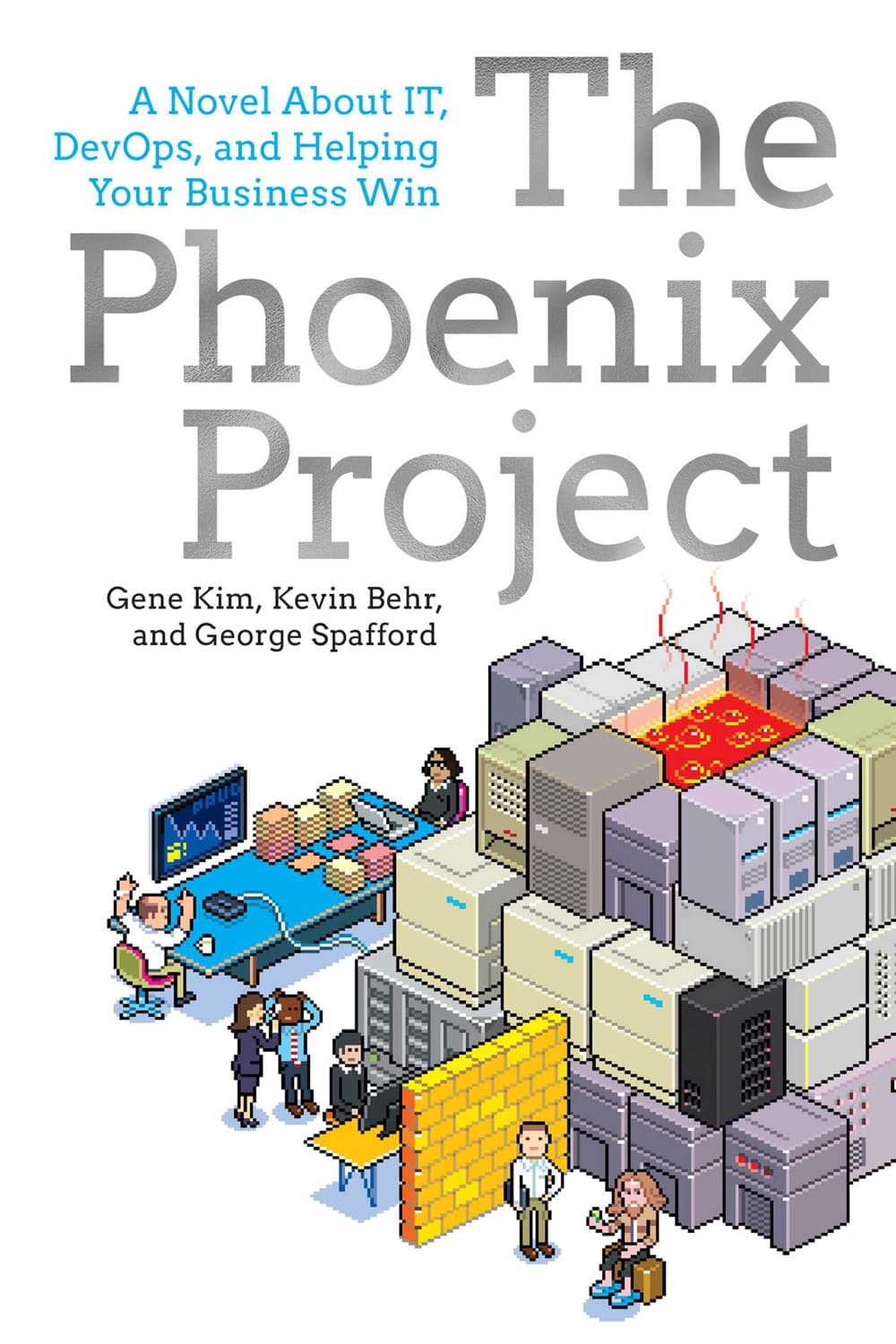
The Phoenix Project
Gene Kim, Kevin Behr, George Spafford
The novel that turned a factory-floor idea into the DevOps movement.
Unplanned work is the silent killer: every emergency you fight is capacity you already promised to something else.
It dramatizes a doomed IT project and uses it to teach the theory of constraints, flow, and feedback loops, so abstract ideas about work-in-progress and bottlenecks become obvious through a story you actually want to finish.
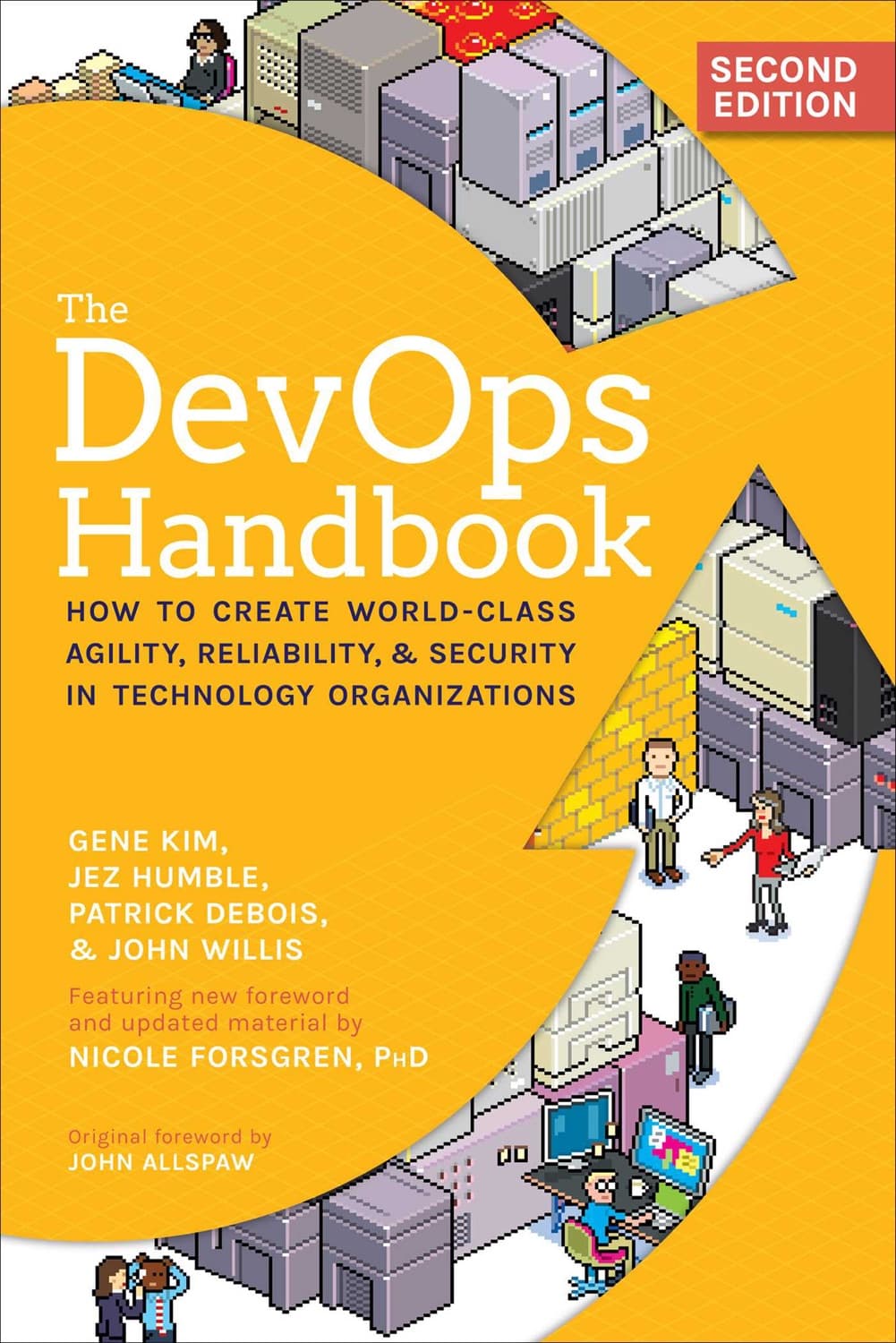
The DevOps handbook
Gene Kim
The practices behind the story, laid out as a working playbook.
The Three Ways, flow, feedback, and continual learning, are the spine every DevOps practice hangs off.
Where The Phoenix Project makes the case in fiction, this converts it into concrete moves: deployment pipelines, telemetry, blameless postmortems, and the daily habits that let teams deploy many times a day safely.
Accelerate
Nicole Forsgren, Jez Humble, Gene Kim
The research proving fast and stable are not a tradeoff.
Deploy frequency, lead time, change-fail rate, and time to restore predict performance better than any tool choice.
It is the book that gave the field the four DORA metrics, drawn from years of survey data, and shows statistically that elite teams ship more often and break less, killing the myth that speed costs stability.
Site Reliability Engineering
Betsy Beyer, Chris Jones, Christof Leng, David Huska, Jennifer Petoff, Niall Richard Murphy
How Google actually runs production, written by the people who do it.
An error budget turns reliability into a currency you can spend on releases instead of an argument you keep having.
It defines the discipline of SRE from the inside: error budgets, service level objectives, and toil reduction, giving language and math to the tradeoff between shipping features and keeping the pager quiet.
Continuous Delivery
Jez Humble, David Farley
The foundational case for the deployment pipeline.
If releasing hurts, do it more often until the pain forces you to automate it away.
It predates modern CI tooling yet still defines what a trustworthy path to production looks like, automating build, test, and release so that shipping becomes a routine, low-drama event rather than a weekend outage.
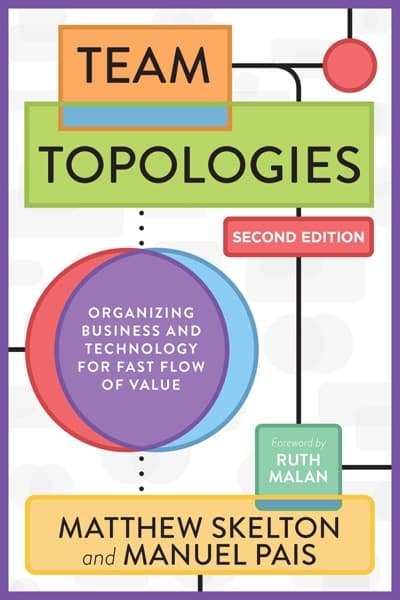
Team Topologies, 2nd Edition
Matthew Skelton, Manuel Pais
Why your org chart quietly determines your architecture.
Cognitive load, not headcount, is the real limit on how much a team can safely own.
It gives a vocabulary for structuring teams, stream-aligned, platform, enabling, and complicated-subsystem, so that Conway's Law works for you, and it explains how a good platform team reduces the load on everyone shipping features.
The Three Ways, flow, feedback, and continual learning, are the spine every DevOps practice hangs off.
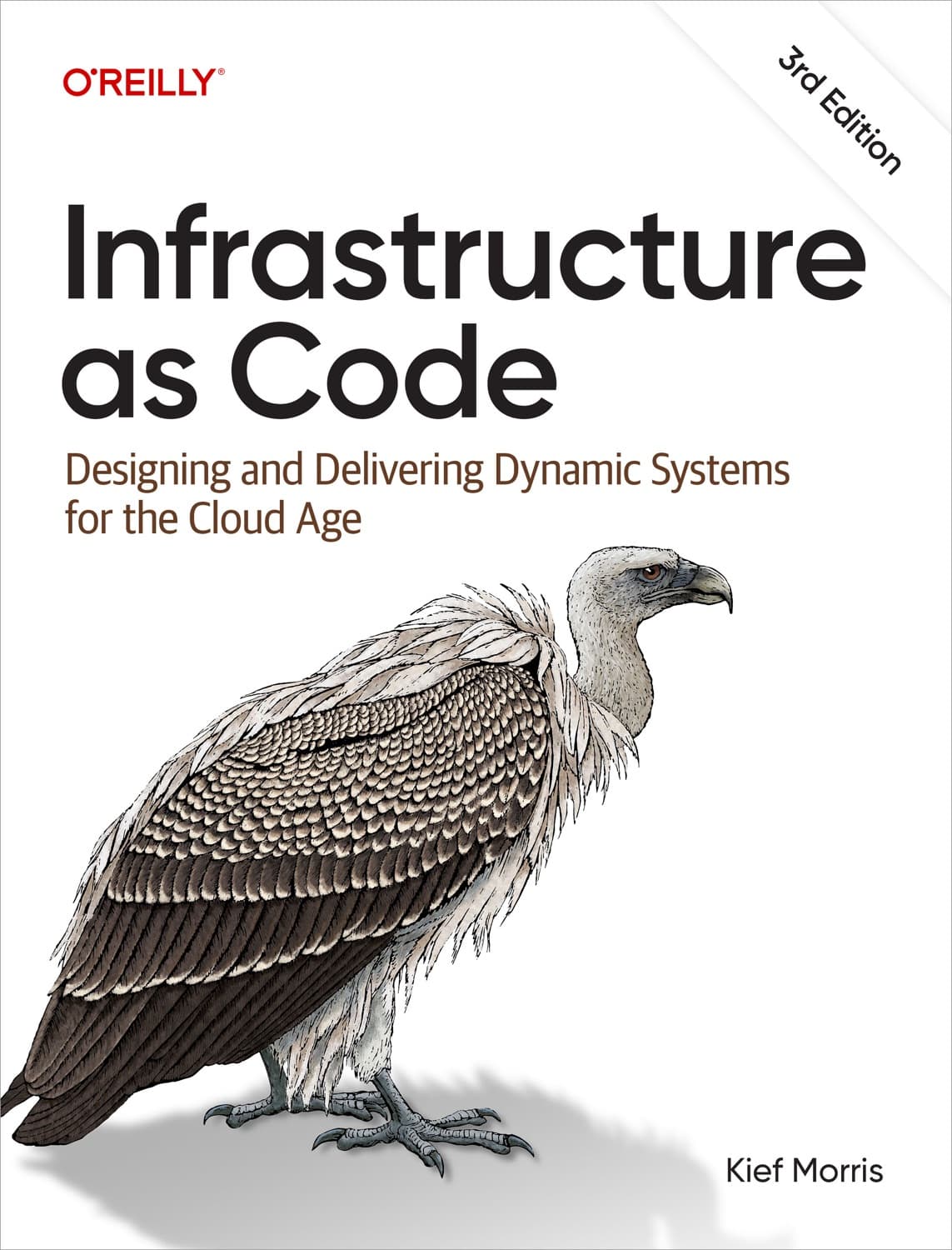
Infrastructure As Code
Kief Morris
Treating servers like software you can rebuild on demand.
If you cannot destroy and recreate a server from code, you do not own it, it owns you.
It is the clearest guide to managing cloud infrastructure through versioned, testable definitions, covering the patterns and pitfalls of Terraform-style tooling without tying itself to any single product that will be gone in three years.
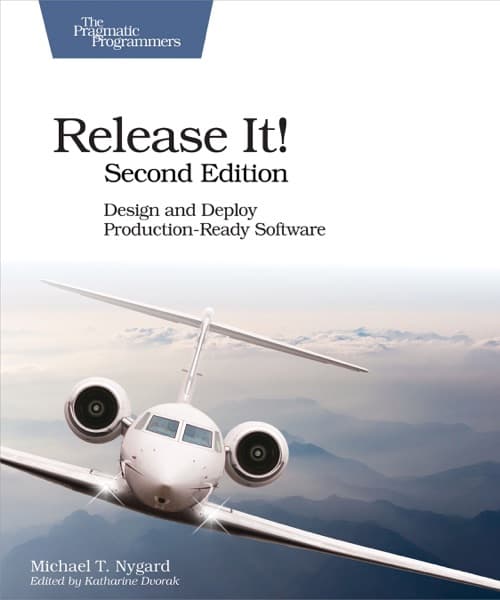
Release It!
Michael T. Nygard
Designing software to survive contact with real production.
Systems do not fail gracefully by accident; every safety valve, timeout, and bulkhead has to be designed in.
It catalogs the ways live systems fail under load, cascading failures, resource leaks, thundering herds, and the stability patterns like circuit breakers and bulkheads that keep one bad dependency from taking the whole system down.
Observability Engineering
Charity Majors, Liz Fong-Jones, George Miranda
You cannot operate a modern system you cannot see into.
Monitoring answers questions you knew to ask in advance; observability lets you ask brand-new ones after the incident has already started.
It argues that dashboards built for predictable failures fall apart in complex distributed systems, and teaches observability through high-cardinality events you can query freely, so on-call engineers can debug problems nobody thought to anticipate in advance.
Can we tailor this list for you?
Type your question in the bar below and the AI will tailor a fresh set of picks just for you.