Best Books for Senior Product Managers
Ten reads for senior product managers: strategy, org design, and the leadership scaffolding that shows up around the principal level. For when you're starting to influence beyond your own team.
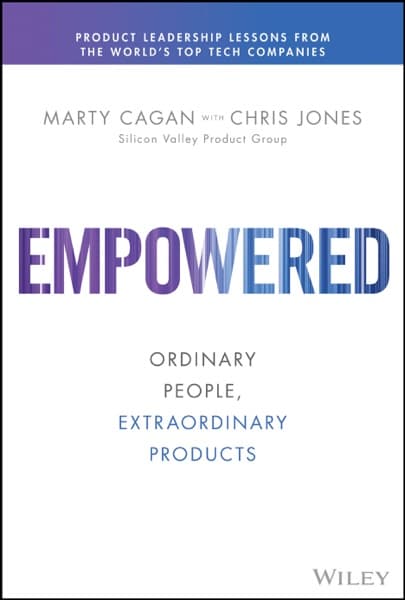
Empowered
Marty Cagan
Cagan's follow-up, about the leaders and structures that let great product teams exist in the first place.
Most companies have product teams in name only. They have feature teams pretending.
Where Inspired is for the PM, Empowered is for the people above the PM. Cagan and Chris Jones examine why most companies' product teams are stuck doing feature work for stakeholders, and what it takes to actually build the kind of organization where empowered teams can solve problems instead of executing tickets. The most useful book on this list for senior PMs trying to fix the org around them.
Escaping the Build Trap
Melissa Perri
Why most product teams ship a lot and learn nothing, and how to climb back out toward outcomes that actually matter.
Shipping is not progress. Output is not outcome. The build trap is mistaking the first for the second.
Perri names a problem most PMs feel but can't articulate: shipping has become the goal because outcomes are harder to measure. She walks through how organizations end up there, what kind of leadership pulls them out, and what a real product strategy looks like top-to-bottom. Short, sharp, and the book to hand a CEO who thinks faster sprints will fix anything.
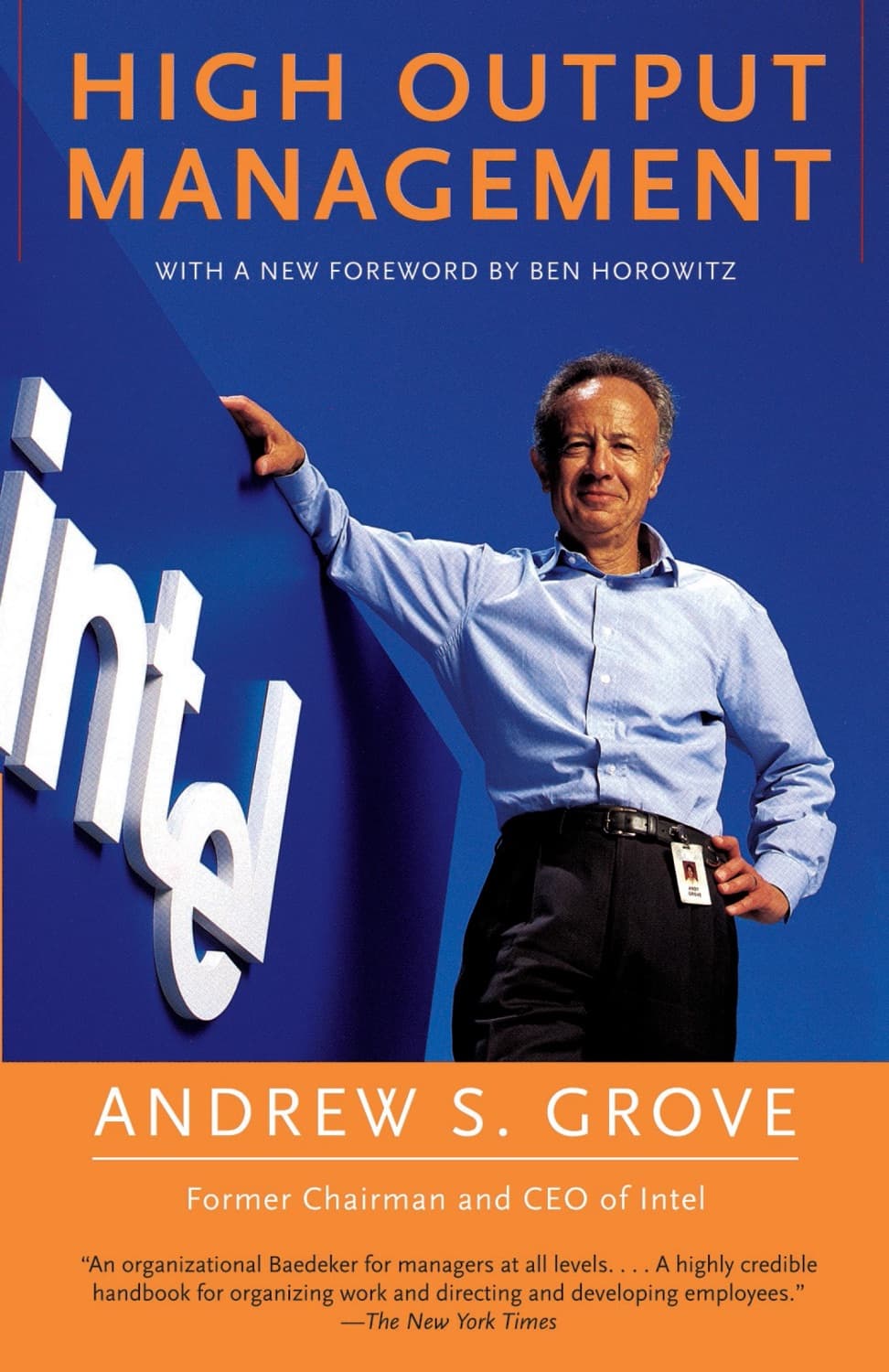
High Output Management
Andrew S. Grove
Intel's legendary CEO writes the management book most other management books quietly copy, short, technical, and still the best on this list after forty years.
The output of a manager is the output of the organizational units under their supervision or influence.
Grove built Intel into the most consequential company of the 1980s and 90s, and High Output Management is what he taught managers under him. The framing, managers as factory operators measuring throughput, quality, and decision velocity, is unsentimental and clarifying. Ben Horowitz reread it annually. Worth every minute of the few hours it takes to finish.
Working Backwards
Colin Bryar, Bill Carr
Two Amazon insiders open the playbook, PR/FAQ documents, six-pagers, the Bar Raiser hiring loop, and the rituals behind the company's product machine.
If you can't write a one-page press release that excites a customer, you don't have a product worth building.
Bryar and Bill Carr were inside Amazon during the explosive years and lived under Bezos's specific operating system. The chapter on the PR/FAQ, write the launch announcement before writing a line of code, is alone worth the book, and the long story of how Kindle, Prime, and AWS were actually built is the best behind-the-curtain account of big-company product work in print.
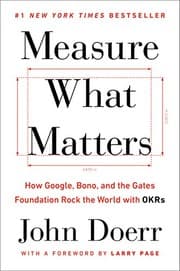
Measure What Matters
John Doerr
The OKR playbook from the venture capitalist who taught it to Google in 1999, and to nearly every scaled tech company since.
Ideas are easy. Execution is everything. OKRs are the bridge.
Doerr learned OKRs from Andy Grove at Intel and carried them into Kleiner Perkins's portfolio. The book is part history, part instruction manual: how to set objectives that stretch, how to align them across an organization, what to do when they fail. Heavy on case studies (Google, Bono's ONE Campaign, Bill Gates Foundation), useful for any PM trying to convince leadership that prioritization is a discipline, not a meeting.
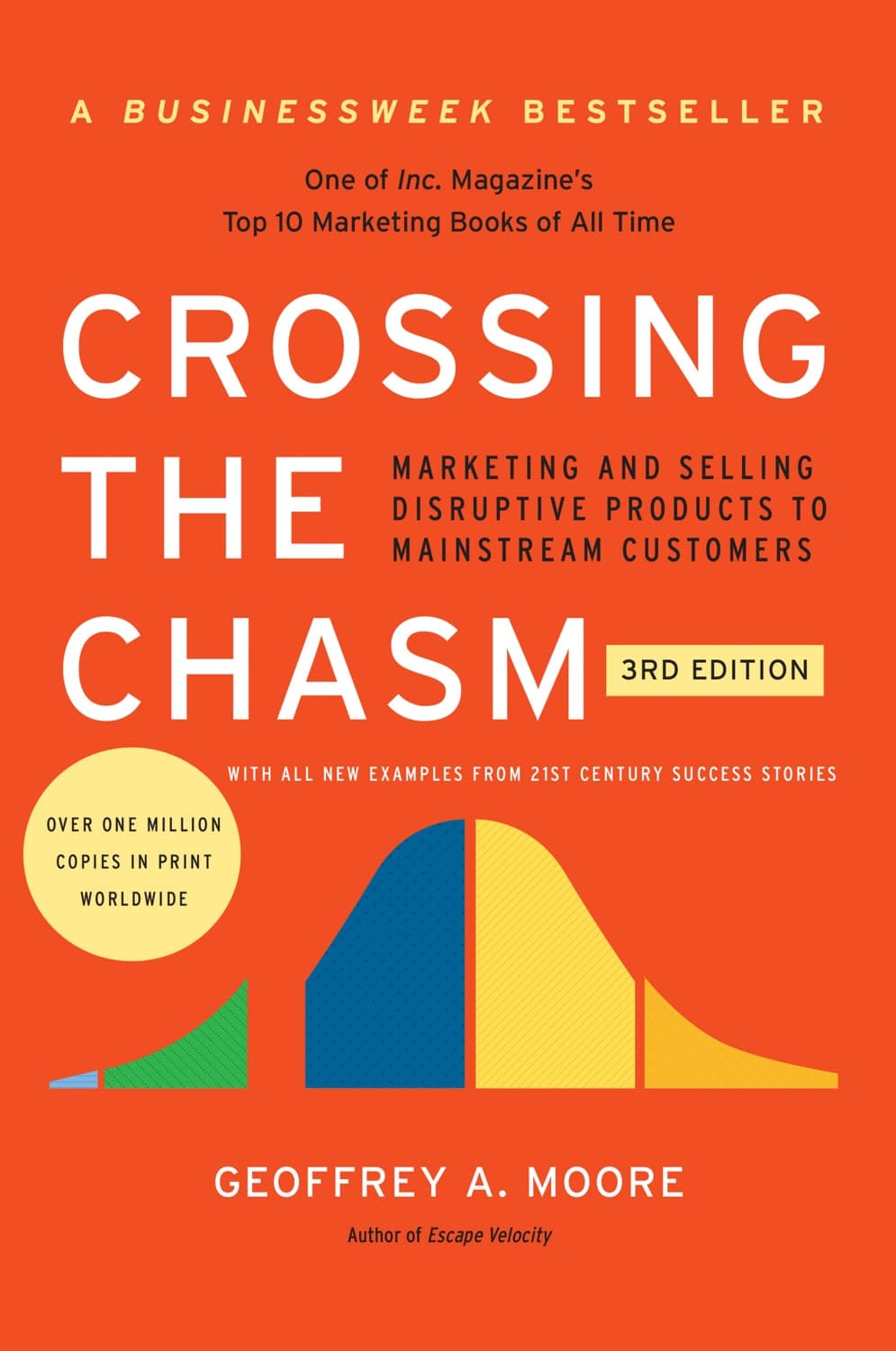
Crossing the Chasm
Geoffrey A. Moore
Why early traction with enthusiasts almost never translates to mainstream adoption, and the marketing/product moves that survive the gap.
The mainstream market doesn't want what the early market wanted. It wants something safer that looks like a complete solution.
Moore wrote this in 1991 for B2B tech founders, and three decades later it's still the canonical book on the technology-adoption lifecycle. The chasm, between visionaries and pragmatists, is where most products die. He walks through bowling-pin segmentation, whole-product thinking, and the strategic patience required to land a beachhead market before going broader. If you've ever wondered why a product loved by early users somehow can't grow, this book is the answer.
Shipping is not progress. Output is not outcome. The build trap is mistaking the first for the second.
Continuous Discovery Habits
Teresa Torres
A weekly cadence for customer discovery that PMs can actually keep up, opportunity-solution trees, assumption tests, and the discipline of small steady habits.
Continuous discovery is a habit, not a project, a small interview every week beats a big study every quarter.
Torres trained more product teams in discovery than anyone else in the field, and this book is the distillation. The opportunity-solution tree alone has changed how thousands of teams think about scope, and her framework for assumption testing is the cleanest one published. Practical, repeatable, designed to survive contact with a busy week.
Thinking in systems
Donella H. Meadows, Diana Wright
A primer on how systems behave, written by one of the founders of system dynamics, feedback loops, stocks and flows, leverage points where small changes shift everything.
The least obvious leverage point in a system is usually the most powerful.
Meadows worked on Limits to Growth and spent her life teaching people to see systems the way engineers see circuits. This posthumous book is the gentlest, most quotable entry point. The list of twelve leverage points alone, places where a small intervention changes a system's behavior, is worth carrying mentally into any product strategy meeting. Slim, deep, and the kind of book senior PMs cite years after reading.
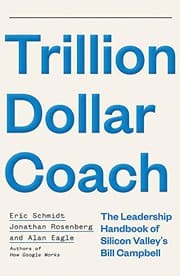
Trillion Dollar Coach
Eric Schmidt, Jonathan Rosenberg, Alan Eagle
The leadership lessons of Bill Campbell, the former football coach who quietly mentored Steve Jobs, Larry Page, Jeff Bezos, and most of Silicon Valley's first wave.
You can be a great team manager only if you have a great team.
Schmidt, Jonathan Rosenberg, and Alan Eagle worked closely with Campbell and wrote this after his death as a record of what he believed and how he worked. The portrait is specific, how he ran one-on-ones, how he handled stuck teams, why he insisted on trust as the operating principle. Less of a book about coaching than a study of what a particular kind of senior leader actually does day-to-day.
Can we tailor this list for you?
Type your question in the bar below and the AI will tailor a fresh set of picks just for you.