Best Books for Aspiring Product Managers
Ten books to get you from "I want to be a product manager" to fluent in what the job actually is: Cagan for the role, Torres and Olsen for the craft, Grove and Moore for the strategy beneath all of it. Built for people breaking in, and still useful ten years after you land the job.
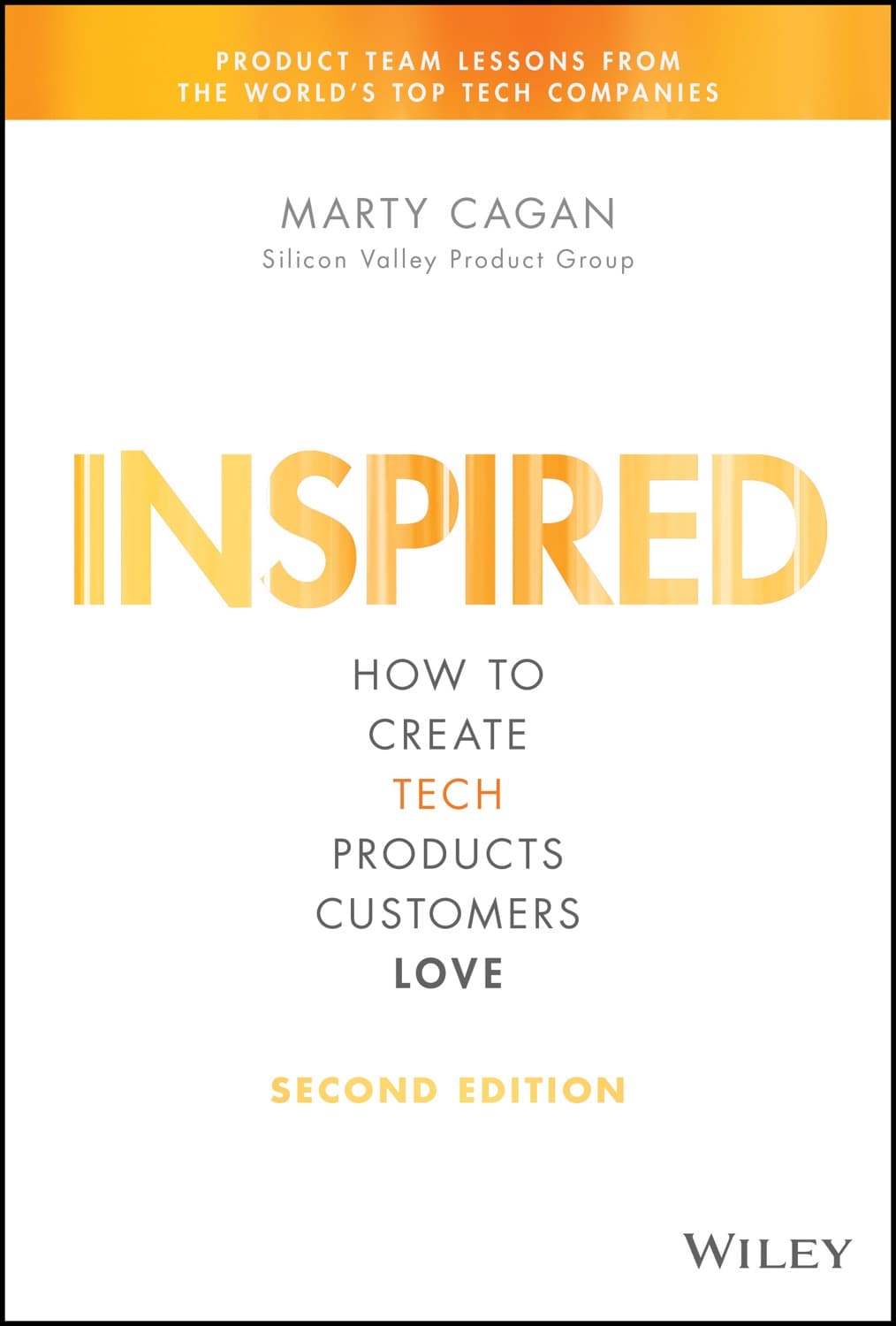
Inspired
Marty Cagan
The product-management bible: what a great PM actually does on a Tuesday afternoon, told by the man who hired and trained more of them than anyone alive.
Product isn't about delivering features. It's about delivering outcomes.
Cagan ran product at eBay, Netscape, and AOL before becoming the industry's de facto coach through Silicon Valley Product Group. Inspired is what he'd tell you over lunch: the difference between feature factories and discovery teams, why most roadmaps are wrong, and how the best companies decide what to build. If you read one PM book, make it this one.
Cracking the PM Interview
Gayle Laakmann McDowell, Jackie Bavaro
The book that turned the PM interview from a black box into something you can actually study: frameworks, case questions, and the whole hiring loop, demystified.
Product management isn't one job. It's four jobs sharing a title, so pick the one you actually want.
McDowell wrote Cracking the Coding Interview; here she teams up with Jackie Bavaro to do the same for product. Half of it is a clear-eyed look at what the role really is at different companies, half is interview prep with worked examples: estimation, product design, strategy, behavioral. The best place to start if you're chasing your first PM offer.
Continuous Discovery Habits
Teresa Torres
A weekly rhythm for customer discovery that a busy PM can actually keep: opportunity-solution trees, assumption tests, and small habits that compound.
Discovery is a habit, not a project. A short interview every week beats a big study every quarter.
Torres has trained more product teams in discovery than just about anyone, and this is the distillation. The opportunity-solution tree alone changed how thousands of teams think about scope, and her approach to assumption testing is the cleanest one in print. Practical, repeatable, and built to survive a hectic week.
Escaping the Build Trap
Melissa Perri
Why so many teams ship constantly and learn nothing, and how to climb back toward outcomes that matter.
Shipping isn't progress. Output isn't outcome. The build trap is mistaking the first for the second.
Perri names a problem most PMs feel but struggle to put into words: shipping becomes the goal because outcomes are harder to measure. She traces how organizations get there, the kind of leadership that pulls them out, and what real product strategy looks like from top to bottom. Short, sharp, and the right book to hand a CEO who thinks faster sprints fix everything.
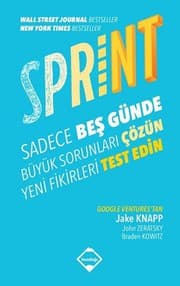
Sprint
Jake Knapp, John Zeratsky, Braden Kowitz
The five-day process Google Ventures used to test an idea before committing to building it, now run by teams everywhere.
Better decisions come from data you didn't have yesterday.
Knapp built the design sprint at Google to compress months of arguing into one structured week: Monday on the problem, Friday in front of real users, with exercises that create alignment without endless meetings. Useful even if you never run one, since the ideas about prototyping and deciding apply to almost any planning.
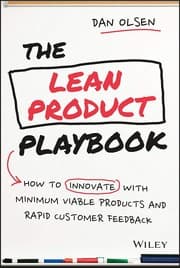
The Lean Product Playbook
Dan Olsen
The most hands-on book on finding product-market fit: six steps and a stack of worksheets that take you from problem to MVP.
Most products fail because the team built the wrong thing well, not the right thing badly.
Olsen turned his Product-Market Fit Pyramid into a book that plenty of YC companies hand new hires. It's concrete enough to use this week: target user, underserved need, value proposition, feature set, UX, validation, with none of the chest-thumping that fills most startup books. Quiet and genuinely useful.
Product management isn't one job. It's four jobs sharing a title, so pick the one you actually want.
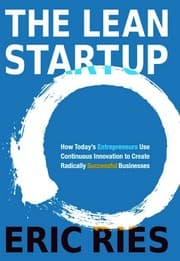
The Lean Startup
Eric Ries
The book that handed Silicon Valley its vocabulary: MVP, build-measure-learn, validated learning, pivot, for better and worse.
The only way to win is to learn faster than everyone else.
Whatever you make of the buzzwords, this book changed how a generation thinks about uncertainty. Drawing on his own misfires at IMVU, Ries argues that the real unit of progress early on is validated learning, not lines of code. Some of the rhetoric has aged; the core idea hasn't. Read it for the source of phrases you've heard a hundred times.
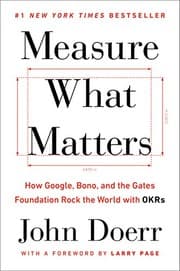
Measure What Matters
John Doerr
The OKR playbook from the investor who taught the system to Google in 1999, and to most of scaled tech since.
Ideas are easy. Execution is everything. OKRs are the bridge between them.
Doerr picked up OKRs from Andy Grove at Intel and carried them into Kleiner Perkins's portfolio. The book is part history, part manual: how to set objectives that stretch, how to align them across a company, what to do when they miss. The case studies run from Google to Bono's ONE campaign, and it's handy for any PM arguing that prioritization is a discipline, not a meeting.
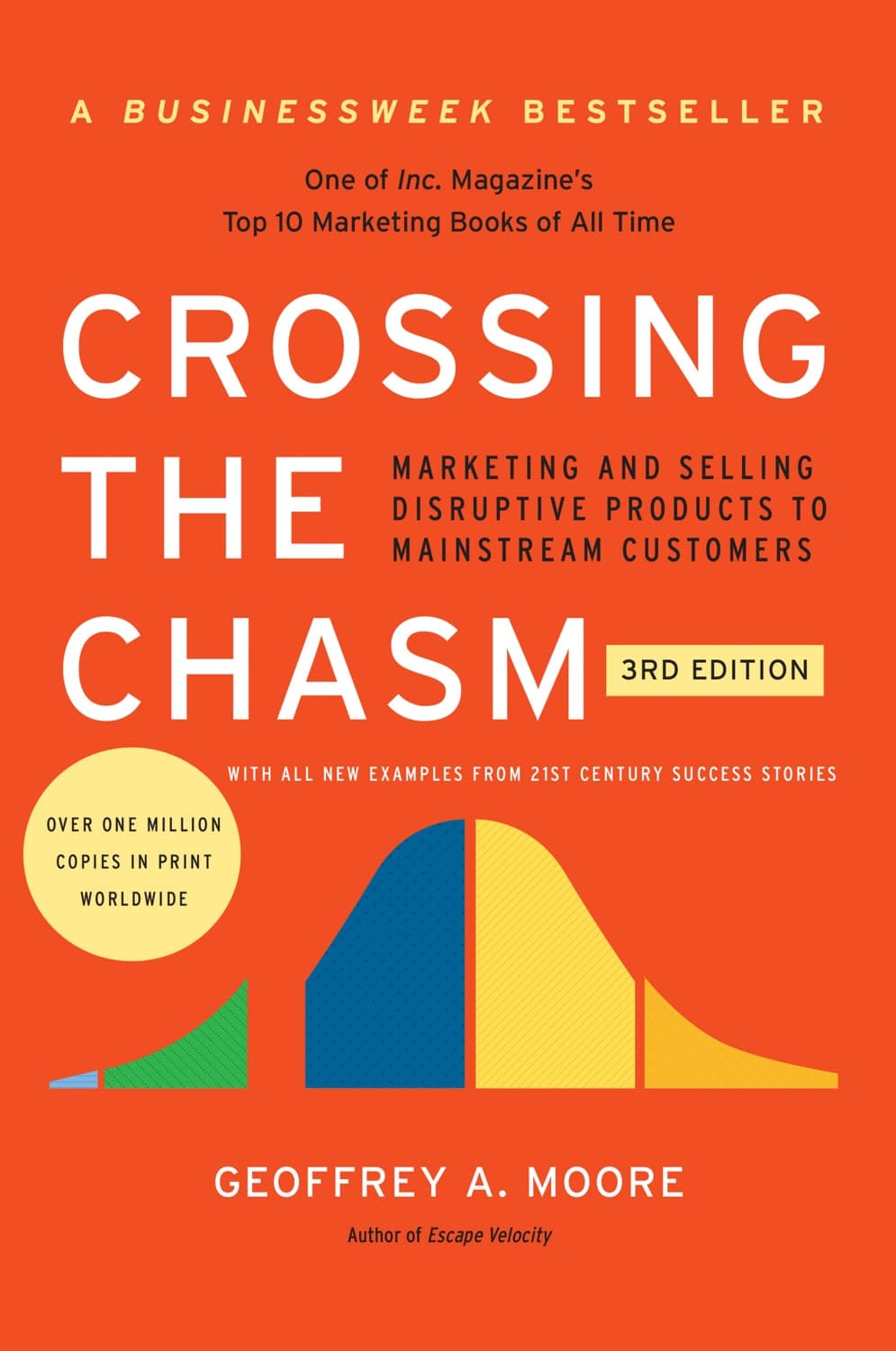
Crossing the Chasm
Geoffrey A. Moore
Why early love from enthusiasts so rarely turns into mainstream adoption, and the moves that carry a product across the gap.
The mainstream doesn't want what early adopters wanted. It wants something safer that looks like a finished solution.
Moore wrote this for B2B tech founders in 1991, and it's still the canonical take on the technology-adoption lifecycle. The chasm between visionaries and pragmatists is where most products quietly die. He lays out beachhead segmentation, whole-product thinking, and the patience it takes to own one market before reaching for the next. If you've watched a product that early users adored fail to grow, this is the explanation.
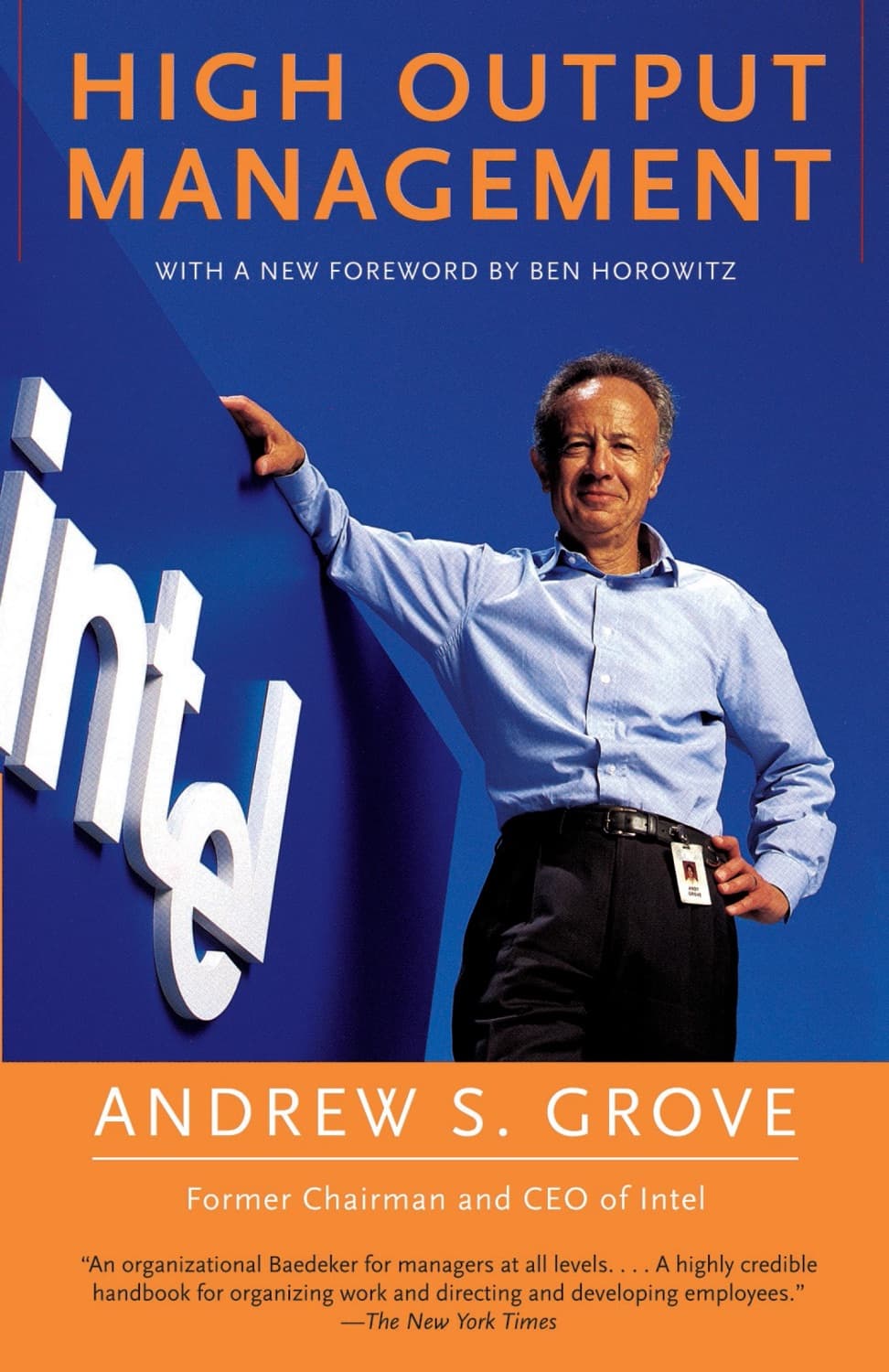
High Output Management
Andrew S. Grove
Intel's legendary CEO writing the management book that most other management books quietly borrow from, and still the sharpest one here.
A manager's output is the output of the teams under their supervision and influence.
Grove built Intel into the defining company of the 1980s and 90s, and this is what he taught the managers beneath him. His framing, the manager as an operator measuring throughput, quality, and decision speed, is unsentimental and clarifying. Ben Horowitz rereads it every year, and it's easy to see why.
Can we tailor this list for you?
Type your question in the bar below and the AI will tailor a fresh set of picks just for you.