Best Narrative Product-Management Books
Ten narrative product-management reads: the founder biographies, company histories, and reported deep-dives that teach by story instead of framework. The shelf for PM lessons that arrive sideways.
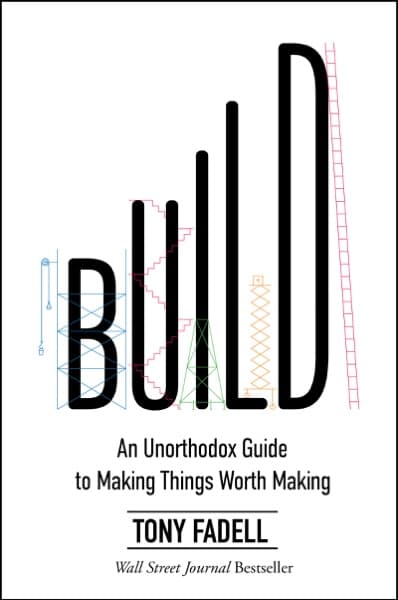
Build
Tony Fadell
The Nest CEO and former Apple SVP, who shipped the original iPod and led the iPhone hardware effort, on what he learned across thirty years of product work.
Your job changes every six months whether you notice or not. The mistake is to keep doing the last job.
Half memoir, half operator's manual, organized as short chapters that read like one-on-ones with someone who's been through what you're about to face. Fadell is candid about what he got wrong at Nest, what working under Jobs was actually like, and what specific kinds of judgment matter at each stage of a career. Closer to mentorship than a book.
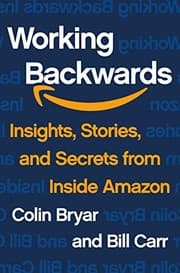
Working Backwards
Colin Bryar, Bill Carr
Two Amazon insiders open the playbook, PR/FAQ documents, six-pagers, the Bar Raiser hiring loop, and the rituals behind the company's product machine.
If you can't write a one-page press release that excites a customer, you don't have a product worth building.
Bryar and Bill Carr were inside Amazon during the explosive years and lived under Bezos's specific operating system. The chapter on the PR/FAQ, write the launch announcement before writing a line of code, is alone worth the book, and the long story of how Kindle, Prime, and AWS were actually built is the best behind-the-curtain account of big-company product work in print.

The Cold Start Problem
Andrew Chen
Andreessen Horowitz partner Andrew Chen on network effects, how they actually start (the cold-start problem), how they scale, and how they collapse.
Networks don't start at scale. They start in one tiny room and grow outward.
Chen led growth at Uber Rider before going to a16z; he's been studying network effects for fifteen years and knows the math and the war stories. The book is the most comprehensive treatment of marketplace and network dynamics in print, the atomic-network framing, the hard-side problem, the gravity-loop framework. Required reading for any PM working on a two-sided product, a social product, or a marketplace.
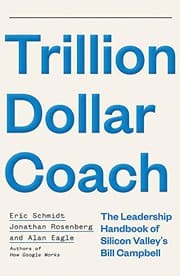
Trillion Dollar Coach
Eric Schmidt, Jonathan Rosenberg, Alan Eagle
The leadership lessons of Bill Campbell, the former football coach who quietly mentored Steve Jobs, Larry Page, Jeff Bezos, and most of Silicon Valley's first wave.
You can be a great team manager only if you have a great team.
Schmidt, Jonathan Rosenberg, and Alan Eagle worked closely with Campbell and wrote this after his death as a record of what he believed and how he worked. The portrait is specific, how he ran one-on-ones, how he handled stuck teams, why he insisted on trust as the operating principle. Less of a book about coaching than a study of what a particular kind of senior leader actually does day-to-day.
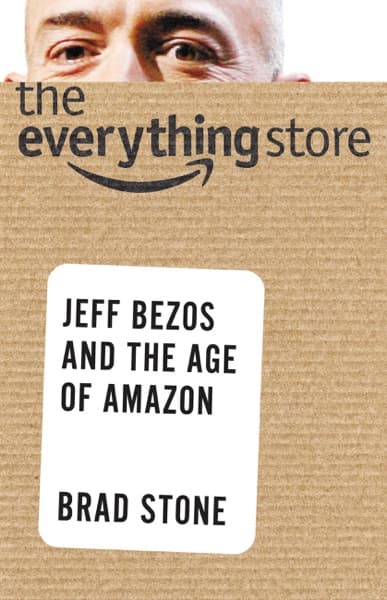
The Everything Store
Brad Stone
The definitive Bezos-era biography of Amazon, written with extensive access and almost no PR polish, from skunkworks projects to the rise of AWS.
Long-term thinking isn't a discipline. It's a willingness to accept short-term pain everyone else avoids.
Stone reported this for two years and got most of the way inside one of the most opaque companies in American business. The portrait of how decisions actually get made at Amazon, the six-page memos, the customer-obsession ritual, Bezos's specific kind of pressure, is the best look at the operating system that produced more product breakthroughs per decade than anywhere else. Pair with Working Backwards for the practitioners' view.
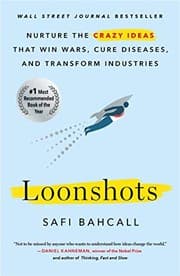
Loonshots: How to Nurture the Crazy Ideas That Win Wars, Cure Diseases, and Transform Industries
Safi Bahcall
A physicist-turned-CEO uses phase transitions to explain why some companies kill their breakthrough ideas and others nurture them, and how to be the second kind.
The structure of the team eats the strategy of the team. Change the structure first.
Bahcall mixes science, business history, and a unique framework, the structure of an organization governs whether it can sustain loonshots (wild early-stage ideas) alongside franchise products (steady cash). The case studies, Vannevar Bush, James Bond, the Vasa warship, are unexpectedly clarifying, and the structural argument is the most original I've seen for why innovation withers in scale-ups.
If you can't write a one-page press release that excites a customer, you don't have a product worth building.
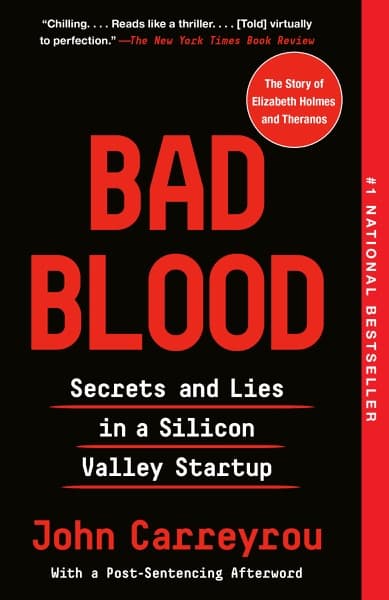
Bad Blood
John Carreyrou
The Wall Street Journal reporter who broke the Theranos story tells the full collapse, from Stanford dropout to fraud trial, in real-thriller pacing.
Bad products survive in companies where no one is allowed to bring the bad news.
Carreyrou's reporting was the indictment; the book is the autopsy. For product people, the value is in seeing what happens when culture, governance, and a charismatic founder combine to suppress the kind of bad-news flow that would normally kill a doomed product. The chapters on internal whistleblowers and the kinds of pressure they faced are required reading for any senior PM who's ever felt they should escalate something and didn't.
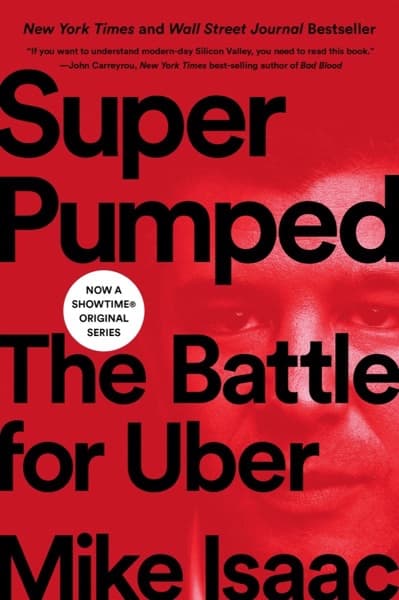
Super Pumped
Mike Isaac
The New York Times reporter on the Travis Kalanick era at Uber, the growth, the surveillance tools, the executive shakeups, and the board coup that ended it.
Velocity without judgment is just acceleration toward the wall you didn't see.
Isaac's reporting on Uber for years was the basis for the book; the result is the best business narrative of the 2010s startup cycle. For PMs the lesson is structural: how a company can ship faster than anyone else and still be vulnerable to itself. The internal politics around the Greyball tool and the executive escalation patterns are case studies in what happens when product velocity outruns governance.
Hard drive
James Wallace
The 1992 biography of Bill Gates and early Microsoft, written before the antitrust trial, with access to the people who built MS-DOS and Windows 3.
The decisions that made Microsoft were small, technical, and ruthless. The legend came later.
Older than most books on this list, and that's the point: Hard Drive captures a company in mid-flight, before the legend hardened. The depth on early product decisions, the IBM PC deal, the Excel-Lotus war, the OS/2 schism, is unmatched. Read it for the operator-level view of how an early-stage product company turned into the dominant one of its era.
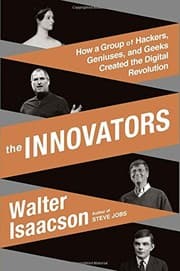
The Innovators
Walter Isaacson, Francisco José Ramos Mena, Marcos Pérez Sánchez, Inga Pellisa Díaz
Isaacson's group biography of the people who built the digital revolution, from Ada Lovelace through Larry Page, and the collaborative patterns that recur across centuries.
The hero of the digital age isn't a person. It's a particular kind of pair.
Less a how-to than a long argument that innovation is a team sport, told through specific stories about specific collaborations (Eckert-Mauchly, Noyce-Moore, Wozniak-Jobs, Brin-Page). The cumulative effect is to make you suspicious of any single-founder myth, and curious about the kinds of partnership that produced the products you use every day. The best history-of-tech book in print.
Can we tailor this list for you?
Type your question in the bar below and the AI will tailor a fresh set of picks just for you.