Best Books for Aspiring Data Scientists
Data science rewards people who can reason with uncertainty, and these books build that muscle from every angle. James and Hastie's An Introduction to Statistical Learning teaches the methods, Geron's Hands-On Machine Learning puts them in code, and Spiegelhalter's The Art of Statistics keeps the thinking honest.
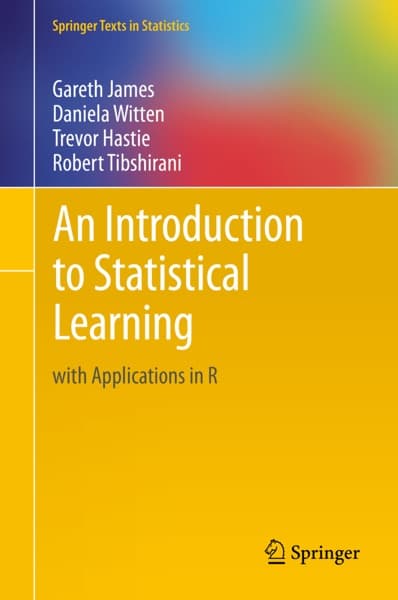
An Introduction to Statistical Learning
Gareth James, Daniela Witten, Trevor Hastie, Robert Tibshirani
The book that taught a generation how machine learning actually works without drowning them in proofs.
Understand the bias-variance tradeoff before any algorithm.
James, Witten, Hastie, and Tibshirani cover regression, classification, trees, and resampling with just enough math and worked examples in R and Python. It is the standard first course for anyone serious about modeling. Ideal for students and practitioners who want concepts they can defend.
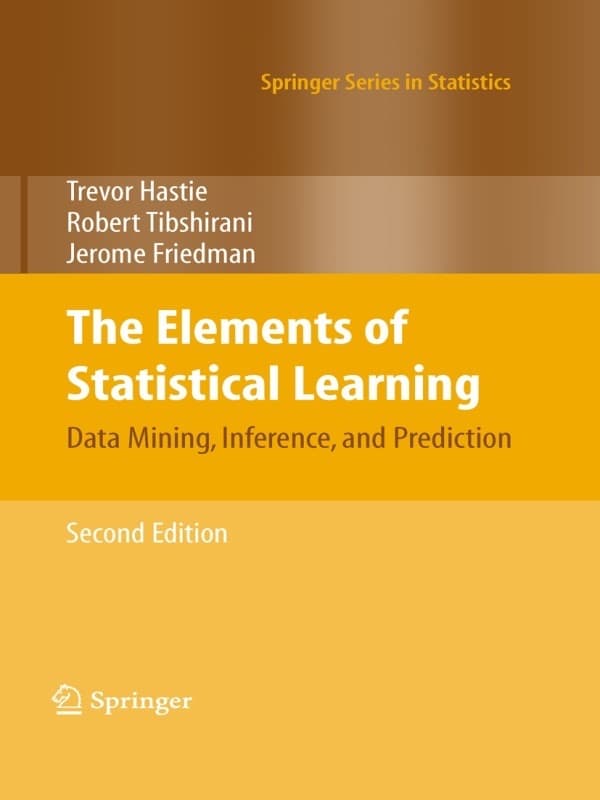
The Elements of Statistical Learning
Trevor Hastie, Robert Tibshirani, Jerome Friedman
The graduate-level bible that every serious data scientist eventually has to wrestle with.
Regularization is how you trade fit for generalization.
Hastie, Tibshirani, and Friedman go deep on the theory behind statistical learning, from regularization to boosting to high-dimensional inference. It rewards readers who already know calculus and linear algebra and want the full mathematical picture. Best as a reference you grow into, not a first read.
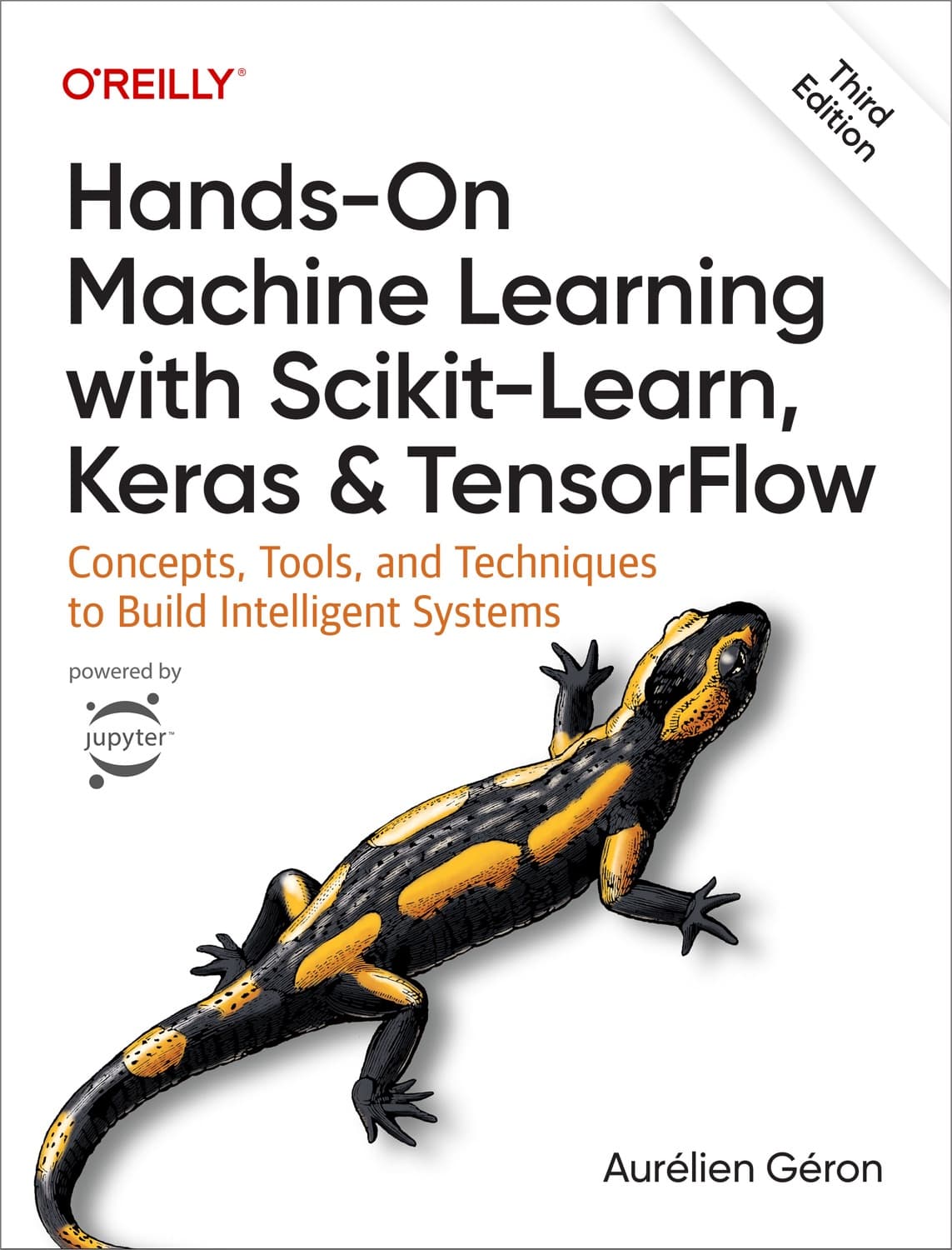
Hands-On Machine Learning with Scikit-Learn, Keras, and TensorFlow
Aurelien Geron
The hands-on companion that turns machine learning theory into code that actually runs.
Build the full pipeline before optimizing any single step.
Aurelien Geron walks through end-to-end projects in scikit-learn and deep learning frameworks, covering data prep, model tuning, and deployment. Every chapter ends with something you can execute. Perfect for practitioners who learn by building rather than by reading proofs.
Python For Data Analysis
Wes McKinney
Written by the creator of pandas, this is the data-wrangling manual the whole field runs on.
Most data science is cleaning data, not modeling it.
Wes McKinney teaches the unglamorous craft that consumes most of a data scientist's time: loading, cleaning, reshaping, and aggregating real data with pandas and NumPy. It is the definitive reference for the Python tooling. Essential for anyone doing analysis day to day.
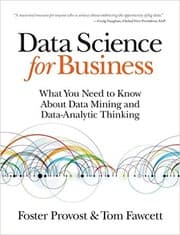
Data Science for Business
Foster Provost, Tom Fawcett
The rare book that teaches you to think about which problems are worth modeling at all.
Frame the business question before choosing a model.
Foster Provost and Tom Fawcett frame data science as a set of fundamental principles for extracting business value, not a list of algorithms. It connects technical methods to decisions and ROI. Best for analysts and managers who need to know when a model is worth building.
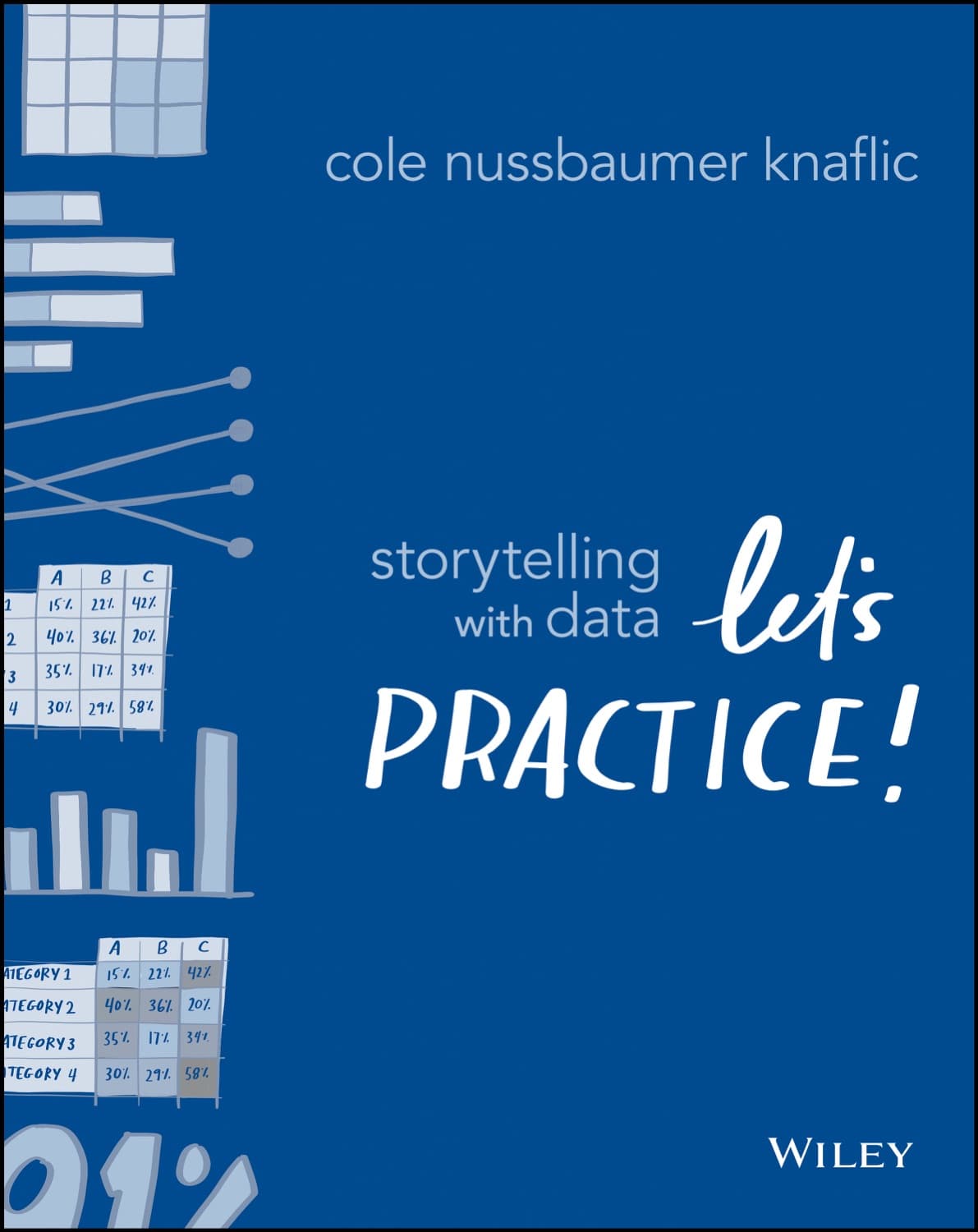
Storytelling with Data
Cole Nussbaumer Knaflic
A chart that nobody understands is a wasted insight, and this book fixes that.
Eliminate everything that does not earn its ink.
Cole Nussbaumer Knaflic teaches how to strip clutter, direct attention, and turn analysis into a story decision-makers act on. It treats communication as a core data skill, not an afterthought. Indispensable for anyone whose work has to persuade an audience.
Regularization is how you trade fit for generalization.
The Art of Statistics
David Spiegelhalter
A masterclass in reasoning from data by one of the world's clearest statistical minds.
Always ask what question the numbers actually answer.
David Spiegelhalter uses real cases, from cancer survival to crime trends, to teach how statistics answers human questions and where it deceives. He focuses on judgment over formulas. Perfect for anyone who wants to interpret numbers wisely without a heavy math background.
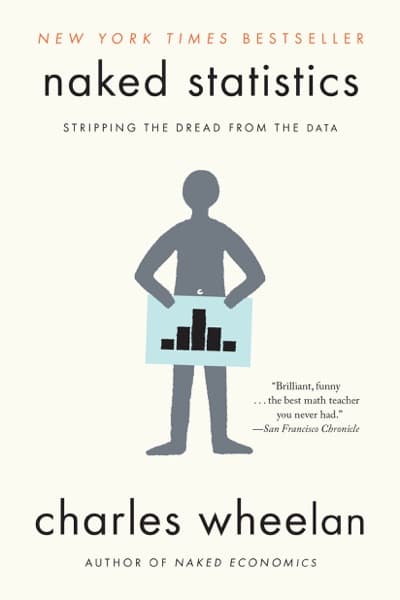
Naked Statistics
Charles Wheelan
Statistics finally explained the way a witty friend would over coffee.
Correlation describes a pattern, not a cause.
Charles Wheelan demystifies probability, correlation, regression, and inference with humor and everyday examples. It builds the intuition that formal textbooks assume you already have. The ideal on-ramp for beginners intimidated by equations.
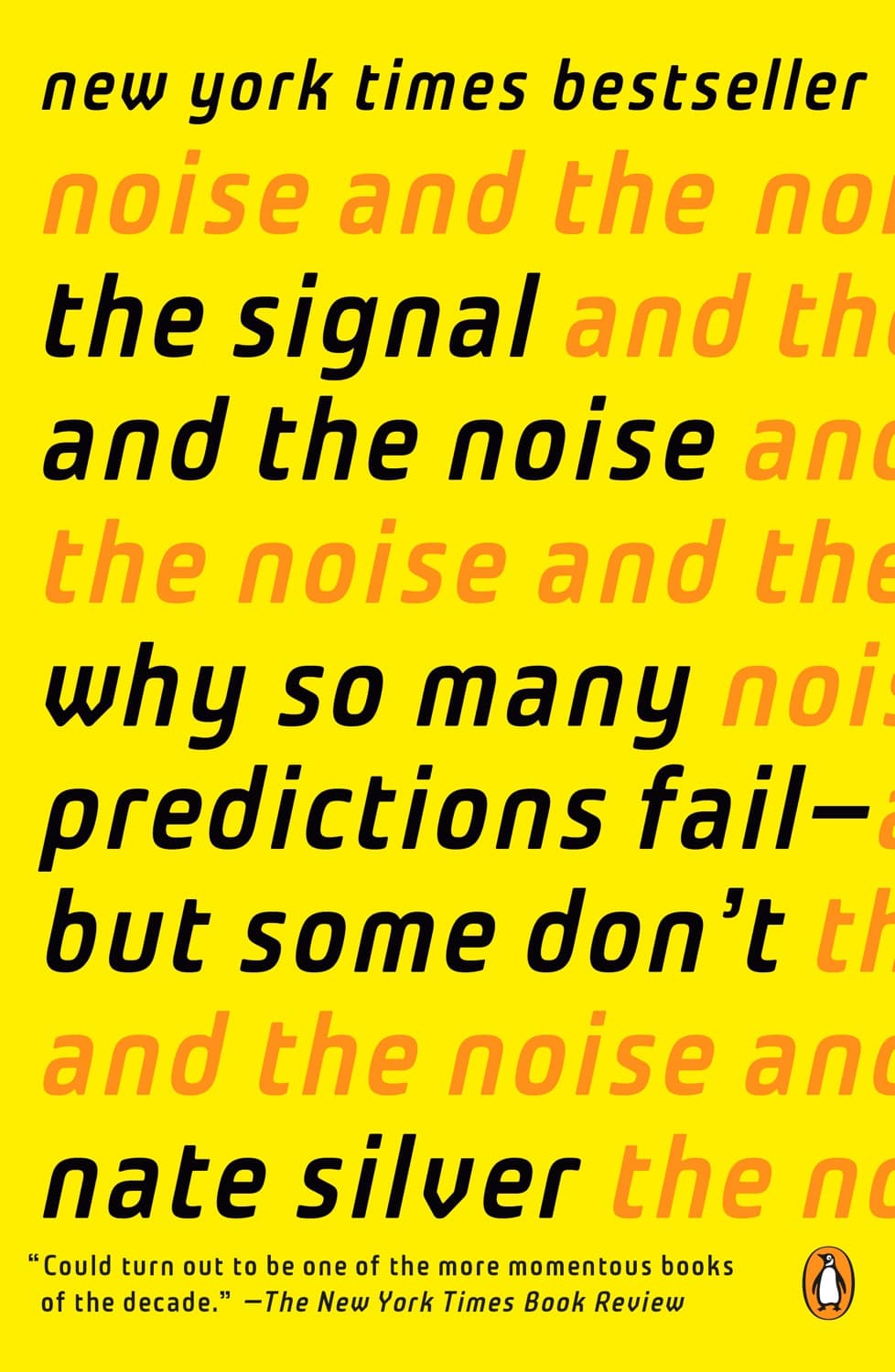
The Signal and the Noise
Nate Silver
Why most predictions fail, told through poker, weather, and elections.
Separate the signal from the seductive noise.
Nate Silver examines how experts forecast and where they go wrong, making a powerful case for probabilistic thinking and Bayesian updating. It is a popular book with real statistical substance. Great for anyone who wants to reason about uncertainty in the real world.
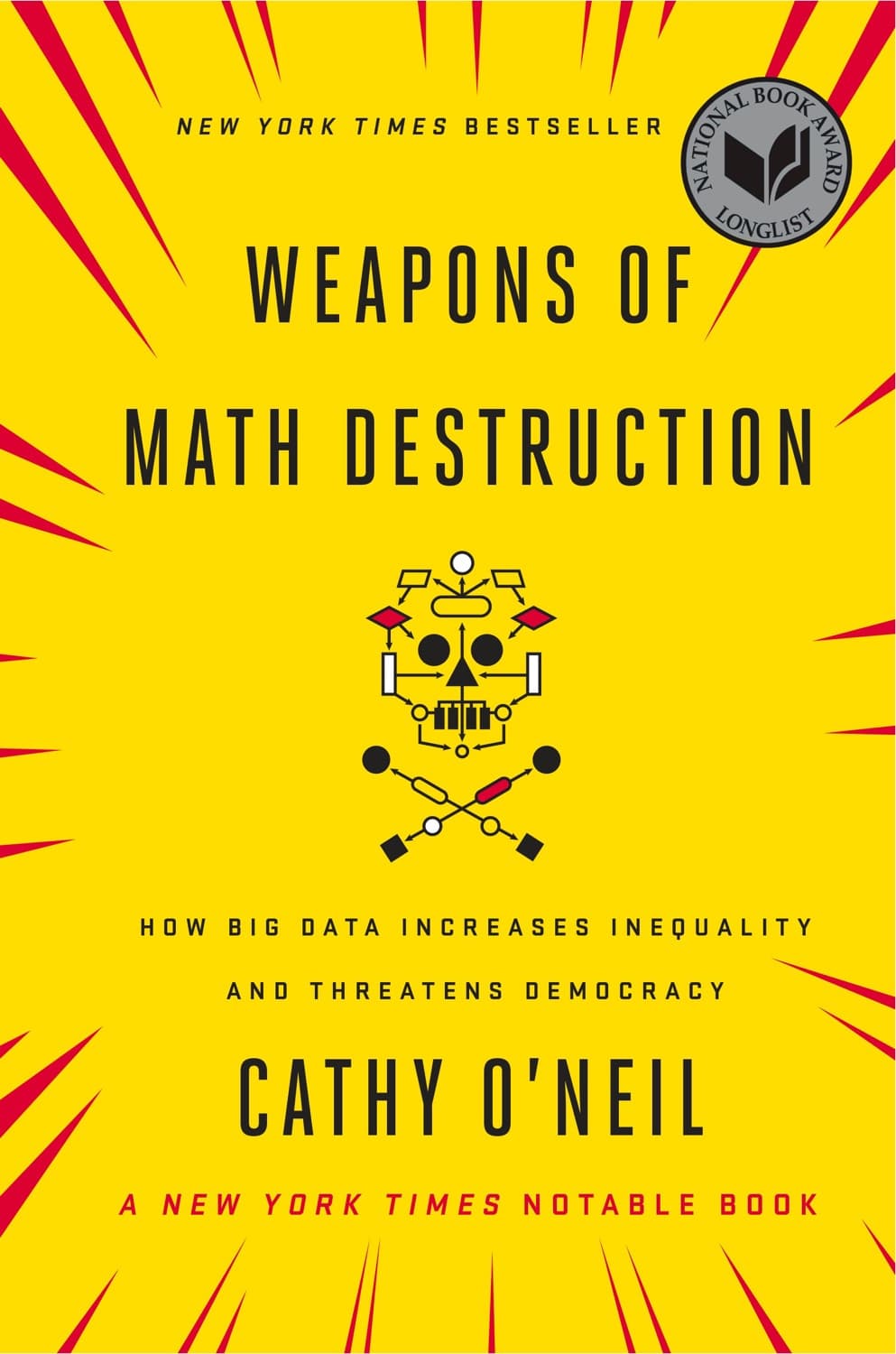
Weapons of Math Destruction
Cathy O'Neil
The book that exposed how algorithms can quietly scale injustice.
A model is only as fair as its feedback loop.
Cathy O'Neil shows how opaque models in credit, policing, and hiring entrench bias under a veneer of objectivity. It is a conscience for anyone building systems that affect people. Required reading for practitioners who want to deploy models responsibly.
Can we tailor this list for you?
Type your question in the bar below and the AI will tailor a fresh set of picks just for you.