Best Books on Philosophy of Science
Philosophy of Science gets sharper when you read Kuhn’s paradigm shifts, Popper’s falsifiability, and Feyerabend’s attack on method: three lenses that expose how “science works” depends on what you think counts as evidence.
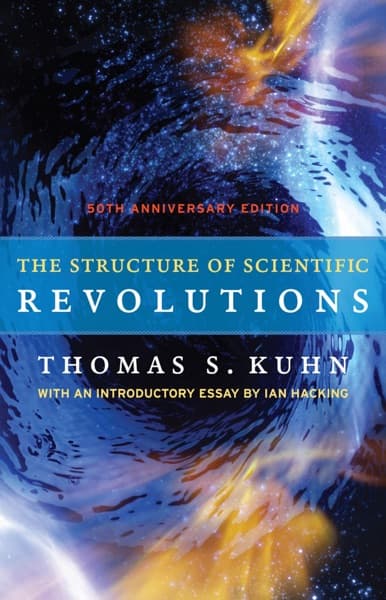
The Structure of Scientific Revolutions
Thomas S. Kuhn, Dennis Holland
Finish it and you’ll read science as a history of competing worldviews, not a smooth march of truth.
Paradigms organize what counts as evidence.
Kuhn turns scientific change into a sociological and conceptual process: paradigms guide what counts as a problem and what counts as a solution. That shift matters for Philosophy of Science because it reframes “method” as something communities do, not something logic guarantees.
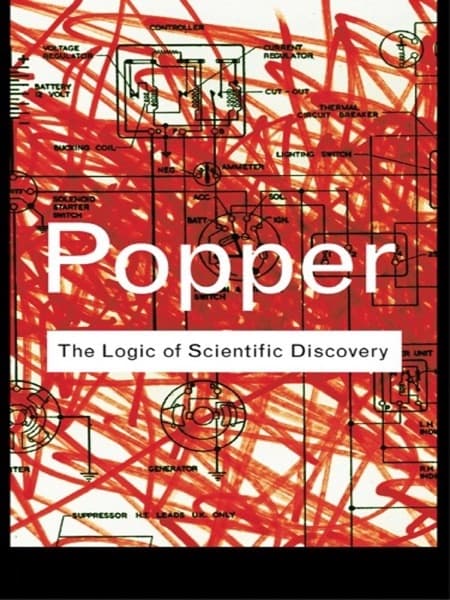
The Logic of Scientific Discovery
Karl Popper
You come away thinking science is defined by the risk of being proven wrong, not by proving itself right.
A theory is scientific if it can be falsified.
Popper sharpens the philosophy of scientific method around falsifiability: theories should make bold predictions that can, in principle, refute them. For Philosophy of Science, it’s a grounding test for every claim that “verification” is the key to knowledge.
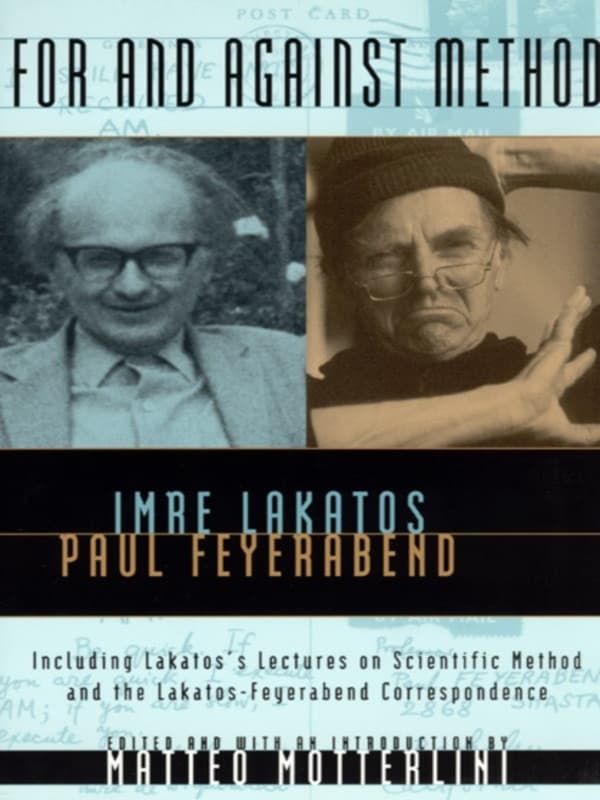
Against Method
Paul Feyerabend
After Feyerabend, you’ll see methodological rules as less like laws of thought and more like tools people use.
“Anything goes” challenges fixed methodological rules.
Feyerabend attacks methodological monism and argues that progress often depends on breaking established norms. In Philosophy of Science, that pushes you to justify your standards for evidence and inference, rather than assuming there’s one universal recipe.
Science and Hypothesis
Henri Poincaré
You’ll start noticing the hidden conventions in scientific thought, especially when mathematics and measurement enter the room.
Conventions shape how hypotheses fit experience.
Poincaré explores how scientific theories connect with geometry, choice of frameworks, and the conventions we adopt in order to model the world. That matters for Philosophy of Science because it complicates the naive idea that theories are purely “read off” from facts.
Philosophy of Natural Science
Carl G. Hempel
You leave with a crisp map of how explanations relate to laws, evidence, and confirmation.
Scientific explanation often uses laws.
Hempel offers a compact treatment of explanation, scientific laws, and how we justify claims using evidence. For Philosophy of Science, it gives you reusable conceptual tools to analyze what makes an account explanatory rather than merely descriptive.
What Is This Thing Called Science?
Chalmers, Alan
You’ll walk away with the sense that “science” is a family resemblance of methods and aims, not a single fixed essence.
Science resists a single essence.
Chalmers surveys the biggest problems that Philosophy of Science keeps revisiting: demarcation, induction, realism, and the status of scientific laws. It helps you compare frameworks without getting trapped in one definition of what “counts” as science.
A theory is scientific if it can be falsified.
The Scientific Image
Bas. C. van Fraassen
You finish it thinking the scientific aim is not truth about unobservables, but empirical adequacy.
Empirical adequacy replaces truth about unobservables.
van Fraassen defends a modern empiricist stance that shifts the target of scientific theorizing. That matters because Philosophy of Science debates hinge on what you think theories are trying to get right: observable phenomena only, or the hidden structure behind them.
Evidence and Evolution
Elliott Sober
You come away seeing evolutionary science as a battleground of arguments about evidence, not just a catalog of facts.
Inference to hypotheses is the heart of evidence.
Sober focuses on how inference works when we interpret evidence under competing hypotheses. In Philosophy of Science, he helps translate abstract epistemology into a live practice: how confirmation actually functions in scientific reasoning.
Explanation and Understanding
Georg Henrik von Wright
You’ll start treating explanation and understanding as different achievements, each with its own standards.
Explanation is not the same as understanding.
von Wright distinguishes causal explanation from interpretive understanding, clarifying what makes an account satisfy different epistemic goals. That matters because Philosophy of Science often blurs these roles, especially when social science meets natural science.
Fact, Fiction, and Forecast
Nelson Goodman
After Goodman, induction feels like a problem about projecting patterns, not merely collecting more data.
Projectibility decides what induction licenses.
He develops challenges around induction and “projectibility,” showing how different hypotheses can fit the same evidence while diverging on the future. For Philosophy of Science, this forces you to examine what justifies using evidence to predict beyond observed cases.
Can we tailor this list for you?
Type your question in the bar below and the AI will tailor a fresh set of picks just for you.