Best Books on Public Speaking: From Stage Fright to Standing Ovation
Public speaking is a skill, not a gift. The people who hold a room learned to structure a talk, manage nerves, and read an audience. These books span foundational classics, modern TED-era guides, and deep cuts on rhetoric and comedy. Start with your loudest problem, fear, dull content, or flat delivery, and let the rest follow.
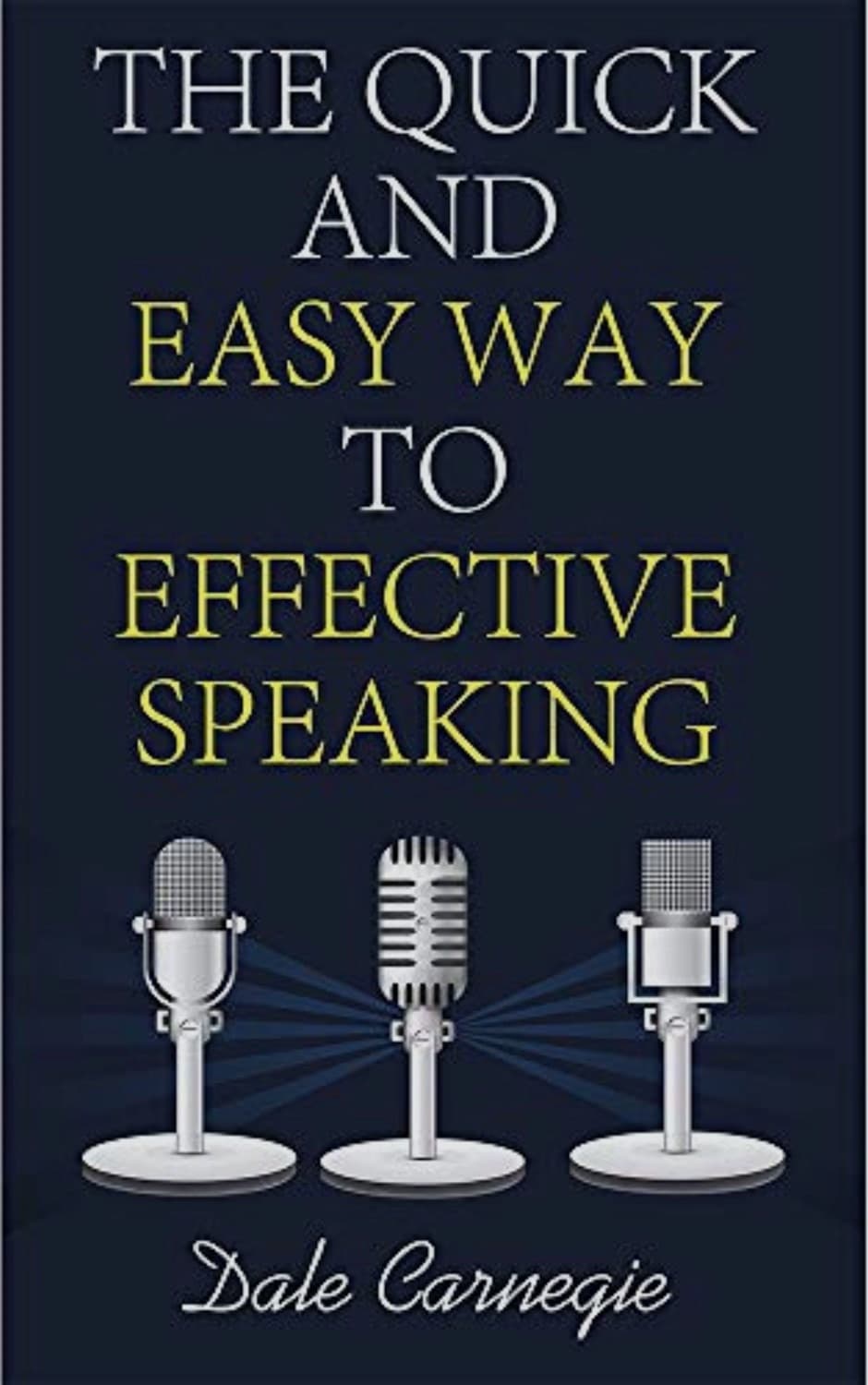
The Quick And Easy Way To Effective Speaking
Dale Carnegie
The grandfather of modern speaking advice.
Earn the right to speak by living the content first; preparation is gathered experience, not memorized lines.
Carnegie distilled decades of teaching adults to speak into a few durable laws: talk only about what you have earned the right to discuss, and let conviction carry the room. It remains the clearest case that confidence is built through repetition, not born.
TED Talks
Chris Anderson
The modern standard, from the head of TED.
Every talk should give the audience one idea worth remembering; if you cannot name that idea in a sentence, the talk is not ready.
Anderson breaks down what separates the talks that spread from the ones that fade, building every talk around a single throughline idea you plant in the listener's mind. It is the best map of audience expectations after the TED era reshaped them.
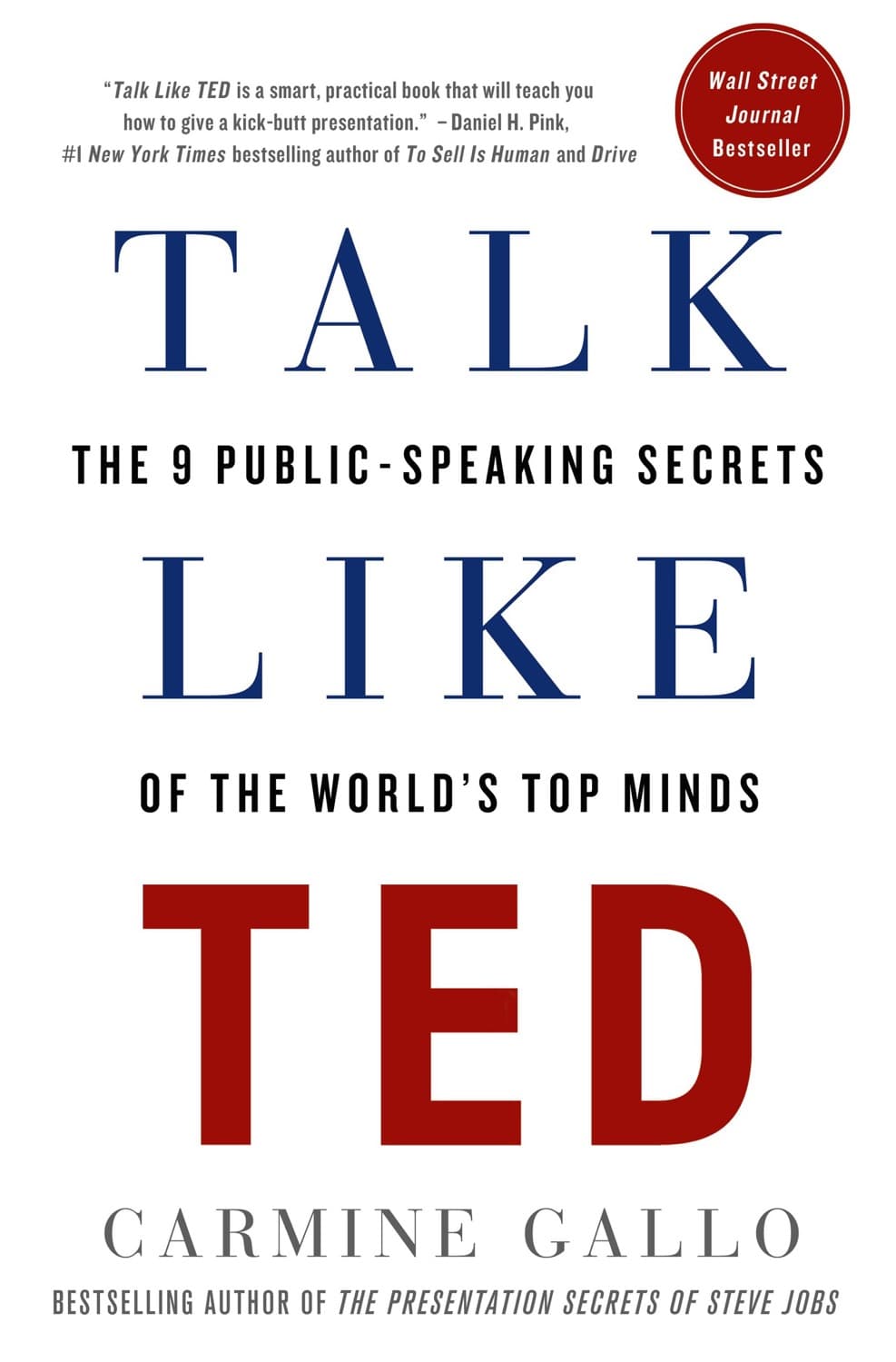
Talk Like TED
Carmine Gallo
Reverse-engineered from the most watched talks.
Audiences remember stories, not bullet points; budget most of your talk for narrative and the rest for data.
Gallo analyzed hundreds of the most viewed TED talks and found recurring moves: emotional storytelling, a jaw-dropping moment, and lightness. It turns the vague advice to be engaging into specific, copyable techniques.
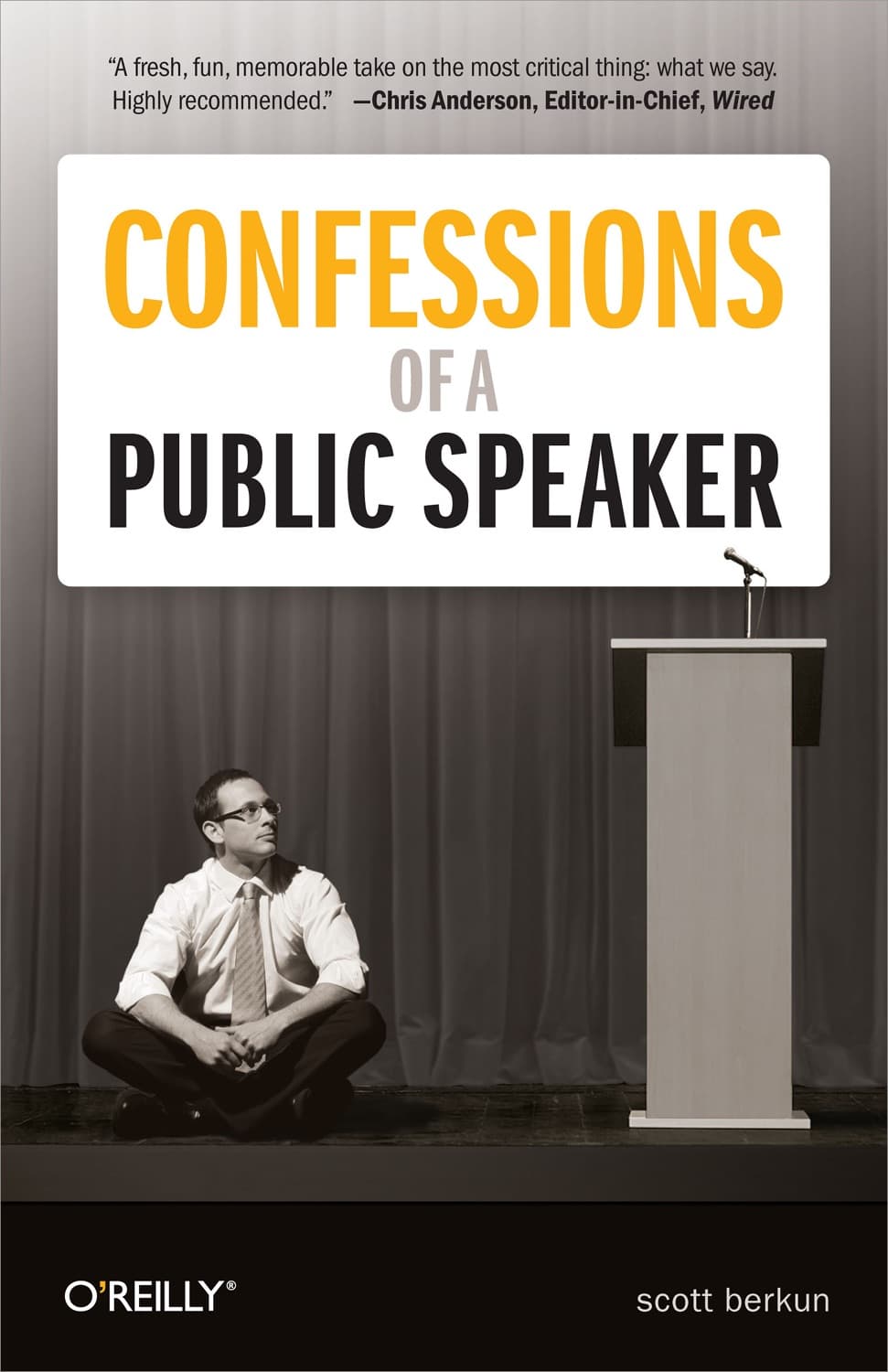
Confessions of a Public Speaker
Scott Berkun
An honest, funny look behind the lectern.
Audiences root for you, not against you; assume goodwill and most of your stage fear loses its grip.
Berkun, a veteran speaker, narrates his own disasters and recoveries: dead rooms, broken tech, hostile questions. The honesty is the lesson, because it shows that poise is mostly a set of rehearsed responses to things going wrong.
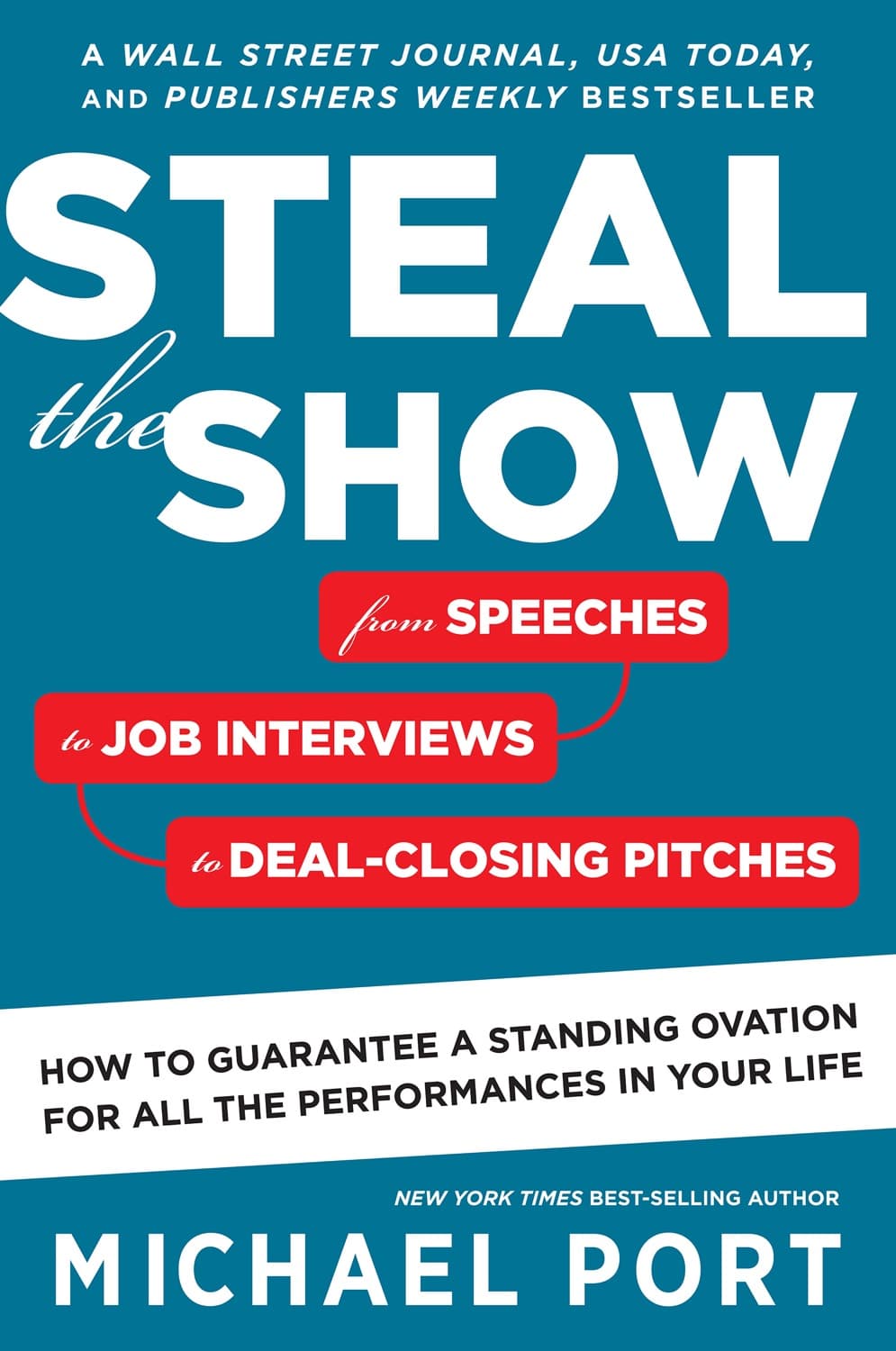
Steal the Show
Michael Port
Treat every high-stakes moment as a performance.
Decide what role you are playing before you walk in; clarity of role reads to an audience as confidence.
Port, a former professional actor, brings stagecraft to ordinary speaking: rehearsal, status, and playing a clear role in each scene. It is the strongest book here on presence and the physical side of holding attention.
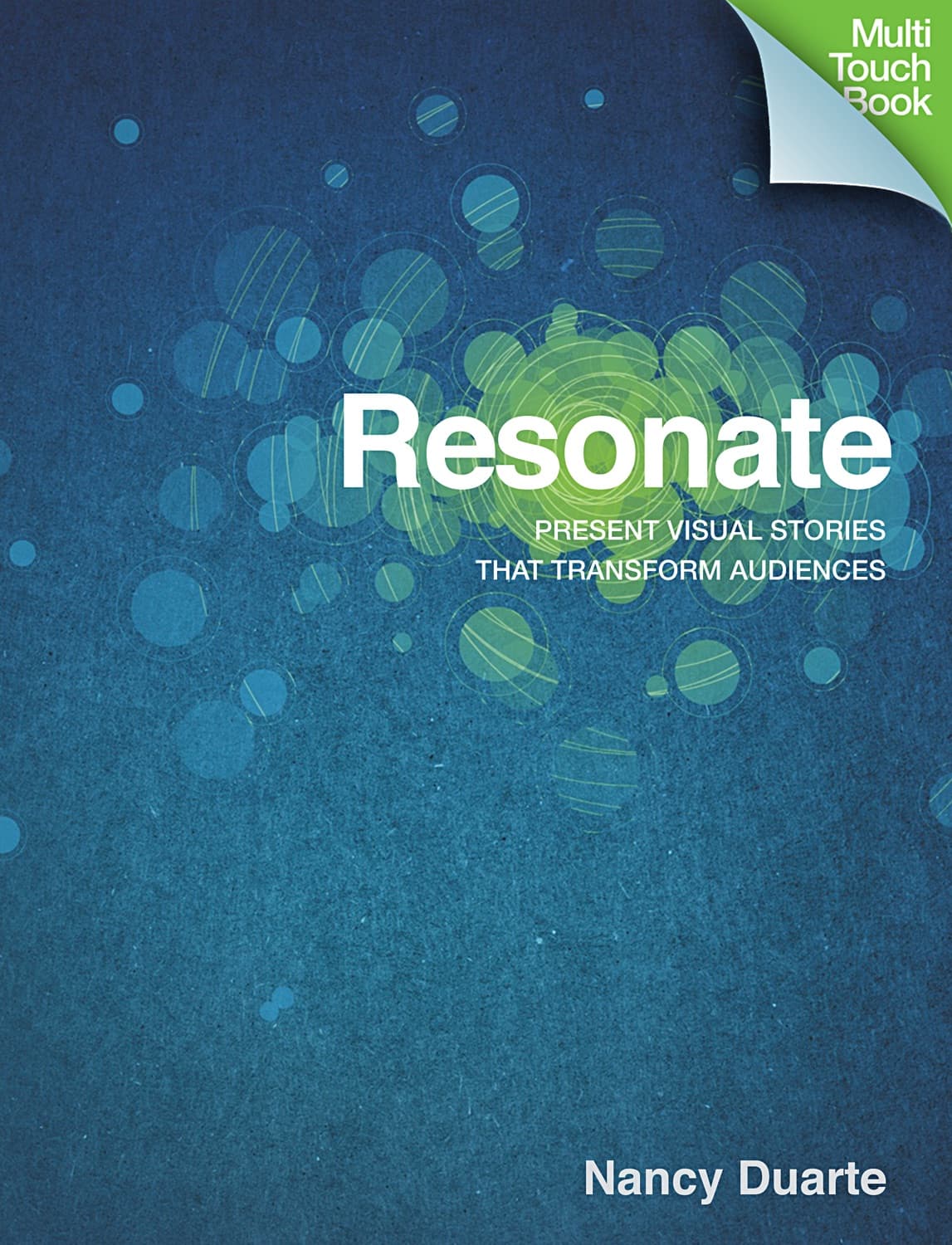
Resonate
Nancy Duarte
Structure a talk like a story with a hero.
Build contrast between the world as it is and the world as it could be; the gap between them is what holds attention.
Duarte maps presentations onto narrative shape, casting the audience as the hero and the speaker as the mentor who moves them from what is to what could be. It fixes the most common flaw in talks, a flat list of points with no tension.
Every talk should give the audience one idea worth remembering; if you cannot name that idea in a sentence, the talk is not ready.
Speak With No Fear
Mike Acker
A practical toolkit for speaking anxiety.
Over-rehearse only your first sixty seconds; once you survive the opening, momentum carries the rest.
Acker treats stage fright as a solvable problem with seven concrete strategies, from reframing adrenaline to rehearsing the opening until it is automatic. It is the most direct help here for the person whose real obstacle is panic.
Words Like Loaded Pistols
Sam Leith
Rhetoric from Aristotle to Obama, demystified.
Persuasion has a toolkit with names; learning the figures lets you build effects you used to stumble into by luck.
Leith makes the ancient machinery of persuasion usable: the appeals of ethos, pathos, and logos, and the named figures of speech that great speakers reach for. It explains why certain lines land, where most speaking books only say that they do.
Do You Talk Funny?
David Nihill
Borrow a stand-up comedian's toolkit.
Test a story on one person before a hundred; if it does not work across a dinner table, it will not work on stage.
Nihill, once terrified of speaking, trained by doing stand-up comedy and shares what transferred: timing, the rule of using true stories, and editing every line for impact. It is an unexpected but effective angle on holding a live audience.
Can we tailor this list for you?
Type your question in the bar below and the AI will tailor a fresh set of picks just for you.