Best Books on Peptides, Longevity, and Biohacking
Peptides went from clinic backrooms to the center of the wellness conversation. GLP-1 drugs like Ozempic reshaped weight loss, biohackers trade BPC-157 protocols, and the longevity industry sells the promise of resetting how the body ages. These books separate the real science from the marketing, from the clinic to the lab.
Outlive
Peter Attia, MD
The longevity physician's framework for adding healthy decades, not just years.
Optimize for healthspan, the decades you stay strong and sharp, because lifespan without function is the outcome nobody actually wants.
Attia lays out Medicine 3.0 and works through the actual levers of longevity, exercise, metabolic health, and the pharmacology behind the trend including GLP-1 drugs and rapamycin, with the rigor of someone who treats patients rather than sells supplements.
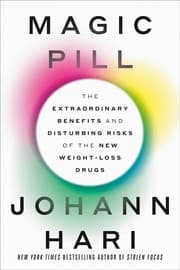
Magic Pill
Johann Hari
A journalist's reckoning with Ozempic after taking it himself.
The GLP-1 drugs work on the symptom; the reason a whole population suddenly needs them sits in the food supply, not in our willpower.
Hari investigates the GLP-1 peptide drugs at the heart of the trend, weighing dramatic weight loss against unknown long-term effects and the deeper question of why our food makes the drugs necessary, all reported from the inside as a user.
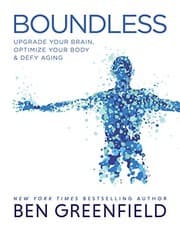
Boundless
Ben Greenfield
The maximalist encyclopedia of biohacking, peptides included.
Treat any protocol as an experiment with one variable at a time, or you will never know which lever actually moved the result.
Greenfield compiles the biohacker's full toolkit, and unlike most wellness books it addresses specific peptides like BPC-157 and growth-hormone secretagogues directly, which makes it the reference the online peptide community actually cites, hype and all.
Life Force
Tony Robbins, Peter H. Diamandis, Robert Hariri
A tour of the cutting-edge longevity marketplace, from stem cells to peptides.
The frontier therapies are real, but so is the marketing; ask what has been tested in humans before you pay for the promise.
Robbins and his coauthors survey the regenerative-medicine industry driving the trend, peptides, gene therapy, senolytics, and diagnostics, interviewing the clinicians and founders selling it, which makes the book a useful if optimistic map of what is actually for sale.
Lifespan
David Sinclair, Matthew D. LaPlante
The Harvard geneticist whose aging theory launched the supplement boom.
If aging is information loss rather than inevitable decay, the goal shifts from slowing the clock to restoring the body's original instructions.
Sinclair argues that aging is a single treatable process driven by a loss of epigenetic information, and his lab's work on sirtuins and NAD is what put molecules like NMN and the whole reverse-aging idea onto the trend's radar.
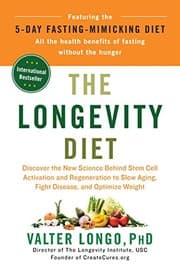
The Longevity Diet
Valter Longo
The biologist behind fasting-mimicking on how eating patterns switch aging on and off.
Periods of controlled fasting push the body out of growth mode and into repair, which is where much of the anti-aging benefit is thought to come from.
Longo connects the trend's obsession with growth and repair to the peptide hormones that fasting regulates, IGF-1 and growth hormone, and grounds it in both centenarian studies and his own clinical research rather than in speculation.
The GLP-1 drugs work on the symptom; the reason a whole population suddenly needs them sits in the food supply, not in our willpower.
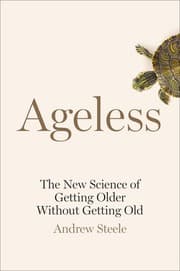
Ageless
Andrew Steele
A computational biologist's rigorous, hype-free account of why we age.
The most promising anti-aging target may be clearing out senescent 'zombie' cells, but promising in mice is a long way from proven in people.
Steele walks through the biology of aging, senescent cells, telomeres, and the senolytic drugs meant to clear them, and serves as the essential skeptical counterweight, showing which longevity claims rest on evidence and which are still hope dressed as science.
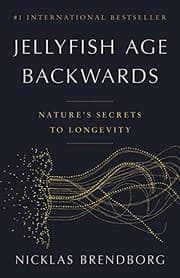
Jellyfish Age Backwards
Nicklas Brendborg
A molecular biologist's surprising tour of the organisms that barely age.
Nature already solved negligible aging in a handful of species, so the real question is not whether it is possible but which of its tricks we can borrow.
Brendborg explores why some jellyfish, tortoises, and naked mole rats seem to cheat aging, turning the science of longevity into a genuinely surprising natural-history detective story that reframes what the human trend is really chasing.
Can we tailor this list for you?
Type your question in the bar below and the AI will tailor a fresh set of picks just for you.