Best Books on AGI: What It Is, Its Dangers, and When It Arrives
Artificial general intelligence is the field's most consequential idea and its most abused word. These nine books cut through the fog along the three questions that matter: what AGI is, what it could do to us, and when it might arrive. The list is argumentative on purpose, pairing the canonical risk text with a skeptic and an optimist.
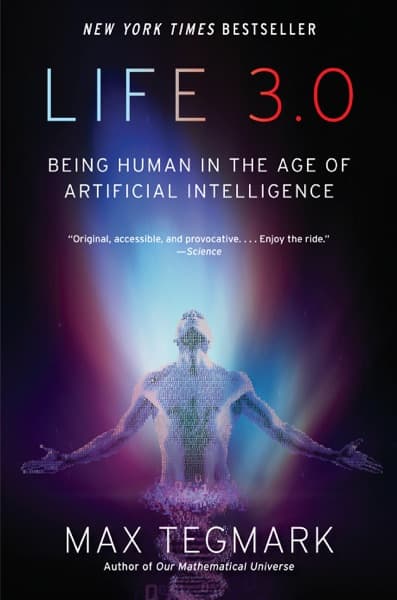
Life 3.0
Max Tegmark
The clearest map of what a world with general intelligence could actually look like.
Intelligence is substrate-independent. What matters is the pattern of information processing, not whether it runs on neurons or silicon, which is why human-level machine minds are physically possible at all.
Tegmark, a physicist, frames AGI as the next stage of life: matter that can redesign both its software and its hardware, and walks through a dozen concrete futures it could produce rather than asserting one.
Artificial Intelligence
Melanie Mitchell
The essential skeptic: why machines are further from real understanding than the hype claims.
The 'barrier of meaning': AI can match patterns at superhuman scale yet lacks the grounded, common-sense understanding a child has, and no one knows how to cross that gap.
Mitchell, a working AI researcher, explains how today's systems actually work and where they break, making the case that genuine general intelligence requires common sense and abstraction current methods do not have.
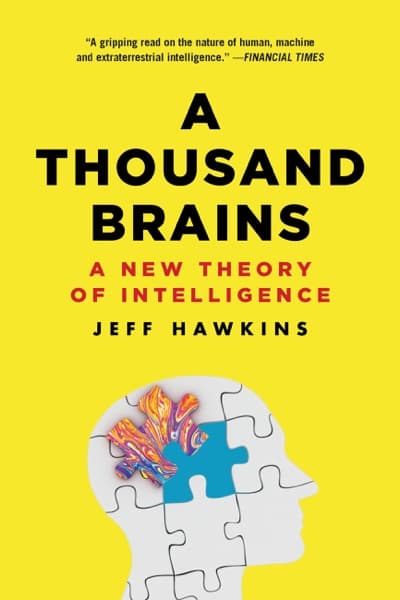
A Thousand Brains
Jeff Hawkins
A neuroscientist's theory of what intelligence is, and what a machine would need to have it.
The cortex runs the same algorithm everywhere, learning a model through movement and prediction; an AGI built this way would understand by constructing reference frames, not by memorizing statistics.
Hawkins argues the neocortex builds thousands of parallel models of the world from reference frames, and that copying this architecture, not scaling today's networks, is the actual road to general intelligence.
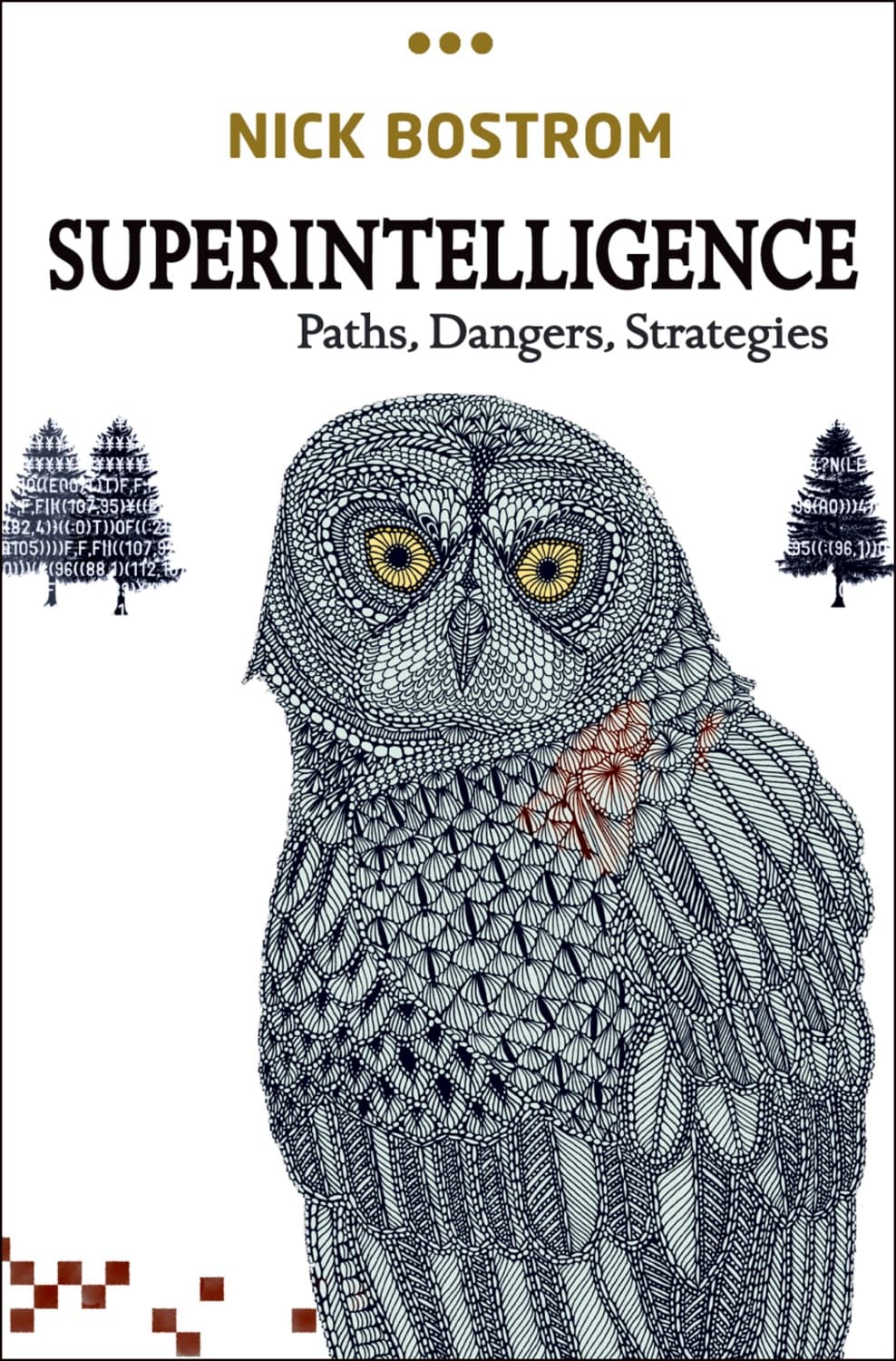
Superintelligence
Nick Bostrom
The book that turned AGI safety from a fringe worry into a serious academic field.
The control problem: the hard part is not building a superintelligence but specifying what it should want, because a system optimizing a slightly wrong goal with vast capability is catastrophic, not merely buggy.
Bostrom rigorously works through what happens if a machine surpasses human intelligence: how fast it could take off, why its goals would not automatically match ours, and why a single mistake might be unrecoverable.
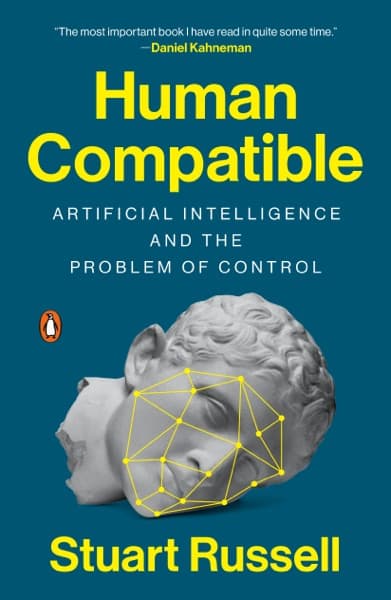
Human Compatible
Stuart Russell
A founder of modern AI explains why the field's basic design assumption is dangerous.
Design AI to be provably deferential: a machine unsure of the true objective will ask, accept correction, and allow itself to be switched off, where a confident one resists.
Russell, who co-wrote the standard AI textbook, argues the whole paradigm of giving machines fixed objectives is the flaw, and proposes building systems that stay uncertain about what humans want and defer to us.
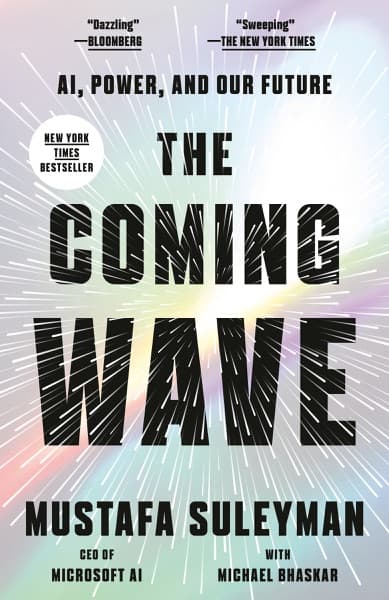
The Coming Wave
Mustafa Suleyman, Michael Bhaskar
From an AI lab founder: the technology is arriving faster than we can contain it.
Containment is the central problem of the century: every prior powerful technology eventually spread to everyone, and AI, being software, will spread faster and cheaper than any of them.
Suleyman, who co-founded DeepMind, argues the real near-term danger is proliferation, that powerful AI and biotech will spread too cheaply and quickly for current states and institutions to govern safely.
The 'barrier of meaning': AI can match patterns at superhuman scale yet lacks the grounded, common-sense understanding a child has, and no one knows how to cross that gap.
The Singularity Is Nearer
Ray Kurzweil
The most committed optimist puts a date on it: human-level AI by 2029.
His specific wager: AI passes the Turing test by 2029 and human and machine intelligence merge by 2045, because compute price-performance has held its exponential curve for over a century of distinct technologies.
Kurzweil updates his decades-old forecasts with current data, arguing exponential progress in computing makes human-level AI by 2029 and a merger of human and machine intelligence by 2045 not just possible but on schedule.
The Myth of Artificial Intelligence
Erik J. Larson
The sharpest case that AGI is not on the road today's AI is driving.
Intelligence depends on abductive reasoning, the inspired guess that best explains the evidence, and no amount of data or raw scale has ever been shown to produce it.
Larson, an AI researcher, argues that current systems excel at narrow pattern-matching but cannot perform the inferential leaps real reasoning needs, so the confident near-term timelines rest on a basic logical mistake.
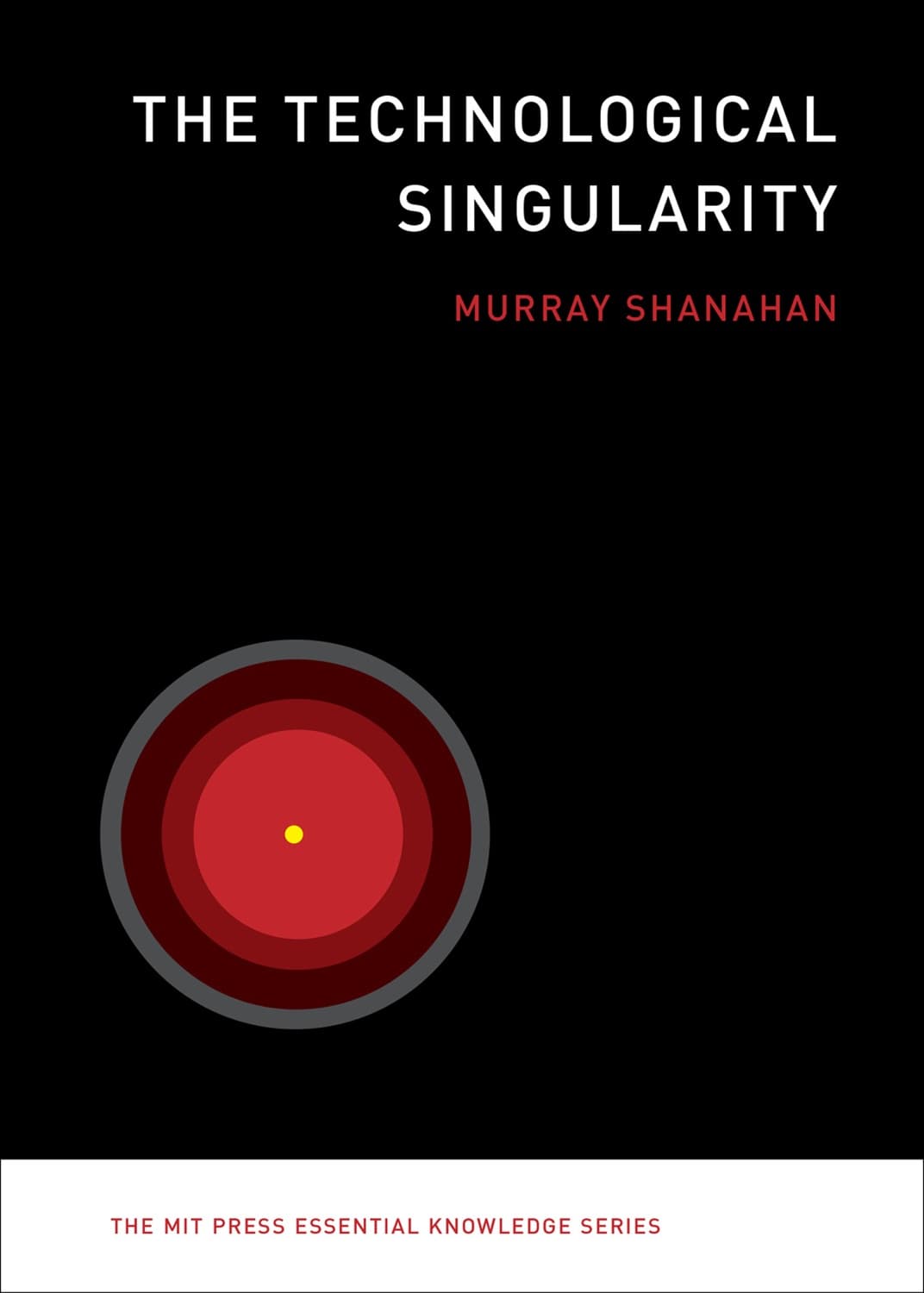
The Technological Singularity
Murray Shanahan
A short, neutral primer on the actual routes machines could take to superintelligence.
Whether superintelligence comes by emulating a brain or engineering one from scratch changes everything about its timing and its risks; the date is unknowable because it hinges on which path succeeds first.
Shanahan, a DeepMind researcher, lays out the two main paths to general AI, brain emulation and engineered cognition, and reasons calmly about what each would mean and how soon it is plausible, without hype or doom.
Can we tailor this list for you?
Type your question in the bar below and the AI will tailor a fresh set of picks just for you.