Best Books on the 2008 Financial Crisis & Housing Collapse
The 2008 Financial Crisis and housing collapse come into focus through books like The big short and All the Devils Are Here: you leave with a practical lens for how mortgage incentives turned into global panic.
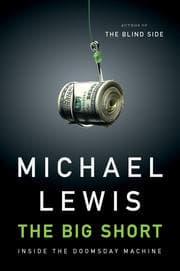
The big short
Michael Lewis, Francisco José Ramos Mena
After finishing The big short, mortgage paper no longer feels like finance jargon: it reads like a system with perverse incentives that rewarded bets against safety.
CDOs bundled risk so blame got scattered.
Lewis follows the people who understood the housing machine was rotten, then shows how CDOs and mortgage bonds translated that rot into risk everyone else pretended not to see. For a crisis-and-housing lens, it makes the chain from underwriting to collapse feel unavoidable and specific.
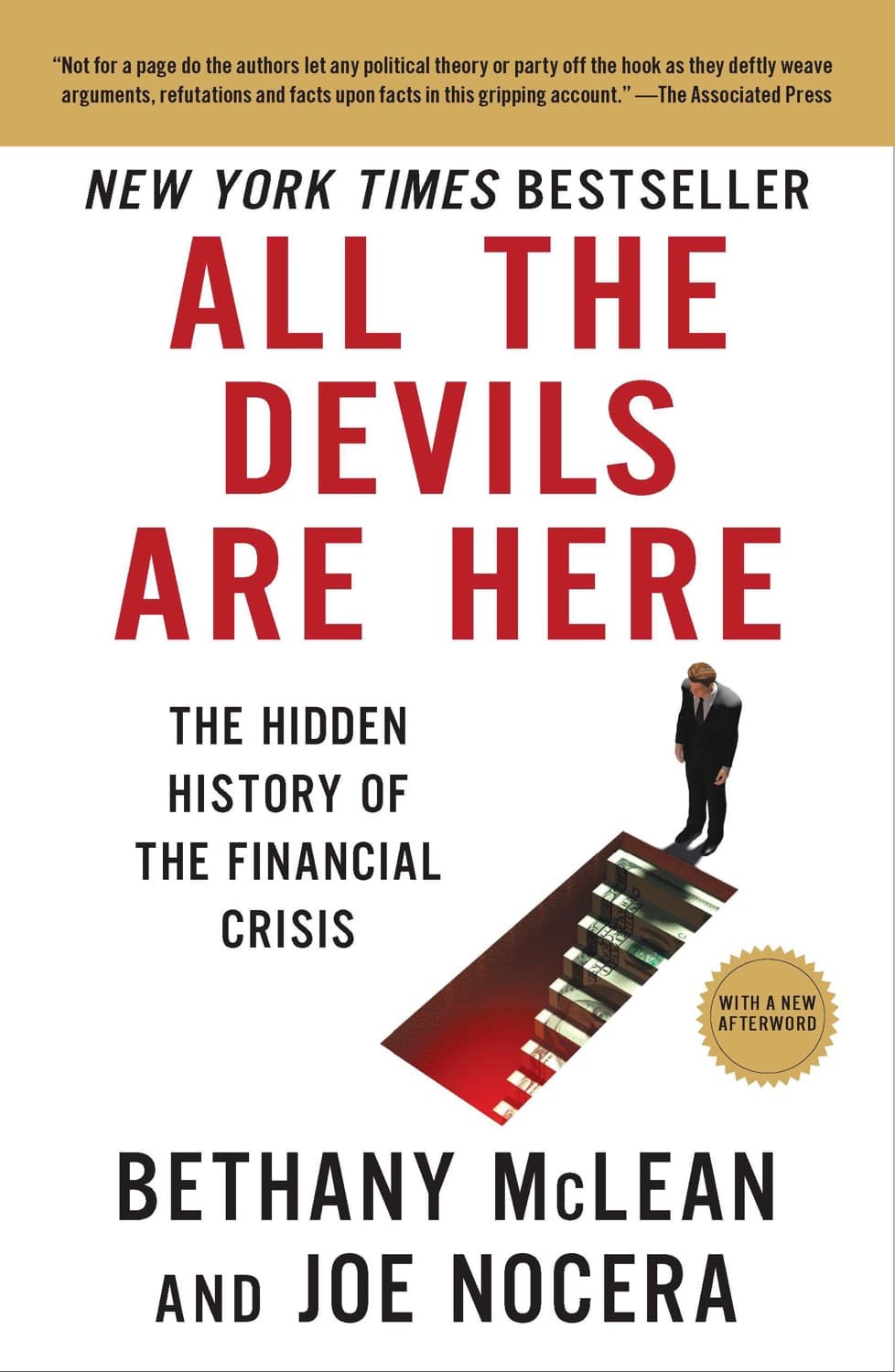
All the Devils Are Here
Bethany McLean, Joe Nocera
All the Devils Are Here turns the housing bubble into a design problem: a set of choices that let the financial system offload consequences until everything snapped.
The bubble scaled faster than accountability.
McLean and Nocera connect the bubble’s early assumptions to the global financial crash, tracing how institutional incentives and failure-to-understand spread through markets. If you want the housing collapse to explain the broader 2008 panic, this threads the whole path together.
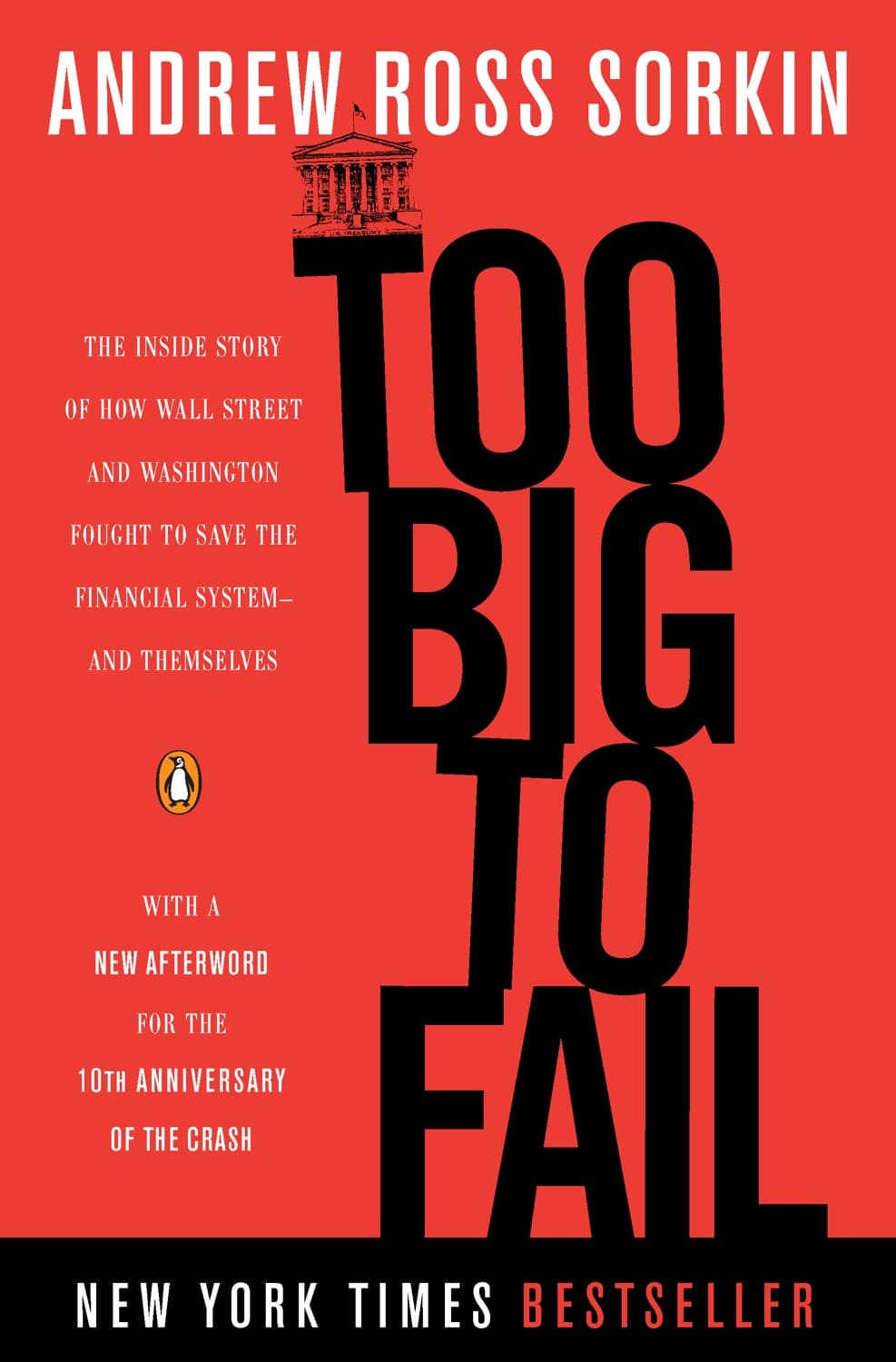
Too Big to Fail
Andrew Ross Sorkin
Too Big to Fail makes 2008 feel like one continuous emergency, where every decision had a clock attached and moral hazard was the constant background.
Fear of contagion drove emergency policy.
Sorkin delivers an insider chronicle of the panic and rescue, showing how policymakers wrestled with banks, liquidity, and public trust under extreme uncertainty. For readers focused on the crisis mechanics, it clarifies why “rescue” often meant choosing which risks would be socialized.
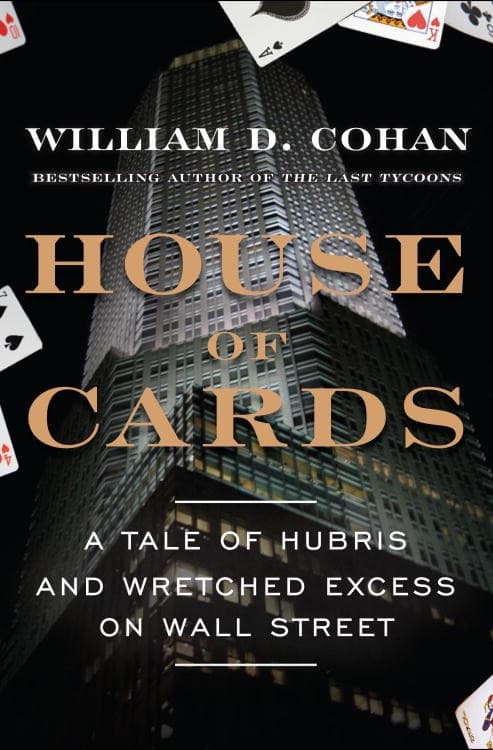
House of Cards
William D. Cohan
House of Cards reframes the Bear Stearns implosion as the logical outcome of mortgage-linked finance, not a freak corporate accident.
Mortgage exposure hid inside complex leverage.
Cohan centers the fall of a major institution and ties it directly to the mortgage crisis that was quietly poisoning balance sheets. That direct linkage is the point for anyone studying how the housing collapse propagated into bank failure and market-wide trust loss.
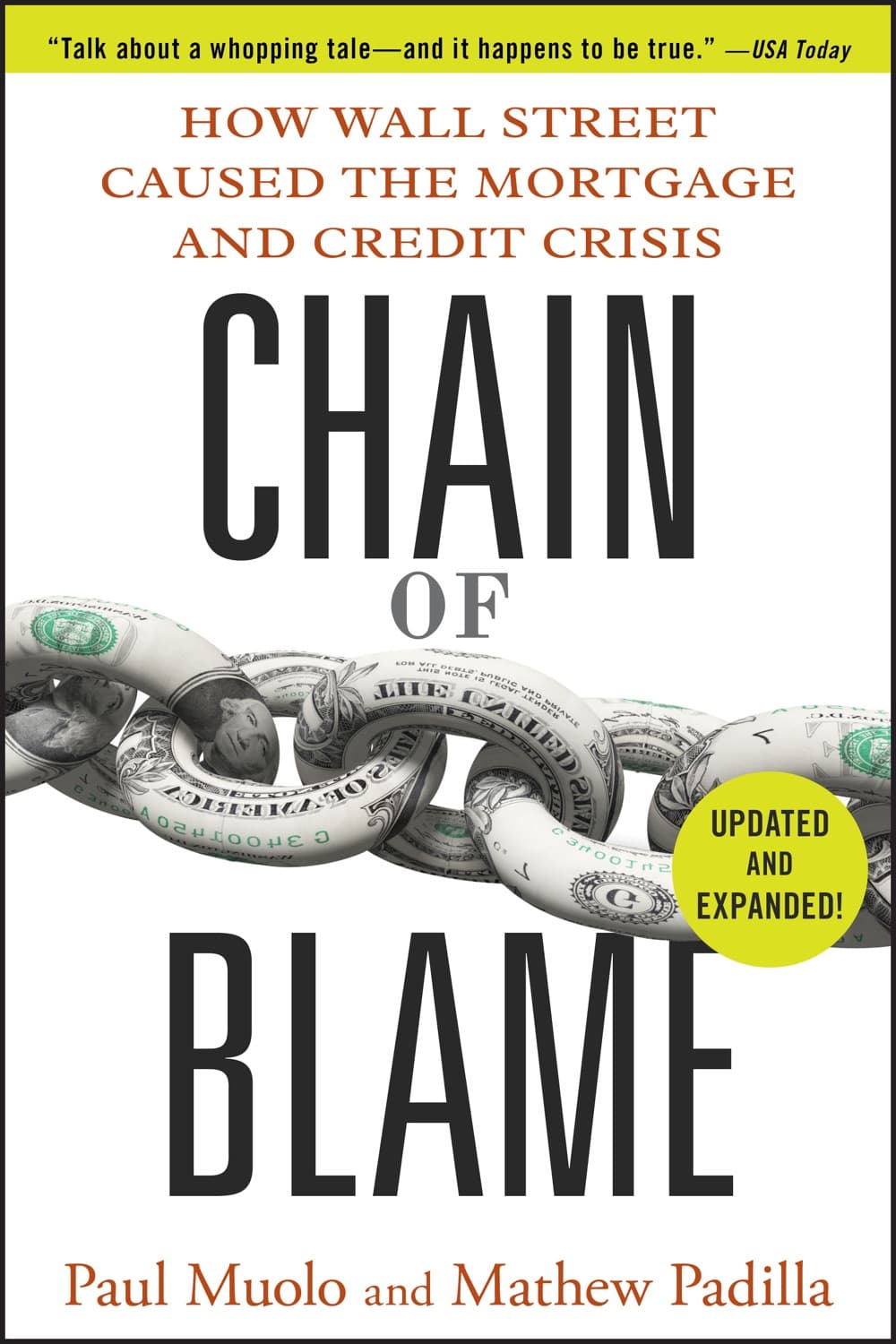
Chain of Blame
Paul Muolo, Mathew Padilla
Chain of Blame leaves you with a clear map of responsibility: the crisis wasn’t only one villain, it was a network of incentives that kept shifting risk onward.
Risk moved from originators to investors.
Muolo and Padilla focus on reporting that traces how the housing bubble was built and how mortgage-machine failures stacked into systemic danger. For your topic, it helps you move beyond “bad luck” and toward who did what and why it kept working until it didn’t.
After the music stopped
Alan S. Blinder
After the music stopped teaches you to listen for the signals that “seemed fine” right up until liquidity vanished and policy had to improvise under stress.
Liquidity problems can become solvency problems fast.
Blinder offers a clear, authoritative overview of how the crisis unfolded, what governments did, and what the aftermath changed. For a housing collapse focus, it helps you connect foreclosure-era damage to financial-market behavior and the policy response.
The bubble scaled faster than accountability.
On the Brink
Paulson, Henry M., Jr., Barney Frank
On the Brink makes 2008 feel like high-stakes governance in real time, where the debate was always about consequences for households and for the financial system.
Stopping collapse required coordinated decisions.
With primary-source voices from the peak moments, it connects Treasury thinking to political realities and the urgent need to prevent collapse. For crisis-and-housing readers, it grounds policy choices in the lived stakes of the moment.
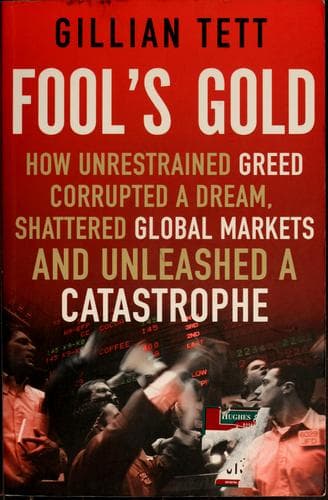
Fool's gold
Gillian Tett
Fool's gold shows how clever engineering can masquerade as safety, so when reality hits, the system doesn’t just fail it exposes the fraud of assumptions.
Complex CDOs hid exposure to the same risks.
Tett focuses on how CDO engineering and risk-model thinking amplified systemic exposure, turning complexity into a misunderstanding that spread. For the housing collapse aftermath, it’s the bridge between underwriting incentives and the mechanics that made the crash so contagious.
Can we tailor this list for you?
Type your question in the bar below and the AI will tailor a fresh set of picks just for you.