The Best Books on Economic Sanctions
Sanctions have become the default tool of statecraft, the option between a strongly worded letter and a war. These books explain how the United States learned to weaponize the dollar, the banking system, and the semiconductor supply chain against Russia, Iran, and China, why that power works, and where it quietly backfires.
The Economic Weapon
Nicholas Mulder
How blockade became a peacetime weapon.
Sanctions were born as a substitute for war, then quietly became a permanent form of low-grade economic warfare in their own right.
Mulder traces sanctions back to the World War I blockade and the League of Nations, showing that the tool was invented to be so terrible it would make war unnecessary.
Chokepoints
Edward Fishman
The definitive account of today's sanctions wars.
Control of the dollar clearing system lets Washington reach into transactions between two foreign firms that never touch American soil.
Fishman, a former State Department sanctions official, takes you inside the campaigns against Russia, Iran, and China, revealing how a handful of financial chokepoints became strategic weapons.
Underground Empire
Henry Farrell, Abraham Newman
The plumbing that turns commerce into coercion.
Globalization did not weaken American power; it built the very chokepoints that let Washington strangle an adversary's economy.
Farrell and Newman map how networks built for globalization, from dollar clearing to undersea cables, became instruments of surveillance and control the United States alone can switch off.
Treasury's War
Juan Zarate
The insider who invented modern financial sanctions.
The breakthrough was not sanctioning banks directly but scaring every other bank into refusing their business first.
Zarate helped build the tools after 9/11 and explains how the Treasury learned to isolate Iran and rogue banks by making the private financial sector afraid to touch them.

War by Other Means
Robert D. Blackwill, Jennifer M. Harris
Why economics is now the main theater of rivalry.
Great powers increasingly fight with capital, tariffs, and market access rather than armies, and China plays that game better than Washington.
Blackwill and Harris argue that the United States neglects the economic instruments of power that China wields fluently, from investment to trade coercion, and lays out how to compete.
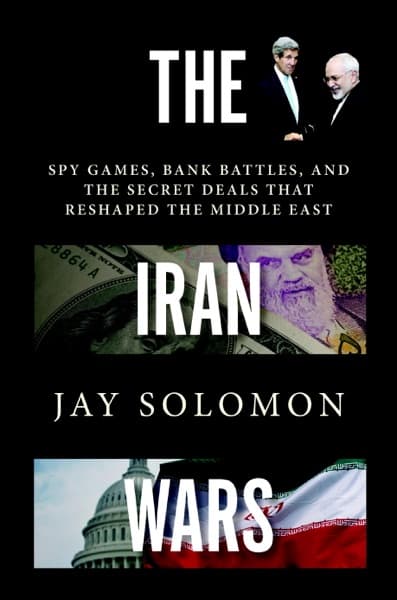
The Iran Wars
Jay Solomon
How sanctions squeezed Iran to the table.
The pressure that forced Iran to negotiate was less about oil than about cutting its banks out of the global dollar system.
Solomon, a veteran Wall Street Journal reporter, reconstructs the covert financial campaign that isolated Tehran and set up the nuclear negotiations, the most cited case of sanctions coercion.
Control of the dollar clearing system lets Washington reach into transactions between two foreign firms that never touch American soil.
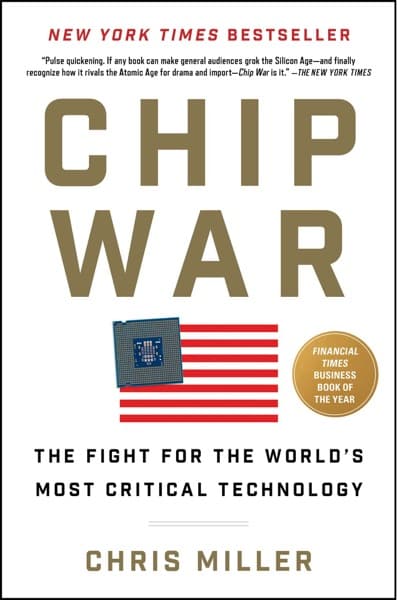
Chip War
Chris Miller, Chris Miller
Export controls as the new front against China.
A single Dutch company's machines are a chokepoint so narrow that denying them can set back a rival nation's entire chip industry.
Miller shows why semiconductors became the decisive chokepoint, and how Washington's controls on chipmaking tools aim to freeze Beijing's most advanced ambitions in place.
Can we tailor this list for you?
Type your question in the bar below and the AI will tailor a fresh set of picks just for you.