Best Books on Solo Travel
Solo travel books that turn independence into a skill: Rolf Potts’ Vagabonding, Matt Kepnes’ $50 a Day, and Lonely Planet’s Solo Travel Handbook share one thread, moving from hesitation to confident movement.
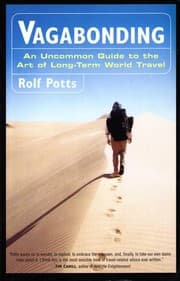
Vagabonding
Rolf Potts
After Vagabonding, you start treating slow, independent travel as an attitude with rules, not just an itinerary.
Freedom grows when you budget for time, not just money
Potts reframes long-term solo travel as a philosophy you can actually practice: choosing limits, embracing uncertainty, and protecting your freedom. For solo travel, it matters because confidence comes from a mindset, not only logistics.
How to Travel the World on $50 a Day
Matt Kepnes
Kepnes’ $50-a-day lens replaces guesswork with repeatable choices that make solo travel feel financially negotiable.
Use a system: learn pricing patterns, then move accordingly
This book gives a practical budget framework and a working method for planning and improvising. If solo travel can feel risky, the payoff here is reducing uncertainty through concrete constraints.
Lonely Planet's Guide to Travel Writing
Don George
You walk differently after Lonely Planet's Guide to Travel Writing: you capture scenes while they are happening, not after the trip ends.
Write for accuracy first, then for voice
George builds observation and journaling habits that deepen solo travel instead of turning it into a checklist. For going alone, stronger noticing is a form of safety and connection, even when you are physically by yourself.
The Rough Guide to First-Time Around The World
Doug Lansky
The Rough Guide to First-Time Around The World turns a first global solo trip from a leap of faith into a sequence of decisions.
Start simple: lock a route skeleton, leave room to adjust
Lansky focuses on clear planning and realistic start points, which helps solo travelers avoid the common early mistake of overcommitting. It matters for first-timers because your confidence is built through well-timed structure, not just enthusiasm.
The Solo Traveler's Handbook
Janice Waugh
After The Solo Traveler's Handbook, independence feels less like exposure and more like preparation you can control.
Reduce risk with routines: documents, check-ins, and backups
Waugh’s advice is designed to build practical confidence around traveling alone, especially around staying aware and handling real-world situations. That focus fits solo travel because comfort often comes from knowing what to do before you need it.
The Solo Travel Handbook
Lonely Planet
Lonely Planet’s Solo Travel Handbook helps you switch from “Can I handle this alone?” to “I have a plan for it.”
Plan basics, then adapt: check safety and logistics before moving
It covers the practical core of solo travel: planning, budgeting, and safety thinking, with reassurance built into the guidance. For solo travelers, that combination matters because it supports both day-to-day decisions and bigger route choices.
Use a system: learn pricing patterns, then move accordingly
Camino de Santiago
Anna Dintaman, David Landis
Camino de Santiago gives solitude a social structure, so the walk feels personal without being lonely.
Let the route shape you: plan logistics, follow the day
This guide is popular with solo travelers because it balances logistics with emotional reassurance, helping you show up for the route without losing your footing. If solo travel feels intimidating, this pilgrimage model offers a clear path plus shared rhythms.

Eat, Pray, Love
Elizabeth Gilbert
Eat, Pray, Love made reflective solo travel mainstream, and it still works as permission to change while you wander.
Your journey can be a practice, not a performance
Gilbert’s narrative helps you see solo travel as inner work, not only outer movement. For many readers, that emotional lens turns the trip into a meaningful arc, especially when going alone makes you confront your own pace.
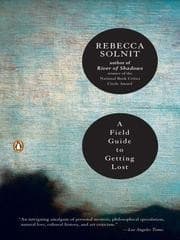
A Field Guide to Getting Lost
Rebecca Solnit
After A Field Guide to Getting Lost, getting turned around stops feeling like failure and starts feeling like a skill.
Wandering can teach you agency, not just direction
Solnit explores solitude, wandering, and the mind’s relationship to place, so solo travel becomes more than navigation. That matters because the hardest part of going alone is often psychological: tolerating uncertainty without shrinking.
Can we tailor this list for you?
Type your question in the bar below and the AI will tailor a fresh set of picks just for you.