Best Books on Cognitive Biases
Cognitive biases are the predictable glitches in human judgment, and Daniel Kahneman's Thinking, Fast and Slow maps the two systems behind them. Julia Galef's The Scout Mindset and Dan Ariely's Predictably Irrational turn that map into sharper everyday decisions.

Thinking, fast and slow
Daniel Kahneman
Finish it and you start catching decisions before you can narrate a confident reason for them: System 1 fires fast, System 2 audits slow.
Demand slow thinking when stakes and confidence diverge.
It lays the core dual-process lens and the specific illusions those processes create, not just a list of biases. That matters for cognitive biases because you get a reusable way to diagnose why your mind reached a conclusion in the first place.
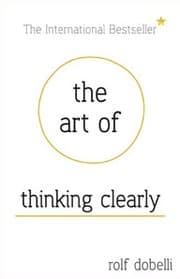
The Art of Thinking Clearly
Rolf Dobelli
You will reread your own conclusions like a detective: one small mental habit at a time, each bias leaving a visible signature.
Treat confidence as a hypothesis, not evidence.
It translates common bias patterns into crisp, memorable case examples, so recognition comes quickly during everyday decisions. That matters when you want cognitive biases to become something you can name in the moment, not only after reviewing theory.
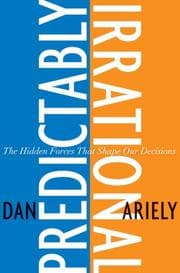
Predictably Irrational
Dan Ariely
You see how “rational” choices collapse under tiny changes in context, pricing, and defaults, producing predictable mistakes.
Small framing shifts can flip decisions reliably.
Instead of abstract definitions, it uses experiments to show how incentives and attention reshape judgment. That matters because cognitive bias training sticks better when you can feel the mechanism behind the error, not just memorize its label.
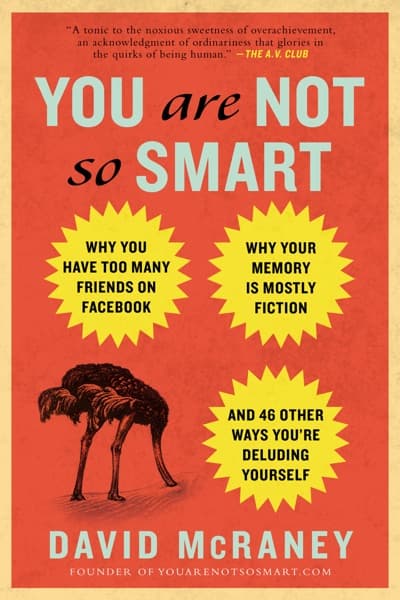
You are not so smart
David McRaney
After finishing, your mind’s excuses sound familiar enough to interrupt: you spot self-deception before it becomes a story.
Confabulation protects identity, not accuracy.
It makes self-deception, memory distortions, and reasoning errors practical and readable, so bias shows up as an everyday process. That matters for cognitive biases because it targets the defenses that stop us from updating our beliefs.
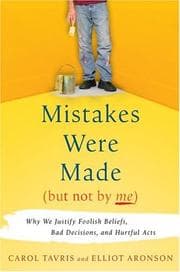
Mistakes Were Made (But Not by Me)
Carol Tavris, Elliot Aronson
You learn how the “but not by me” reflex rewrites the past, turning contradictions into proof that you were right all along.
Dissonance turns blame outward, then memory follows.
It explains how cognitive dissonance and self-justification maintain beliefs even when evidence changes. That matters because many bias failures are not about missing information, but about defending coherence after the fact.
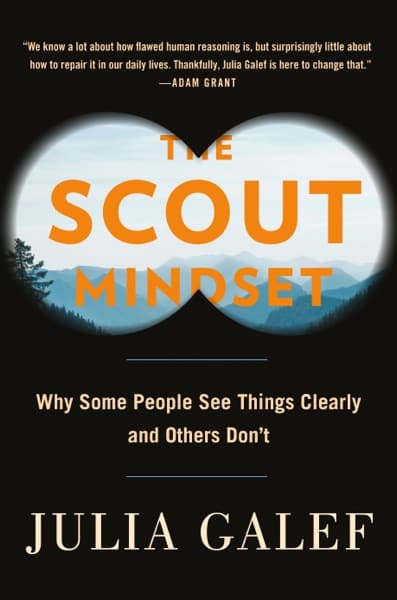
The Scout Mindset
Julia Galef
You practice the mental move from “why I think this” to “what evidence would change my mind,” and it starts working in conversations.
Use “steelman then stress-test” before committing.
It gives a concrete bias-detection stance: identify the motivated reasoning impulse, then recruit your counterevidence skills. That matters for cognitive biases because it turns awareness into a repeatable method, not a vague goal.
Treat confidence as a hypothesis, not evidence.
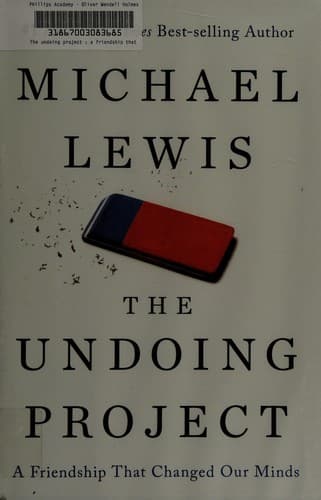
The undoing project
Michael Lewis, Dennis Boutsikaris, Michael Lewis
You come away seeing bias research as a lived partnership: two minds stress-testing each other until the blind spots become discussable.
Scientific humility beats perfect intuition.
It shows the human arc behind heuristics and biases, making the ideas feel earned rather than mechanical. That matters when you want cognitive biases to become a durable lens, because the story model helps you stick with the mindset.
Nudge
Richard H. Thaler, Cass R. Sunstein
You realize decisions are often designed, not chosen, because subtle prompts steer outcomes even when people feel fully free.
Defaults and friction can change minds without arguing.
It applies bias findings to real-world choice architecture, which reframes cognitive biases as something that shapes behavior outside your head. That matters if you want to understand how cognitive biases operate in systems, not only in personal thinking.
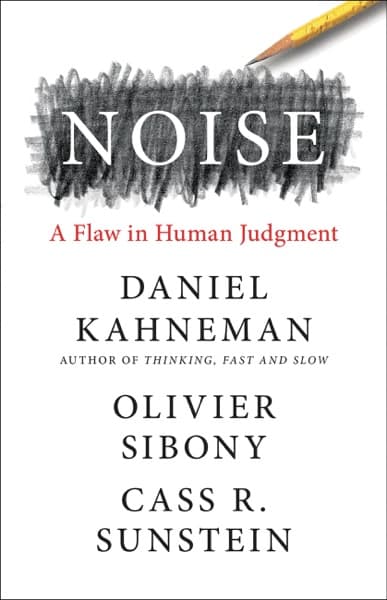
Noise
Daniel Kahneman, Olivier Sibony, Cass R. Sunstein
You stop treating judgment errors as rare quirks and start seeing them as statistical noise that can swamp accuracy even with smart people.
Measure variance, not just average accuracy.
It focuses on variability across judges, occasions, and contexts, extending cognitive bias thinking from “systematic distortion” to “inconsistent judgment.” That matters because reducing bias alone can leave a bigger problem untouched: unreliable decisions.
Can we tailor this list for you?
Type your question in the bar below and the AI will tailor a fresh set of picks just for you.