Best Books on Observability and Monitoring
Observability and monitoring turn from dashboards to decisions with books like Observability Engineering by Charity Majors and The Art of Monitoring by James Turnbull, each sharpening what to measure and why alerts should drive action.
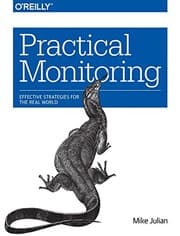
Practical Monitoring
Mike Julian
Practical Monitoring helps you move from “collect data” to “run operations” by designing instrumentation and alerts that reflect how systems fail in real life.
Alerts should map to user impact, not internal states.
It treats monitoring as an operational discipline: metrics, alerting, instrumentation, and how teams respond when things go wrong. That focus fits observability work that needs actionable signals, not vanity dashboards.
Monitoring with Graphite
Jason Dixon
Monitoring with Graphite turns time-series metrics into a reliable architecture for visibility, retention, and query patterns that make graphs usable day after day.
Design retention and query patterns early, not later.
It goes beyond philosophy into the mechanics of building a monitoring system around time-series data. If your observability goal includes building or evolving pipelines, this gives practical design trade-offs you can apply.
The Art of Monitoring
James Turnbull
The Art of Monitoring reshapes monitoring from a technical task into an engineering culture that uses feedback to prevent incidents and shorten recovery.
Measure the things that let you decide, not just track graphs.
It surveys monitoring across infrastructure, applications, and services, connecting what you can observe to how you operate. That breadth helps when you need an observability strategy that spans teams, not just tools.
Site Reliability Engineering
Betsy Beyer, Chris Jones, Christof Leng, David Huska, Jennifer Petoff, Niall Richard Murphy
Site Reliability Engineering gives you the mental model to define reliability work: monitoring and alerting become part of a system for learning and improving.
Good alerts are precise enough to trigger action.
As a foundational SRE collection, it includes influential perspectives on monitoring, alerting, and operational practices. For observability and monitoring, it helps you align telemetry with behaviors that reduce toil and incident risk.
Becoming SRE
David N. Blank-Edelman
Becoming SRE reframes observability as operational readiness: build monitoring that supports calm, repeatable responses instead of heroics.
Operational discipline beats clever tooling.
Its accessible SRE essays emphasize how to think and act under real constraints, including monitoring that supports day-to-day operations. That makes it a strong companion when you want monitoring to change team habits, not only dashboards.
The Practice of Cloud System Administration
Tom Limoncelli, Thomas Limoncelli, Strata R. Chalup, Christina J. Hogan
The Practice of Cloud System Administration grounds observability in the operational reality of administering systems, capacity, and incident response.
Make monitoring part of administration, not an add-on.
It’s an ops handbook with durable guidance that includes monitoring patterns alongside the realities that drive what telemetry you need. If your monitoring work must hold up in production, this gives practical context and decision framing.
Design retention and query patterns early, not later.
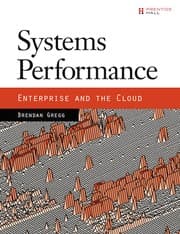
Systems Performance
Brendan Gregg
Systems Performance teaches you to instrument with intent, so telemetry becomes evidence for root cause instead of a pile of charts.
Use the right tool for the hypothesis, not for the graph.
Gregg’s approach deepens how to think about performance analysis, which directly improves how you choose metrics, trace signals, and interpret data. For observability, that means better signal quality and more defensible conclusions.
Observability Engineering
Charity Majors, Liz Fong-Jones, George Miranda
Observability Engineering pushes you to define observability outcomes: meaningful telemetry, faster diagnosis, and systems that explain themselves when they fail.
Observability is about reducing time to understanding.
It focuses on modern observability practices for software systems, emphasizing how teams design signals that support debugging and reliability. If you’re building an observability program, this helps you translate goals into practices.
The Site Reliability Workbook
Betsy Beyer, Niall Richard Murphy, David K. Rensin, Kent Kawahara, Stephen Thorne
The Site Reliability Workbook turns monitoring and alerting into exercises you can apply, test, and improve with the team’s operational reality in mind.
Turn incident learning into measurable monitoring changes.
It complements SRE theory with practical implementation advice and work you can run to strengthen monitoring. For observability, it helps you operationalize what good telemetry and alerting should accomplish.
Can we tailor this list for you?
Type your question in the bar below and the AI will tailor a fresh set of picks just for you.