Best Books for Chaos Engineering
Chaos engineering turns controlled failure into confidence: Casey Rosenthal and Nora Jones’ Chaos Engineering lays the method, while Russ Miles’ Learning Chaos Engineering makes it practical. Together they help you move from “theory” to repeatable experiments that reveal real bottlenecks.
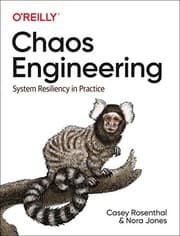
Chaos Engineering
Casey Rosenthal, Nora Jones
After finishing Chaos Engineering, you’ll start designing experiments around measurable hypotheses and blast-radius thinking, not vibes about “breaking things safely.”
Write hypotheses and measure steady-state before injecting faults.
It systematizes the craft of chaos experiments and builds a shared vocabulary for teams. That directly supports your goal of chaos engineering: turning uncertainty into evidence and making reliability improvements repeatable.
Learning Chaos Engineering
Russ Miles
Learning Chaos Engineering reframes chaos work as a sequence of experiments you can run, observe, and learn from, even when you lack a big reliability team.
Start with safe experiments that validate key assumptions.
It emphasizes hands-on approaches that translate concepts into concrete experimentation and organizational adoption. For chaos engineering, that matters because the hardest part is usually making tests real in a living system.
Becoming SRE
David N. Blank-Edelman
Becoming SRE changes chaos engineering from a specialist activity into a reliability mindset you can operationalize through leadership and team practices.
Operational excellence is built through systems, not heroes.
It brings seasoned SRE experience into how reliability work gets built, staffed, and sustained. That matters because chaos engineering succeeds when it fits how teams plan, prioritize, and respond to incidents.
Site Reliability Engineering
Betsy Beyer, Chris Jones, Christof Leng, David Huska, Jennifer Petoff, Niall Richard Murphy
Site Reliability Engineering gives you the operational foundation that chaos engineering needs: targets, telemetry, and incident thinking that turn experiments into outcomes.
Use SLOs to align reliability work with user impact.
As a canonical reliability reference, it clarifies the context around measurement, reliability goals, and learning loops. That helps you place chaos engineering where it belongs: inside a disciplined reliability program.
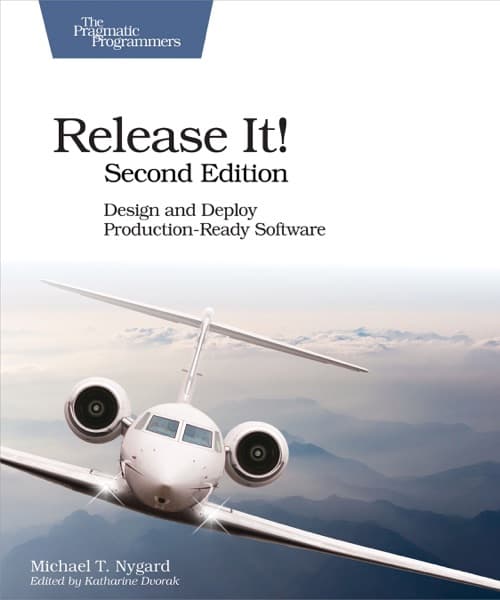
Release It!
Michael T. Nygard
Release It! makes you stop treating failures as edge cases and start engineering the paths systems take when things go wrong.
Prefer fail-slow and isolate faults to prevent cascades.
It strengthens the production hardening lens that chaos engineering relies on: understanding failure modes, designing for graceful degradation, and improving resilience. Chaos experiments become more meaningful when you know what failure patterns you’re validating.
Can we tailor this list for you?
Type your question in the bar below and the AI will tailor a fresh set of picks just for you.