Best Books on Serial Killers in Small Towns
Serial killers in small towns land best in books like In Cold Blood by Truman Capote and I'll Be Gone in the Dark by Michelle McNamara, where the horror is mapped onto ordinary places and local trust unravels.
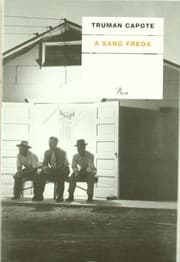
In Cold Blood
Truman Capote
A small Kansas community becomes a lab for how violence spreads: from a brutal act to months of collective suspicion and relentless reconstruction.
Cold facts can still produce burning communal fear.
Capote’s method treats the town itself as part of the story, tracking how ordinary routines bend under a murder that won’t stay contained. For serial-killer territory in small towns, it gives you the emotional mechanics: denial, curiosity, and fear turning into a shared narrative.
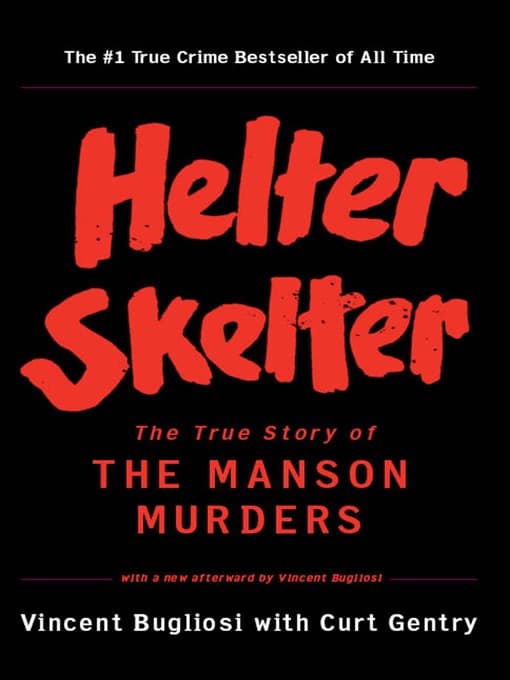
Helter Skelter
Vincent Bugliosi, Curt Gentry
The Manson murders made a “small-world” of fear by showing how a remote criminal web can detonate inside tight-knit communities.
Distance collapses when the crime touches familiar streets.
Even when the perpetrators are not town-born, Bugliosi and Gentry reconstruct how life in close quarters absorbs the shock: rumors, shattered safety, and the long grind of investigation. If you’re drawn to serial-killer dynamics, the book sharpens your sense of how communities react when evil feels suddenly local.

Midnight in the Garden of Good and Evil
John Berendt
A celebrated Southern social scene is pierced by murder, turning charm and gossip into an accidental cover for something far darker.
Community mythmaking can outvote evidence for years.
Berendt builds a small-city atmosphere where reputations, institutions, and casual storytelling can mask threat. It’s less a serial-killer investigation than a masterclass in how small towns talk themselves into blind spots.

Under the Banner of Heaven
Jon Krakauer
Religious isolation doesn’t just shape beliefs: it can incubate violence that looks unthinkable until you see the chain of justifications.
Evil often arrives wearing a convincing moral story.
Krakauer’s investigation connects an extremist crime to the social structures that made it survivable for insiders. For small-town serial-killer themes, it helps you recognize how ideology and community cohesion can delay detection and normalize warning signs.

Devil's knot
Mara Leveritt
When child murders hit a small Arkansas town, panic and certainty move faster than proof, reshaping every relationship.
Panic creates its own kind of evidence.
Leveritt focuses on how a community’s need for answers can become a force that drives the narrative toward blame. If your interest is serial predation in small towns, this book sharpens the risk: the town can “solve” itself emotionally before facts catch up.
The Man from the Train
Bill James, Rachel McCarthy James
A pattern of “family murders” is framed as a serial crime with a traveling footprint that small towns kept running into.
Look across towns, not within them.
This investigation builds a method for noticing how crimes across scattered rural places can share a logic, even when the communities feel unrelated. For serial-killer searching, it turns your attention to pattern-recognition: what gets missed when each town treats its case as isolated.
Distance collapses when the crime touches familiar streets.
Bitter blood
Jerry Bledsoe
A North Carolina family case becomes a study in how a violent predator can persist in plain sight while suspicion ricochets.
Local knowledge can both hide and expose a killer.
Bledsoe’s narrative is grounded in the lived texture of a specific community, showing how relationships, reputation, and fear collide. It maps well onto small-town serial themes: the terror is not just the act, but the slow erosion of trust.
The Devil in Pew Number Seven
Rebecca Nichols Alonzo, Robert G. DeMoss
A violent predator terrorizing a church shows how sacred spaces can become the scariest places to seek safety.
Trust can become camouflage.
The book emphasizes the small-community scale: who’s trusted, who’s believed, and how long warning signs can be filed away. For serial killers in small towns, it highlights a crucial variable: institutions that rely on trust can inadvertently delay accountability.

The Stranger Beside Me
Ann Rule
Ted Bundy read as a neighbor before he became a monster, and the gap between public normal and private brutality is the point.
Your brain protects you by trusting what feels ordinary.
Rule writes from firsthand knowledge of Bundy’s surroundings, capturing how concealment works when the community wants to believe in the familiar. If you’re hunting the small-town serial-killer vibe, this one nails the psychological mismatch: how ordinary appearances disrupt early instincts.
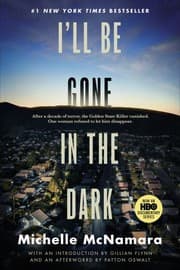
I'll Be Gone in the Dark
Michelle McNamara
A long-missing predator becomes a relentless search through suburbs and clues, and the uncertainty itself becomes its own kind of torment.
Clues are also grief you have to keep cataloging.
McNamara’s work is intensely about place: how a predator’s shadow reshapes everyday life and community vigilance. For small-town serial themes, it teaches you how the hunt feels from the outside, where fear, frustration, and documentation collide.
Can we tailor this list for you?
Type your question in the bar below and the AI will tailor a fresh set of picks just for you.