Best Books on How to Lie With Statistics
Darrell Huff's 1954 classic named the game, but seeing through misleading numbers takes a whole shelf. These books span the everyday tricks of statistical deception, the math behind bogus claims, and the habits that let you read a chart, a poll, or a headline without being fooled.
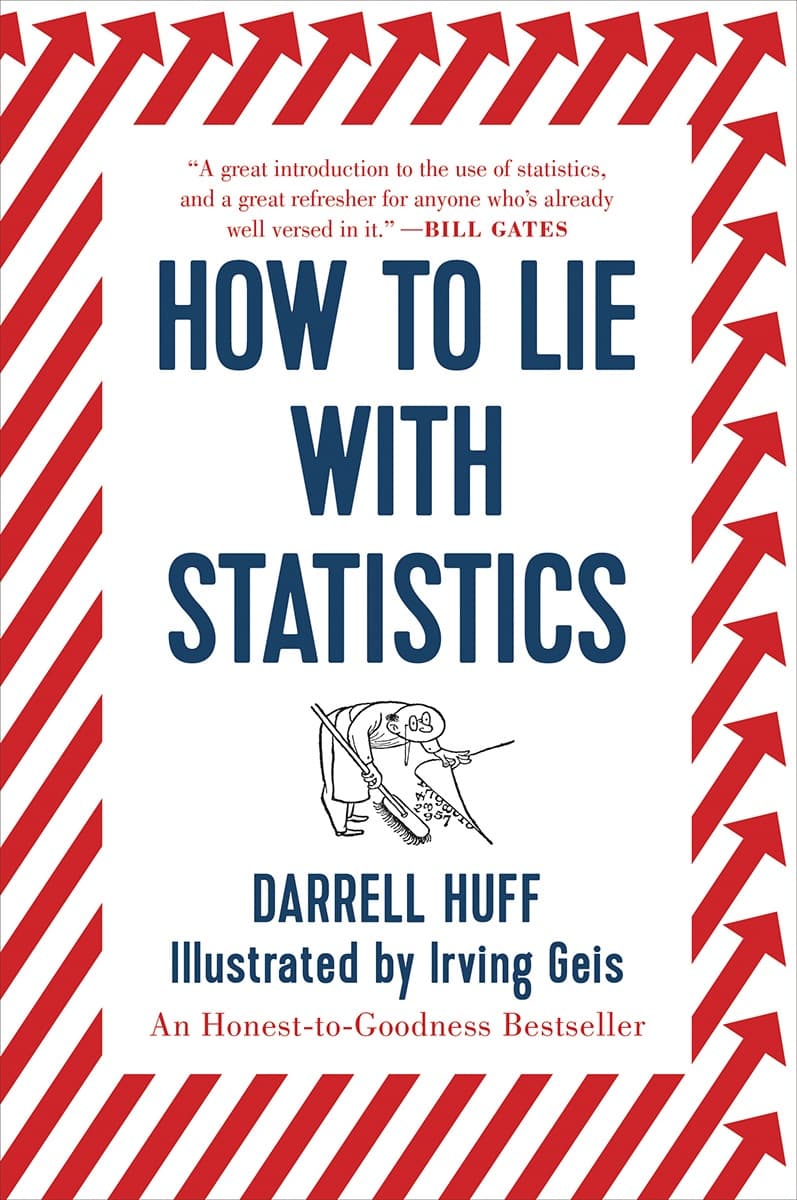
How to Lie with Statistics
Darrell Huff
The 1954 pocket classic that taught a generation to distrust a tidy number.
When someone reports an 'average,' ask which one: the mean, median, and mode can point in opposite directions.
Huff catalogs the everyday cons, the truncated axis, the biased sample, the average that hides everything, in prose so plain it still disarms readers seventy years on.
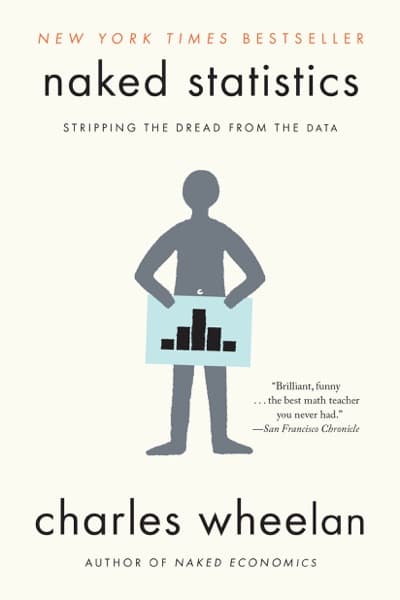
Naked Statistics
Charles Wheelan
A statistics course with the equations stripped out and the intuition left in.
Correlation is not causation, but it is constantly dressed up as causation by people who want your vote or your money.
Wheelan explains correlation, regression, and sampling through gambling, baseball, and Netflix, so you grasp what a study actually claims before you decide to trust its conclusion.
The Art of Statistics
David Spiegelhalter
A Cambridge statistician's guide to reasoning honestly from real data.
A percentage change means little until you know the base: a 100% rise in a one-in-a-million risk is still almost nothing.
Spiegelhalter works through actual cases, from cancer survival rates to the Harold Shipman murders, showing how framing, denominators, and uncertainty decide what a number really means.
Calling Bullshit
Carl T. Bergstrom, Jevin D. West
A field manual for spotting data dressed up to deceive.
The strongest defense against numeric nonsense is usually a rough sanity check, not a rebuttal equation.
Grown from a viral university course, it dissects misleading graphs, junk correlations, and algorithmic hype, handing you named tools to call out a bogus claim without redoing the math.
The Tiger That Isn't
Andrew Dilnot, Michael Blastland
Two BBC number-watchers on seeing through the figures in the news.
A huge number shrinks fast once you divide it by the population it is spread across; always ask 'is that a lot?'
Blastland and Dilnot show how counting, context, and comparison quietly decide what a statistic means, turning scary risk numbers and vast government sums into figures you can actually judge.
Can we tailor this list for you?
Type your question in the bar below and the AI will tailor a fresh set of picks just for you.