Best Books on Nuclear Submarines
Cold War nuclear submarine books that move past mere hardware: Sherry Sontag and Christopher Drew’s Blind Man’s Bluff and Josh Dean’s The Taking of K-129 recast “undersea power” as intelligence, risk, and human judgment.
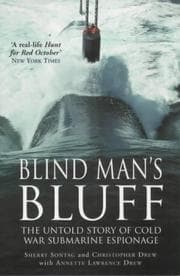
Blind Man's Bluff
Sherry Sontag and Christopher Drew
By the time you finish Blind Man's Bluff, the undersea world feels mapped through deception: sonar, spies, and misread signals drive history as much as missiles do.
Sonar is a question, not an answer.
This is a reported account that makes nuclear submarines understandable as intelligence platforms under constant uncertainty. For your topic, it shifts the lens from propulsion and weapons to how information and inference determine survival at sea.
The Taking of K-129
Josh Dean
The Taking of K-129 turns a famous “lost submarine” into a high-stakes recovery mission where technology meets improvisation under political pressure.
Recovery planning starts before the rescue is possible.
Dean focuses on a single landmark operation and the choices that shaped it, rather than covering nuclear submarines as a general topic. That makes it ideal when you want real undersea stakes tied to one incident and its aftermath.
Red November
W. Craig Reed
Red November makes nuclear-era brinkmanship feel procedural: the closer you get to a crisis, the more behavior is shaped by drills, rules, and miscalculation risk.
In crisis, procedure can be both shield and trap.
It offers an overview of undersea dangerousness and operational culture, especially the early-warning psychology around Soviet and US forces. For your topic, it connects “nuclear submarine” to decision-making under stress, not just capabilities.
Undersea Warrior
Don Keith
Undersea Warrior shows how a submarine officer’s mindset is built: patience, discipline, and team trust become as consequential as the boat itself.
Submarine culture is trained to survive uncertainty.
Even when it is not strictly nuclear in every detail, it illuminates the culture and habits that later shape nuclear-era boats and crews. For your interest, it makes the human machinery of submarine life feel concrete before you move into Cold War systems and incidents.
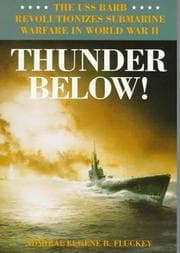
Thunder Below!
Eugene B. Fluckey
Thunder Below! reframes command at sea as a constant negotiation with noise, fear, and fatigue, long before nuclear weapons enter the picture in your imagination.
Accuracy depends on what you can’t measure.
This memoir is built on lived undersea operations and the mindset required to keep going when conditions and information degrade. For nuclear submarine curiosity, it provides the baseline instincts that make later accounts of nuclear patrols and risk feel believable.
The Silent Deep
James Jinks, Peter Hennessy
The Silent Deep argues Britain’s nuclear submarine success depended less on glamour and more on industrial discipline, doctrine, and sustained institutional choices.
Deterrence is built, not declared.
It is a deep, readable history of Britain’s nuclear submarine service that treats deterrence as a system: people, policy, and implementation. If your goal is to understand nuclear submarines beyond US-centric stories, it gives a full national frame.
Recovery planning starts before the rescue is possible.
Dark Waters
Lee Vyborny, Don Davis
Dark Waters treats one covert nuclear submarine as a story of transformation: from secrecy to survival under uniquely constraining operational realities.
Secrecy reshapes operations more than you expect.
As an insider-style narrative, it brings texture to how nuclear undersea service can differ when secrecy and specialty missions dominate. For your topic, it adds variety to the usual mainstream Cold War picture by centering a distinctive covert element.
Rising Tide
Gary E. Weir, Walter J. Boyne
Rising Tide widens the map: instead of one navy’s narrative, nuclear submarine history becomes a competitive, multi-nation story with different design philosophies and doctrines.
Doctrine varies with national assumptions.
It broadens beyond a single-country focus, which matters because nuclear submarine practice is shaped by geography, politics, and threat assumptions. For your search, it helps you build a comparative understanding of the undersea Cold War.
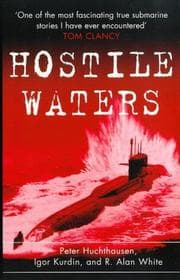
Hostile Waters
Peter Huchthausen and Igor Kurdin
Hostile Waters makes the K-219 disaster feel uncomfortably human: a chain of engineering events and crew actions under extreme stress.
Disasters are sequences, not single failures.
This concentrates on a canonical Soviet submarine catastrophe, giving you the mechanics of how such incidents unfold and why the crew response matters. If you want nuclear submarine stories that hinge on real-world disaster dynamics, this delivers.
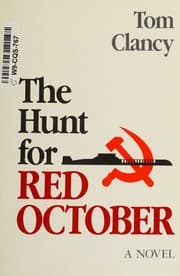
The Hunt for Red October
Tom Clancy
The Hunt for Red October makes technical detail feel like tension: every maneuver reads as a clue in a contest of concealment and interpretation.
Undersea chess is information under uncertainty.
As fiction, it is not an archive of events, but experts still cite its technical authenticity, which can sharpen how you imagine nuclear submarine behavior. For your topic, it offers a fast emotional entry point into the logic of undersea deception.
Can we tailor this list for you?
Type your question in the bar below and the AI will tailor a fresh set of picks just for you.