Best Books on Nuclear Non-Proliferation
Nuclear non-proliferation debates sharpen fast when you read Sagan’s The Spread of Nuclear Weapons and Miller’s Stopping the Bomb: one explains incentives, the other tests outcomes.
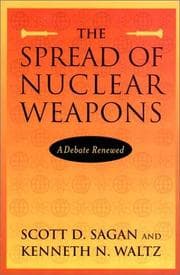
The Spread of Nuclear Weapons
Scott D. Sagan
Sagan frames nuclear restraint as a tug-of-war between state ambition and institutional failure, not just rational calculation.
Proliferation is driven by incentives and by institutions.
You get the canonical strategic debate: why states build, and why the same pressures can also block proliferation. That lens helps you read every later “why did it happen” claim with sharper skepticism.
Atomic Obsession
John Mueller
Mueller argues many alarmist proliferation scenarios overestimate how easily worst-case futures materialize.
Worst-case thinking often outruns real-world probabilities.
If your goal is to understand nuclear non-proliferation debates as they happen in policy, this book gives you a critical stress test for “inevitable” narratives. It sharpens how you weigh intelligence, timelines, and assumed technical barriers.
Nuclear Power and Nonproliferation
William C. Potter
Shows how the nuclear fuel cycle and energy incentives collide with non-proliferation constraints in practical, repeatable ways.
Civil nuclear supply chains can create proliferation leverage.
This is one of the most accessible ways to connect civilian nuclear power to proliferation pathways without treating the topic as purely hypothetical. It fits the non-proliferation focus because it grounds policy concerns in concrete capabilities and governance.
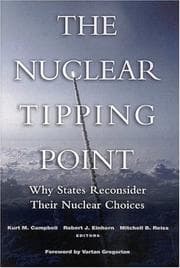
The Nuclear Tipping Point
Kurt M. Campbell, Robert J. Einhorn, Mitchell B. Reiss
Focuses on the decision windows where reversal and restraint can still redirect nuclear trajectories.
Tipping points are about timing plus leverage.
Where many books stay at explanation level, this one emphasizes actionable points of leverage in nuclear programs. That makes it useful when you want to translate non-proliferation principles into political timing and diplomacy.
Stopping the Bomb
Nicholas L. Miller
Uses evidence to show that nonproliferation policy works when it changes behavior, not when it only signals intent.
Policies stop proliferation by altering incentives and compliance.
This is built for readers who want “what actually succeeded and why,” not only theories. It helps you evaluate policy debates by outcome and mechanism, bringing the conversation down from speculation.
Deadly Arsenals
Joseph Cirincione, Jon B. Wolfsthal, Miriam Rajkumar
A policy primer that ties nuclear danger to inventories, trajectories, and institutional realities rather than abstract fear.
Non-proliferation depends on governance, not just weapons.
If you want a clear baseline on treaties, actors, and proliferation risks, this is a strong entry point. It supports non-proliferation study by mapping the ecosystem where decisions about restraint get made.
Worst-case thinking often outruns real-world probabilities.
The Logic of American Nuclear Strategy
Associate Professor of Political Science Matthew Kroenig, Matthew Kroenig
Argues that certain American nuclear strategy choices can shape proliferation incentives through credibility and coercion.
Deterrence signals can either dampen or motivate proliferation.
This is useful for non-proliferation because it treats strategy and deterrence as part of the same causal chain. It helps you see how actions meant to deter may also influence what other states conclude about building their own weapons.
The Nuclear Express
Thomas Reed, Danny Stillman
A historical account that spotlights how the bomb spread through networks, expertise, and enablement, not just state declarations.
Proliferation often travels via networks and supply chains.
Non-proliferation is often discussed at the treaty level, but this shifts attention to procurement and clandestine pathways. It gives you a more realistic view of where controls succeed and where gaps persist.
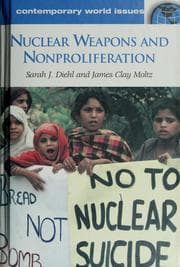
Nuclear Weapons and Nonproliferation
Sarah J. Diehl, James Clay Moltz
A structured handbook that turns non-proliferation concepts into an organized map of treaties, institutions, and recurring dilemmas.
Use treaties and institutions to track incentives and compliance.
This fits best when you need clarity across the full non-proliferation landscape, from agreements to actors to policy problems. It supports deeper reading by giving you a consistent vocabulary and framework for comparing arguments.
Can we tailor this list for you?
Type your question in the bar below and the AI will tailor a fresh set of picks just for you.