Best Books on Statistics & Probability
Statistics and probability books that turn symbols into a usable way of thinking: from Blitzstein and Hwang’s worked-problem clarity to Wasserman’s compact tour of inference.
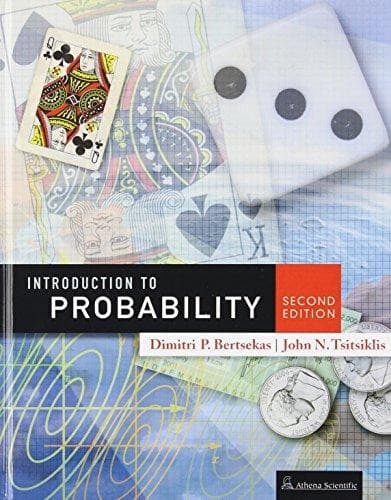
Introduction to Probability
Dimitri Bertsekas, John N. Tsitsiklis
After this, probability stops feeling like a bag of formulas and starts behaving like a disciplined toolkit you can rely on in new problems.
Use conditioning to reduce uncertainty
It balances intuition with rigorous reasoning, then repeats that discipline across core topics so the concepts stay coherent. That structure helps if you want foundations that carry into inference and real modeling later.
All of Statistics
Larry Wasserman
Finish Wasserman and you’ll recognize the statistical “moves” behind many results, from estimation to regression, without getting lost in notation.
Statistics is inference plus modeling assumptions
The book compresses the field into a readable survey while keeping the logic of why methods work. If your goal is breadth across statistics and probability, it gives you a stable map before deeper specialization.
Probability and Statistics
Morris H. DeGroot, Mark J. Schervish
You come away seeing probability and statistics as one continuous story rather than two separate subjects you memorize separately.
Bayesian updating as a general reasoning pattern
By integrating the two, it builds bridges from random variables to statistical reasoning and decision-making. That matters when you want a consistent lens for probability first, then inference.
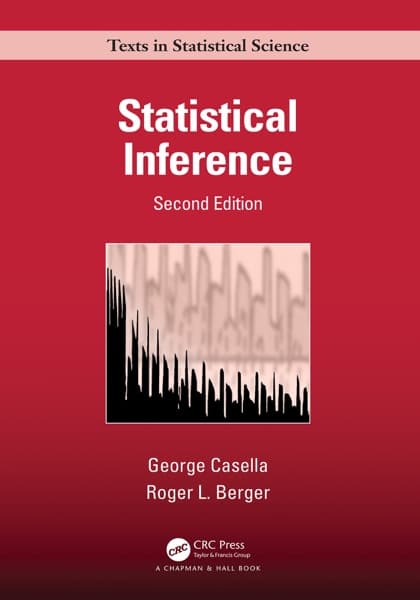
Statistical Inference
George Casella, Roger Berger
This book reshapes your sense of “what counts as correct” in inference: assumptions, criteria, and justification become explicit.
Consistency and unbiasedness define credibility
It’s a foundational graduate-level reference that treats core inference theory carefully and thoroughly. For statistics and probability, it’s the place to sharpen your reasoning when you are ready for the real bedrock.
An Introduction to Probability Theory and Its Applications
William Feller
Feller makes probability feel elegant: results unfold from clear examples into a repeatable style of thinking.
Many proofs begin with conditioning and symmetry
It’s a historic classic known for depth and craftsmanship, using many instructive problems to build intuition without skipping rigor. If you want probability at its most beautiful and enduring, this is a strong foundation.
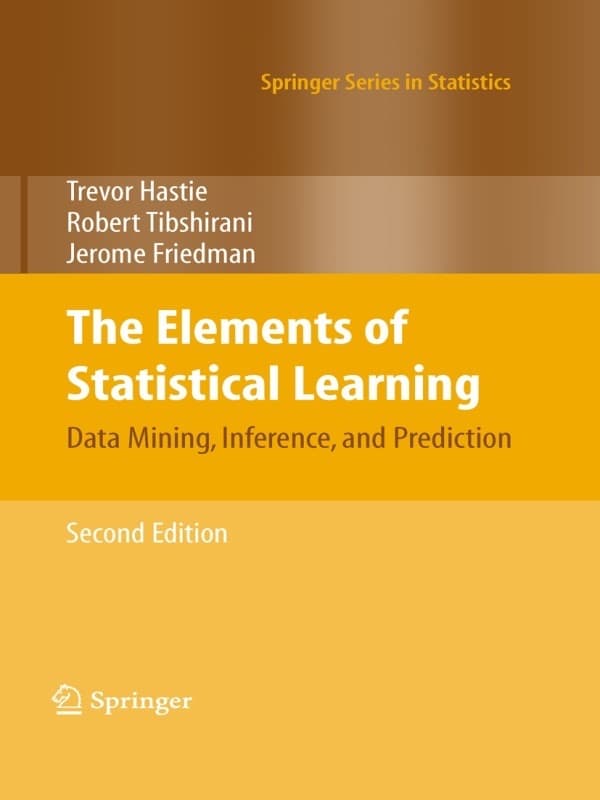
The Elements of Statistical Learning
Trevor Hastie, Robert Tibshirani, Jerome Friedman
After this, you start treating learning algorithms as trade-offs you can reason about, not black boxes you only run.
Generalization depends on bias-variance trade-off
It connects statistical theory to supervised learning practice, so probability and inference show up inside modern modeling decisions. It fits if your statistics and probability curiosity extends toward predictive modeling and algorithms.
Statistics is inference plus modeling assumptions
Probability
Rick Durrett
Durrett turns probability into something you can simulate mentally: stochastic behavior becomes concrete through well-chosen examples.
Limit theorems explain long-run structure
It pairs rigorous arguments with many illuminating illustrations, building intuition that sticks. For statistics and probability, it’s a dependable route from fundamentals to deeper understanding.
The Art of Statistics
David Spiegelhalter
Spiegelhalter trains your eye to spot what data can and cannot support, so uncertainty stops being intimidating and becomes readable.
Uncertainty belongs in the story, not the footnote
It translates statistical thinking into accessible decisions about evidence, risk, and explanation. That’s ideal if you want the probability-and-statistics mindset without being buried in heavy mathematics.
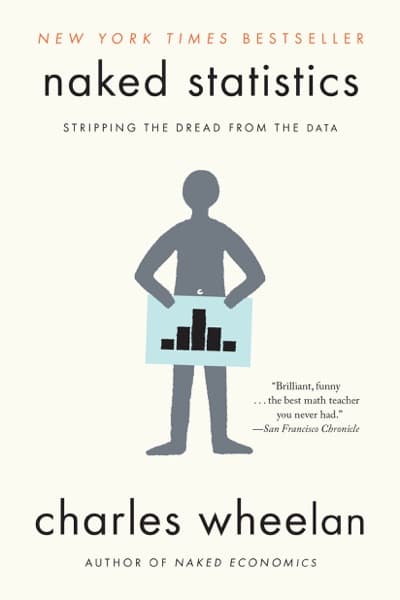
Naked Statistics
Charles Wheelan
Wheelan makes statistical reasoning feel natural by stripping away jargon until the core logic is unmistakable.
Correlation is not causation
It gives a beginner-friendly tour of major statistical ideas without heavy mathematics, so the concepts are easier to wield. If you need probability and statistics basics you can apply immediately, this keeps momentum.
Can we tailor this list for you?
Type your question in the bar below and the AI will tailor a fresh set of picks just for you.