Best Books on Vibe Coding
Vibe coding is a mindset, not a shelf of matching titles, since few books use that exact phrase yet. This list favors the real craft underneath it: prompting with precision, structuring LLM-driven builds, and judging when a model's output can be trusted versus checked by hand.
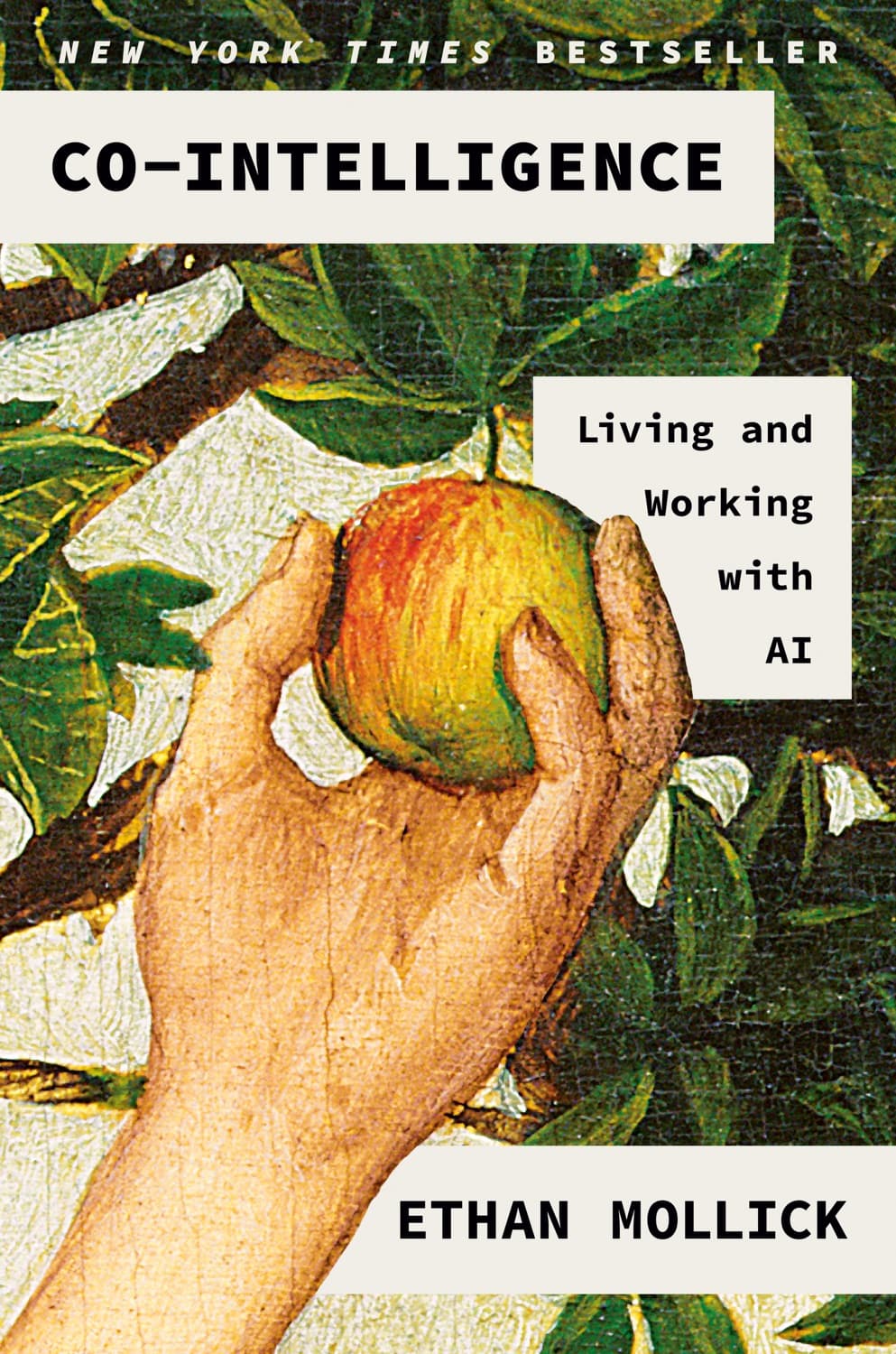
Co-Intelligence
Ethan Mollick
The mindset shift that makes vibe coding possible in the first place.
The three second rule: try the AI first on any task before doing it yourself, because intuition about what AI can and cannot do is usually wrong.
Mollick's central argument, treat AI as a genuine collaborator rather than a search engine, is the exact posture that makes prompt-driven, agent-assisted coding work instead of frustrate.
AI Engineering
Chip Huyen
The technical backbone for building real products on top of LLMs.
A rigorous framework for evaluating LLM outputs systematically instead of eyeballing a handful of example responses and calling it done.
Huyen maps the full stack, from prompting and retrieval to evaluation and inference optimization, that separates a working AI-assisted codebase from a demo that never ships.
Prompt Engineering for LLMs
John Berryman, Albert Ziegler
Written by one of the engineers who helped build GitHub Copilot.
Concrete patterns for chaining prompts and managing context so an assistant stays useful across a long, evolving coding session.
Ziegler's firsthand experience shipping Copilot gives this book a rare grounding in what actually makes an AI coding assistant useful versus merely impressive in a demo.
Hands-On Large Language Models
Jay Alammar, Maarten Grootendorst
The clearest visual explanation of what an LLM is actually doing.
Diagrams showing exactly how tokenization and embeddings shape what a model can and cannot infer from a given prompt.
Alammar's illustrated approach turns transformer internals and embeddings into intuition, which matters once a developer starts debugging why an agent misread a prompt.
Prompt Engineering for Generative AI
James Phoenix, Mike Taylor
A hands-on manual for getting reliable output out of an unreliable model.
A set of reusable prompt templates for common coding tasks, structured so outputs stay predictable across model versions.
Phoenix and Taplin treat prompting as an engineering discipline with testable patterns, the skill that turns vibe coding from guesswork into a repeatable practice.
AI-Assisted Programming
Tom Taulli
A field guide to coding with AI at every stage, not just autocomplete.
Checklists for where AI assistance saves real time versus where it introduces risk, broken down by stage of the development lifecycle.
Taulli walks through planning, coding, testing, and deployment with AI tools at each step, matching the full lifecycle a vibe coder actually works through on a real project.
A rigorous framework for evaluating LLM outputs systematically instead of eyeballing a handful of example responses and calling it done.
Developing Apps with GPT-4 and ChatGPT
Olivier Caelen, Marie-Alice Blete
A compact, hands-on build log for shipping GPT-powered apps.
Working code patterns for function calling and structured output that keep an LLM integration maintainable as the app grows.
Caelen and Blete walk through real application builds end to end, giving a template for structuring an LLM-powered project instead of calling an API in isolation.
Build a Large Language Model (From Scratch)
Sebastian Raschka
Build a working LLM one component at a time, in plain PyTorch.
You understand a system once you can rebuild it: coding an LLM from scratch demystifies every tool built on top of one.
Raschka walks through implementing a GPT-style model from tokenization through training and fine-tuning, so the abstractions behind every AI coding tool stop being magic and become code you understand.
Can we tailor this list for you?
Type your question in the bar below and the AI will tailor a fresh set of picks just for you.