Best Books on How Art Prices Are Set
How Art Prices Are Set becomes legible through Don Thompson’s The $12 Million Stuffed Shark and Olav Velthuis’s Talking Prices: numbers, narratives, and social power combine to produce the price you see on the wall.
The $12 Million Stuffed Shark
Don Thompson
After finishing The $12 Million Stuffed Shark, art prices stop feeling mysterious: you can trace how expertise, publicity, and institutions quietly manufacture confidence in a number.
Provenance and reputation convert taste into price.
Thompson explains art value formation with concrete, contemporary examples, including how “taste” turns into pricing power. That matters for How Art Prices Are Set because it ties price outcomes to the systems that certify worth.
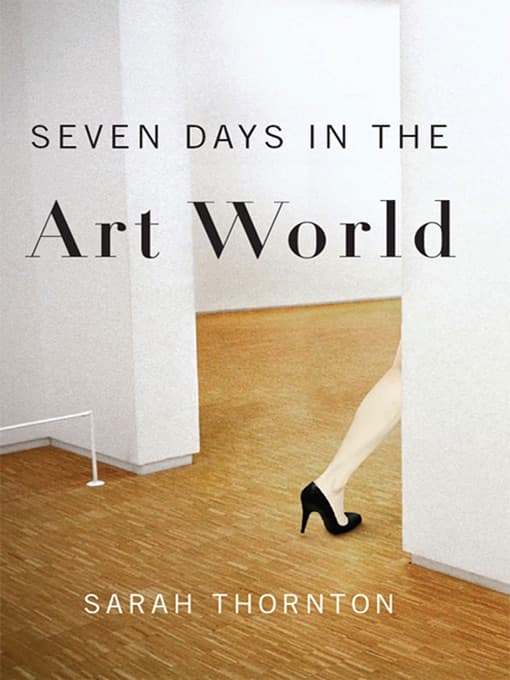
Seven Days in the Art World
Sarah Thornton
Seven Days in the Art World makes prestige feel operational: you see how auction days, dealers, and collectors each perform status that later hardens into price.
Prestige is a market input, not decoration.
Thornton’s insider reporting shows the choreography behind markets rather than just the economics. For How Art Prices Are Set, it clarifies why comparable sales alone cannot explain what buyers are willing to pay.
Talking Prices
Olav Velthuis
Talking Prices turns pricing talk into a mechanism: after this, you notice how dealers’ language performs justification before the bid ever rises.
Price justifications are social work.
Velthuis studies how market actors frame value in conversation and negotiations. That matters for How Art Prices Are Set because the “story” of a price becomes part of the price itself.
Boom
Michael Shnayerson
Boom reframes contemporary art pricing as a struggle over power: after it, high prices look like leverage, not merely valuation.
Market power governs what counts as value.
Shnayerson’s narrative traces the rise of postwar contemporary art market influence and how key players shaped demand and interpretation. That directly supports How Art Prices Are Set by showing who benefits when prices climb.
The Value of Art
Michael Findlay
The Value of Art helps you separate price from value: you learn why a work’s commercial number and its cultural meaning can diverge.
Symbolic value fuels market valuation.
Findlay connects how value is argued across markets, social worlds, and symbolism. For How Art Prices Are Set, it gives you a framework to understand how multiple “values” collapse into one observable price.
Priceless
Robert K. Wittman, John Shiffman
Priceless shows how fragile “value” can be when the price is detached from ownership, replacing certainty with a stark view of what a market protects.
Market price can be separated from ownership reality.
By contrasting market price with theft, the book highlights what collectors, institutions, and systems assume value is. For How Art Prices Are Set, it sharpens the difference between price tag logic and deeper claims about worth.
Prestige is a market input, not decoration.
Art/Work - Revised & Updated
Heather Darcy Bhandari, Jonathan Melber
Art/Work turns pricing into practice: after it, you understand what galleries, artists, and markets negotiate when they talk about numbers.
Representation terms shape the price you see.
This book grounds pricing in the mechanics of representation, production, and commercial positioning. For How Art Prices Are Set, it supplies a practical lens on how the artist-gallerist relationship influences what eventually becomes the market price.
Can we tailor this list for you?
Type your question in the bar below and the AI will tailor a fresh set of picks just for you.