Best Books on Competing with OpenAI and Anthropic as a Startup
Competing with OpenAI and Anthropic needs wedge thinking plus durable moats: Zero to One, The Innovator's Dilemma, and Co-Intelligence each push you toward differentiation instead of feature chasing against frontier models.
Zero to One
Peter Thiel, Blake Masters
After Zero to One, you start treating OpenAI- and Anthropic-adjacent competition as a reason to find monopolistic wedges, not to win head-to-head on capabilities.
Build a monopolistic wedge, not incremental improvements.
Thiel and Masters force a discipline of contrarian value creation: pick a direction where the market cannot simply copy your move. That framing helps a startup decide which “AI” you will own through distribution, workflow lock-in, or a uniquely constrained advantage instead of generalized model performance.
The Innovator's Dilemma
Clayton Christensen
The Innovator's Dilemma reframes frontier-model competition as a pattern where incumbents protect their best customers while missing the new trajectory.
Disruption beats incumbency by shifting trajectories.
Christensen’s core lens helps you spot how established AI players rationalize current roadmaps, then miss emerging demand. For a startup, it clarifies what to attack: not the biggest models, but the next set of use cases, interfaces, and adoption constraints that incumbents discount or ignore.
7 Powers
Hamilton Helmer
7 Powers pushes your strategy beyond product specs: it trains you to map the forces that let a winner avoid being outcompeted by stronger players.
Moats come from multiple powers, not one advantage.
Helmer’s framework is designed for winner-take-most markets where scale and network effects compound. That matters when OpenAI and Anthropic define the baseline, because your edge must survive pricing pressure, switching costs, and distribution bottlenecks.
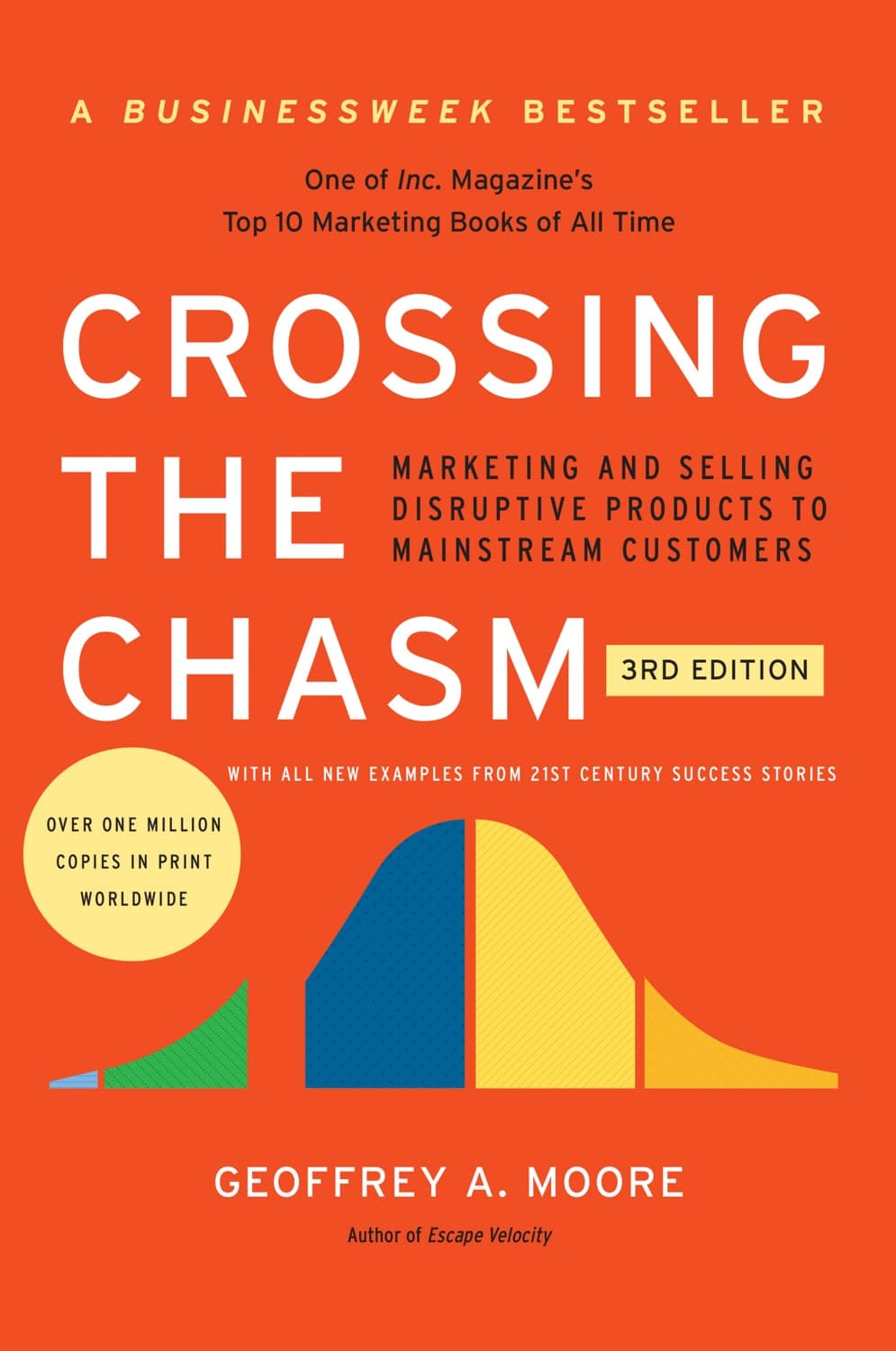
Crossing the Chasm
Geoffrey A. Moore
Crossing the Chasm turns “generic AI startup” into a painfully focused bet on one niche that actually buys, adopts, and expands.
Start with a beachhead that has urgent, credible demand.
Moore helps you avoid the common trap of trying to win everyone with model-agnostic features. When frontier labs raise the floor, the startup’s path is often narrower: anchor adoption with a specific buyer pain, a repeatable use pattern, and a compelling reason to switch.
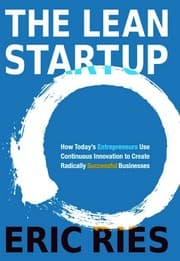
The Lean Startup
Eric Ries
After The Lean Startup, experimentation stops being random: you design learning loops that validate whether a market will pull your AI product, not just whether it demos well.
Build-measure-learn with validated learning.
Ries gives you a way to reduce uncertainty while the landscape shifts underneath you. Against fast-moving model providers, this helps you test the parts that actually differentiate: workflow fit, data advantages, adoption triggers, and economic value, before you scale blindly.
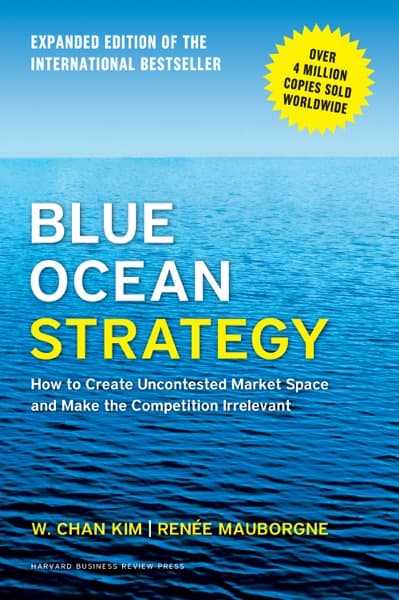
Blue ocean strategy
W. Chan Kim
Blue ocean strategy reframes competing with OpenAI and Anthropic as a move away from the crowded battle for “smarter models” toward value you redefine.
Value innovation breaks the value-cost tradeoff.
Kim and Mauborgne’s toolset pushes you to find levers that change what buyers value, not just how you implement features. For startups, this translates into creating categories where the frontier-model arms race is less relevant than a distinct job-to-be-done and a cleaner economic story.
Disruption beats incumbency by shifting trajectories.
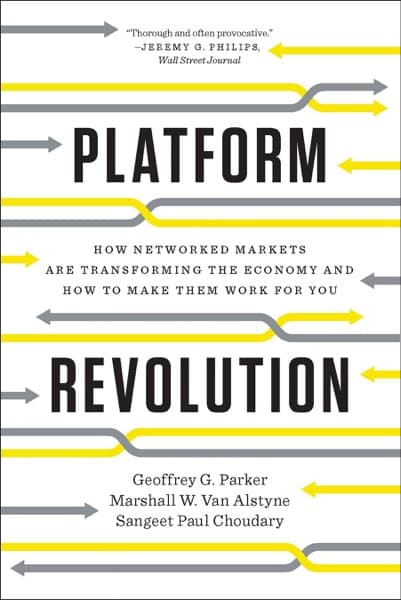
Platform Revolution
Geoffrey G. Parker, Marshall W. Van Alstyne, Sangeet Paul Choudary
Platform Revolution makes you treat AI competition as ecosystem competition: distribution, complementors, and standards often decide the outcome more than raw model quality.
Platforms win by attracting complements and capturing value.
Parker, Van Alstyne, and Choudary help you design for network effects and bargaining power in an ecosystem. When big AI labs are the default providers, a startup can still win by owning the platform layer: integrations, developer workflow, or a complement network that raises switching costs.
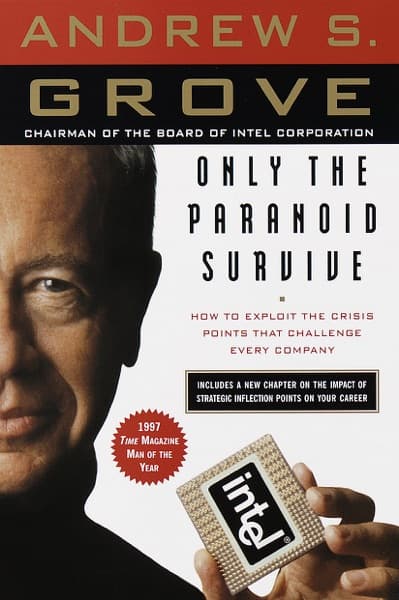
Only the Paranoid Survive
Andrew S. Grove
Only the Paranoid Survive prepares you for strategic inflection points where today’s advantage becomes tomorrow’s irrelevance, especially under technology shocks like foundation models.
Strategic inflection points demand rapid repositioning.
Grove’s thinking supports continuous competitive reassessment, not one-time planning. For AI startups, it helps you maintain a “staying power” view: watch how customer needs evolve, how adoption changes, and how incumbent incentives shape which capabilities become commoditized.
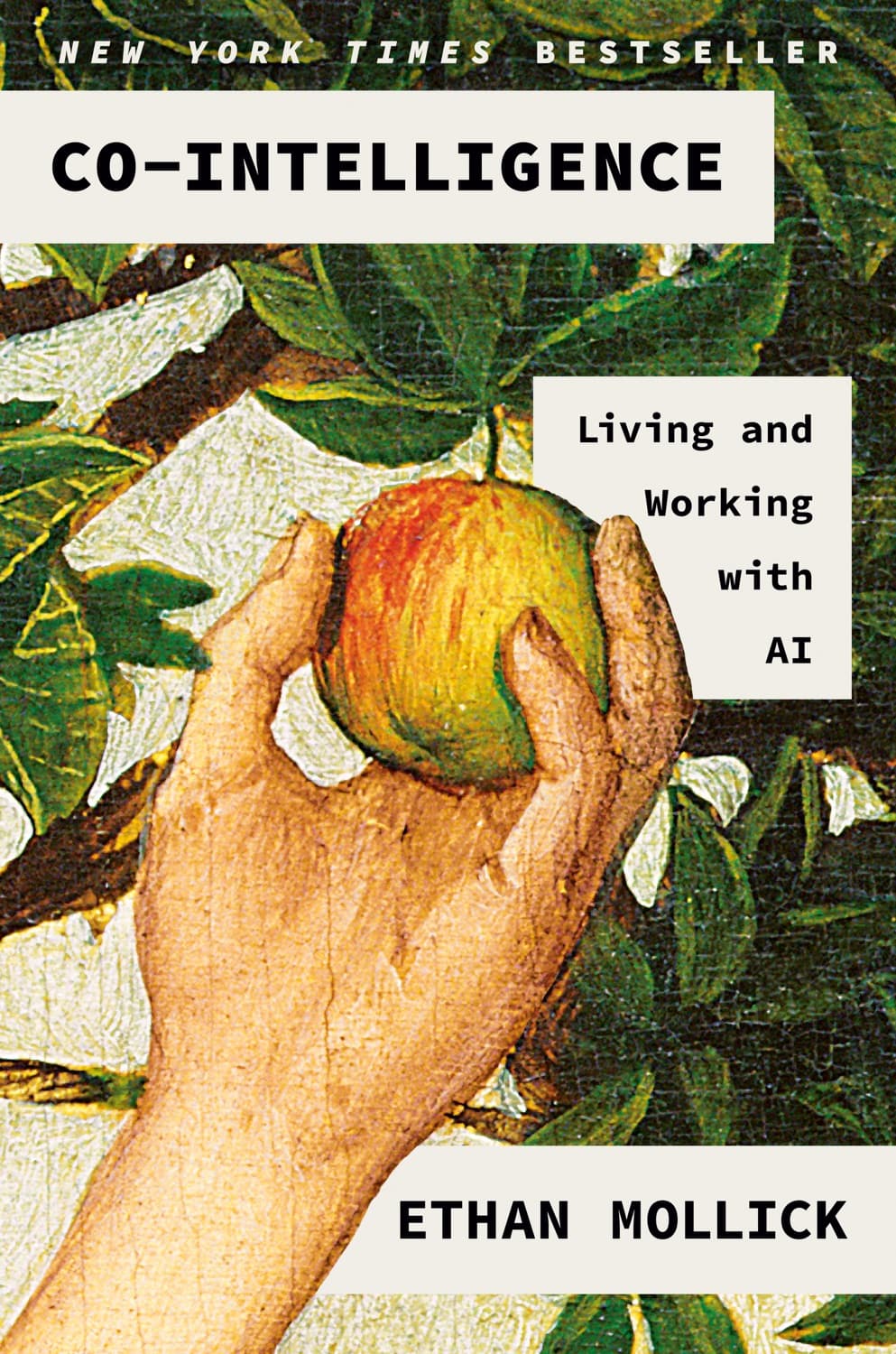
Co-Intelligence
Ethan Mollick
Co-Intelligence pushes a startup lens where frontier models are collaborators, and differentiation comes from how you design teams, workflows, and outputs together.
Design for collaboration, not just automation.
Mollick’s emphasis on practical co-working helps you avoid the simplistic “replace humans” narrative. In the face of OpenAI and Anthropic, that matters: your product advantage often lives in orchestration, domain constraints, feedback loops, and human-in-the-loop value, not in claiming superiority to the base model.
Prediction Machines
Ajay Agrawal, Joshua Gans, Avi Goldfarb
Prediction Machines reframes AI competition as an economics problem: where predictions create value depends on incentives, data, and integration costs, not vibes.
Value comes where prediction is useful and cheap to deploy.
The book explains how AI changes workflows and pricing power, giving you a sharper map for defensible value in the shadow of big labs. For a startup, it clarifies what to build around: tasks with clear feedback, data advantages, and measurable ROI that big providers either can’t bundle or won’t prioritize.
Can we tailor this list for you?
Type your question in the bar below and the AI will tailor a fresh set of picks just for you.