Best Books on Large Language Models
Hands-On Large Language Models by Jay Alammar and Maarten Grootendorst turns “LLM hype” into actionable intuition. The picks below share a single thread: they move from transformer mechanics to real generation and applications.
Hands-On Large Language Models
Jay Alammar, Maarten Grootendorst
By the end, LLMs stop feeling like black boxes: you can reason about tokens, attention, and generation choices as concrete levers.
Attention and tokens give you a controllable mental model
It translates the modern LLM workflow into hands-on mental models, not just conceptual overview. That makes it a strong anchor for learning large language models while keeping your next step tangible.
Generative AI with LangChain
Ben Auffarth
You learn to turn raw LLM calls into an app pipeline with components that behave predictably instead of improvising.
Think in chains and prompts as composable components
This focuses on building LLM applications with a widely used framework, so your learning connects directly to practical systems. That matters when your goal is large language models in production-like workflows.
Natural Language Processing with Transformers, Revised Edition
Lewis Tunstall, Leandro von Werra, Thomas Wolf
You come away understanding why transformer design choices work, not just how to run them.
Transformers unify representation learning for language tasks
It bridges foundations with hands-on modern language modeling, giving you both the “why” and the practical usage. For large language models, this prevents you from treating architecture as folklore.
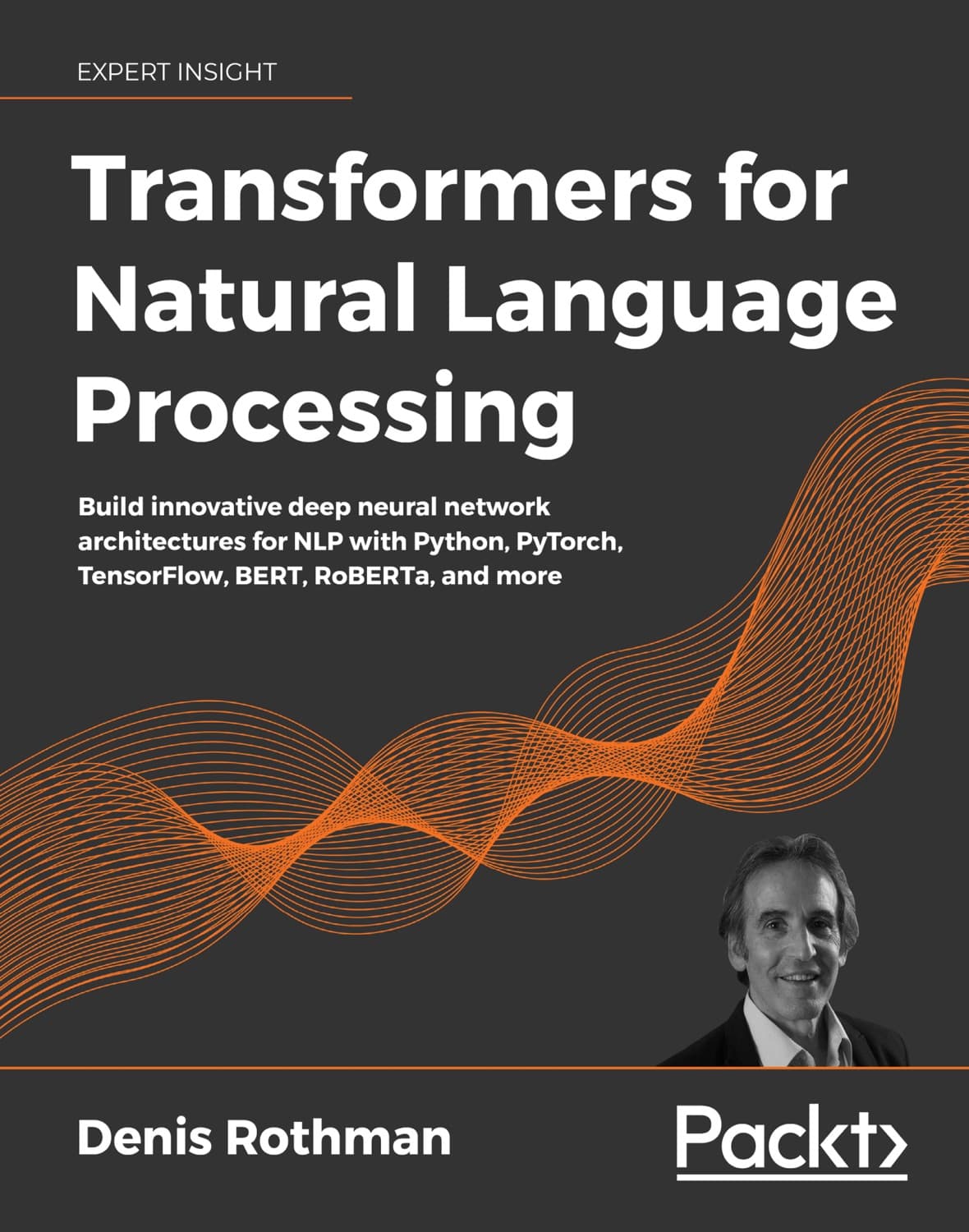
Transformers for Natural Language Processing and Computer Vision
Denis Rothman
It sharpens your transformer intuition by showing the same attention ideas across language and vision.
Same attention mechanics, different data modalities
Even when you only care about large language models, cross-domain transformer explanations deepen understanding of what attention and embeddings are doing. That helps you generalize beyond one model family.
Building AI-Powered Products
Marily Nika
You shift from “cool model demo” to product decisions: what to build, what to measure, and what to avoid.
Good LLM apps start with product constraints, not prompts
It frames large language models as product components, so the learning connects to real constraints like reliability and user value. If you want application thinking, it complements the more implementation-heavy books.
Build a Large Language Model (From Scratch)
Sebastian Raschka
Implementing the model internals changes your expectations: you see exactly where training and architecture choices become behavior.
From-scratch implementation reveals the real sources of behavior
Instead of only consuming results, it trains your understanding by building the machinery behind large language models. That directly upgrades how you debug, evaluate, and reason about generation.
Think in chains and prompts as composable components
Speech and language processing
Dan Jurafsky, Daniel Jurafsky, James H. Martin
It gives you the older language-modeling intuition that modern LLMs inherit, so errors stop feeling random.
NLP is built on linguistics plus engineering trade-offs
This is a grounding reference for core NLP ideas that still explain tokenization, language structure, and evaluation thinking. For large language models, it’s a stability layer beneath transformer novelty.
Generative Deep Learning
David Foster
You gain a generative perspective that makes LLMs feel like one case of a larger family, not a standalone miracle.
Generative modeling links data, likelihood, and sampling
It strengthens your foundation in generative modeling so large language models become easier to classify and reason about. That helps when you encounter new methods beyond today’s mainstream.

Deep Learning
Ian Goodfellow, Yoshua Bengio, Aaron Courville
You end up with the mathematical and practical neural-network backbone that makes LLM concepts less mysterious.
Backprop and optimization are the real foundation beneath LLMs
As a foundational reference, it supports the technical literacy needed to understand training dynamics and model behavior. That matters for large language models because the details underpin evaluation and tuning decisions.
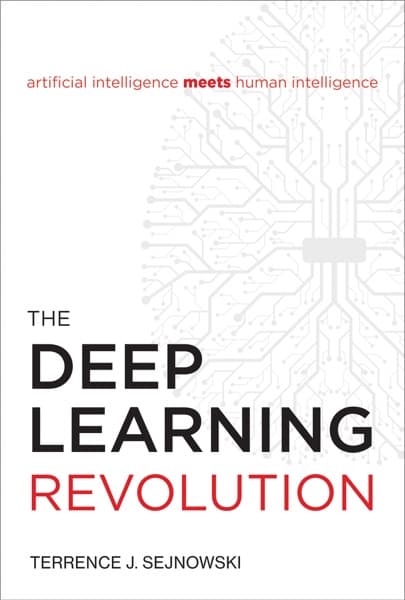
The deep learning revolution
Terrence J. Sejnowski
You understand the human and technical causes behind modern breakthrough models, not just the final results.
Breakthroughs follow better representations plus better training
It adds historical and conceptual context for why deep learning scaled to what LLMs are now. That can clarify how to interpret claims and advances in the field responsibly.
Can we tailor this list for you?
Type your question in the bar below and the AI will tailor a fresh set of picks just for you.