Best Books on Writing API Documentation
Writing API documentation gets easier once you treat docs like a product and a system, not a manuscript. Books like “The Product is Docs” and “Docs Like Code” change how you plan, write, and maintain reference that people actually use.
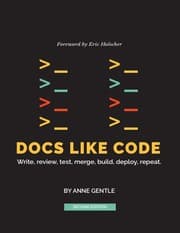
Docs Like Code
Anne Gentle
You stop “finishing” documentation and start shipping it: treat changes, review, and automation like software development.
Write docs with the same rigor as code
Gentle gives practical workflow patterns that map cleanly onto API documentation, where accuracy depends on frequent releases. If your API docs keep drifting out of sync, this helps you build a repeatable way to update, review, and validate.

The Insider's guide to technical writing
Krista Van Laan
You’ll learn to write instructions that reduce support load by making the next step unambiguous.
Design for the reader’s next action
Van Laan focuses on the core mechanics of technical writing: clarity, structure, and reader-centered explanation. For API docs, those habits translate into reference and guides that help developers succeed without guessing.
Managing Writers
Richard L. Hamilton
Documentation quality becomes repeatable when you manage it like a production process, not a personal craft.
Scale docs with roles, process, and metrics
Hamilton helps you build scalable documentation practices, which matters when API documentation grows across teams, versions, and contributors. If consistency is breaking, this supports governance, roles, and standards.
Docs for Developers
Jared Bhatti, Sarah Corleissen, Jen Lambourne, David Nunez, Heidi Waterhouse
Developer docs succeed when they’re engineered for usability: the book emphasizes the concrete choices that make APIs understandable at the point of use.
Optimize for time-to-understand, not word count
This is built for the realities of developer-facing documentation, including workflow and how users learn an API. It’s especially helpful when you need both reference clarity and guidance that fits how developers actually build.
Information Development
JoAnn T. Hackos
Treat documentation as an information program with repeatable processes, so change management becomes part of writing.
Information development is a program, not documents
Hackos offers a structured approach to building and scaling documentation programs, which is exactly what API docs require as products add endpoints and behaviors. It gives you the planning tools to sustain quality over time.
Every Page is Page One
Mark Baker
Stop relying on readers starting at the top: topic-based writing forces each page to earn its existence.
Write each topic to stand alone
Baker’s topic-based approach aligns naturally with API reference, where developers jump directly to a single endpoint or field. It helps you write pages that stand on their own, reducing confusion and mismatched context.
Design for the reader’s next action
The Elements of Content Strategy
Erin Kissane
Make content decisions with constraints and governance, so documentation stops being ad hoc and starts behaving like an ecosystem.
Content strategy defines governance and decision rules
Kissane gives the content strategy foundation for structuring developer documentation across channels, audiences, and life cycles. That thinking helps you design information architecture for APIs, not just individual pages.
Letting go of the words
Janice Redish
Clarity comes from editing away reader burden: Redish teaches you to remove what forces interpretation instead of supporting tasks.
Write for scanning: cut the friction
Redish’s web-writing principles improve the usability of API docs where dense text and vague explanations slow developers down. It’s a practical way to sharpen wording, reduce ambiguity, and make documentation feel lighter and more direct.
Can we tailor this list for you?
Type your question in the bar below and the AI will tailor a fresh set of picks just for you.