Best Books for Aspiring Technical Writers
Technical writing books for aspiring writers that shift you from “writing things down” to designing usable documentation systems, with field-tested guidance from Krista Van Laan and Mark Baker’s topic-based framework.

The Insider's guide to technical writing
Krista Van Laan
Krista Van Laan turns technical writing into an actionable craft: from getting your first assignments to producing documentation that earns trust instead of confusion.
Treat every doc as a task someone must complete.
You learn what to do on real projects, not just what “good writing” looks like in theory. That makes it a strong on-ramp for aspiring technical writers who need workplace-ready skills fast.
Handbook of technical writing
Gerald J. Alred
A single reference that helps you make style and format decisions consistently, even when your audience, toolchain, and subject change.
Consistency beats originality in workplace documentation.
This handbook gives you the core conventions technical writers rely on when they need to produce credible, workplace-standard documents. It supports your next step from student drafts to professional outputs.
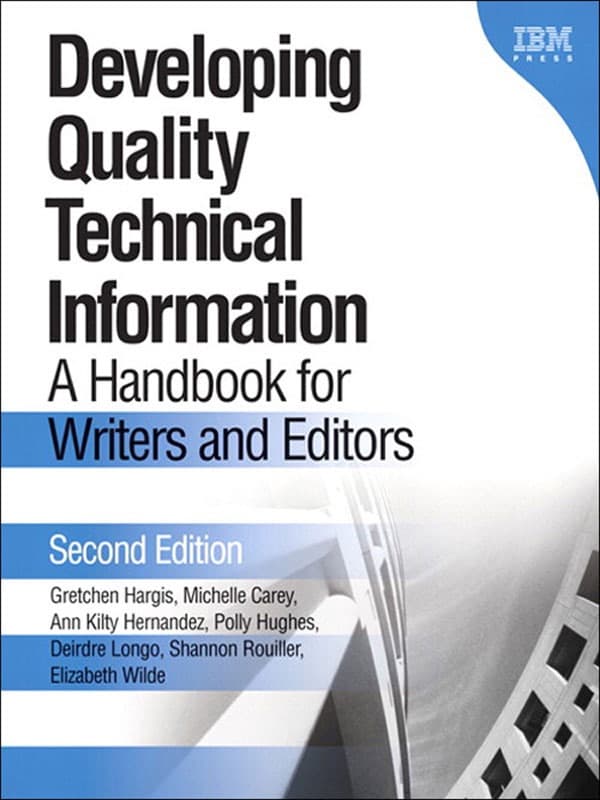
Developing Quality Technical Information
Gretchen Hargis
Structured guidance from IBM that helps you build technical information that is clear, accurate, and maintainable under real review cycles.
Quality comes from method, not inspiration.
It focuses on quality as a set of decisions and checks, not a vague writing vibe. For aspiring technical writers, that translates into fewer revisions and more confidence in deliverables.
Information Development
JoAnn T. Hackos
A documentation operations lens: planning, workflow, and governance that make content scalable as products and teams grow.
Plan information development like an operation.
If you want to become the kind of technical writer who can lead process, this is the workflow foundation. It helps you connect what you write to how documentation gets produced and maintained.
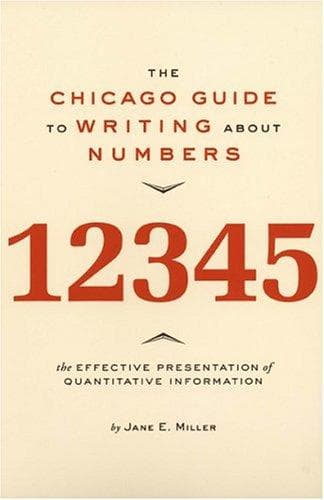
The Chicago Guide to Writing about Numbers
Jane E. Miller
Explains how to translate quantitative details into language readers can actually use, without burying meaning in statistics.
Make the number’s meaning the headline.
Aspiring technical writers often struggle to write instructions that include numbers, tradeoffs, and criteria. This supports your ability to communicate quantitative info clearly to non-specialists.
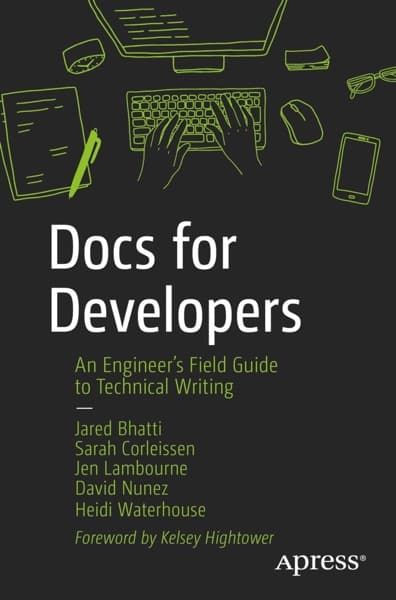
Docs for Developers
Jared Bhatti, Sarah Corleissen, Jen Lambourne, David Nunez, Heidi Waterhouse
Turns developer documentation into a usability problem you can solve: clearer APIs, better onboarding, and docs that respond to how engineers actually work.
Developer docs prioritize onboarding and task success.
It’s a practical entry point for writing developer docs and treating docs as part of the developer experience. Ideal if your future work involves APIs, SDKs, and task-based content.
Consistency beats originality in workplace documentation.
Every Page is Page One
Mark Baker
Topic-based writing becomes a repeatable production system: reuse content with precision so readers can start anywhere and still finish the job.
Write for independent pages, not whole books.
Baker’s framework helps you stop writing “linear manuals” and start building modular information that teams can update without breaking everything. That shift is central for modern technical documentation and scaling content.
Technical Writing Process
Kieran Morgan, Ali McCart, Sanja Spajic
A practical workflow model that turns research, drafting, review, and publishing into a repeatable technical writing process you can execute on real tasks.
Document the process, then follow it consistently.
This supports aspiring technical writers who want structure they can follow, especially when teams and stakeholders pull in different directions. It helps you build confidence that your output will hold up through review.
Can we tailor this list for you?
Type your question in the bar below and the AI will tailor a fresh set of picks just for you.