Best Books on Media Manipulation in Politics
Media manipulation in politics becomes legible through classic models and modern network studies: Manufacturing consent and Network Propaganda show how narratives propagate, who benefits, and why the public believes.
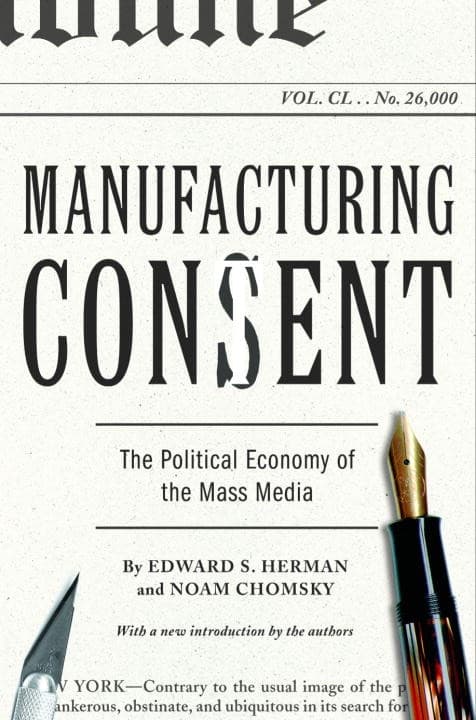
Manufacturing consent
Edward S. Herman, Noam Chomsky, Edward S. Herman, John Pruden
Finish it with a propaganda model in your head: media incentives, not individual bias, explain why certain political stories get amplified and others vanish.
Propaganda model: filters shape news beyond explicit censorship.
The book systematizes how powerful interests shape news through predictable filters, so you can map political media bias without hand-waving. For media manipulation, it gives you a working lens for spotting pattern-level influence in real reporting.
Propaganda
Edward L. Bernays
You’ll recognize persuasion as a technology: mass opinion is manufactured by crafting triggers, symbols, and “public” desires.
Public opinion can be engineered through symbols.
Bernays turns consent into something engineered, translating social psychology into tactics that politicians and industries can use. For politics and media manipulation, it clarifies the mechanism behind “spontaneous” public narratives.
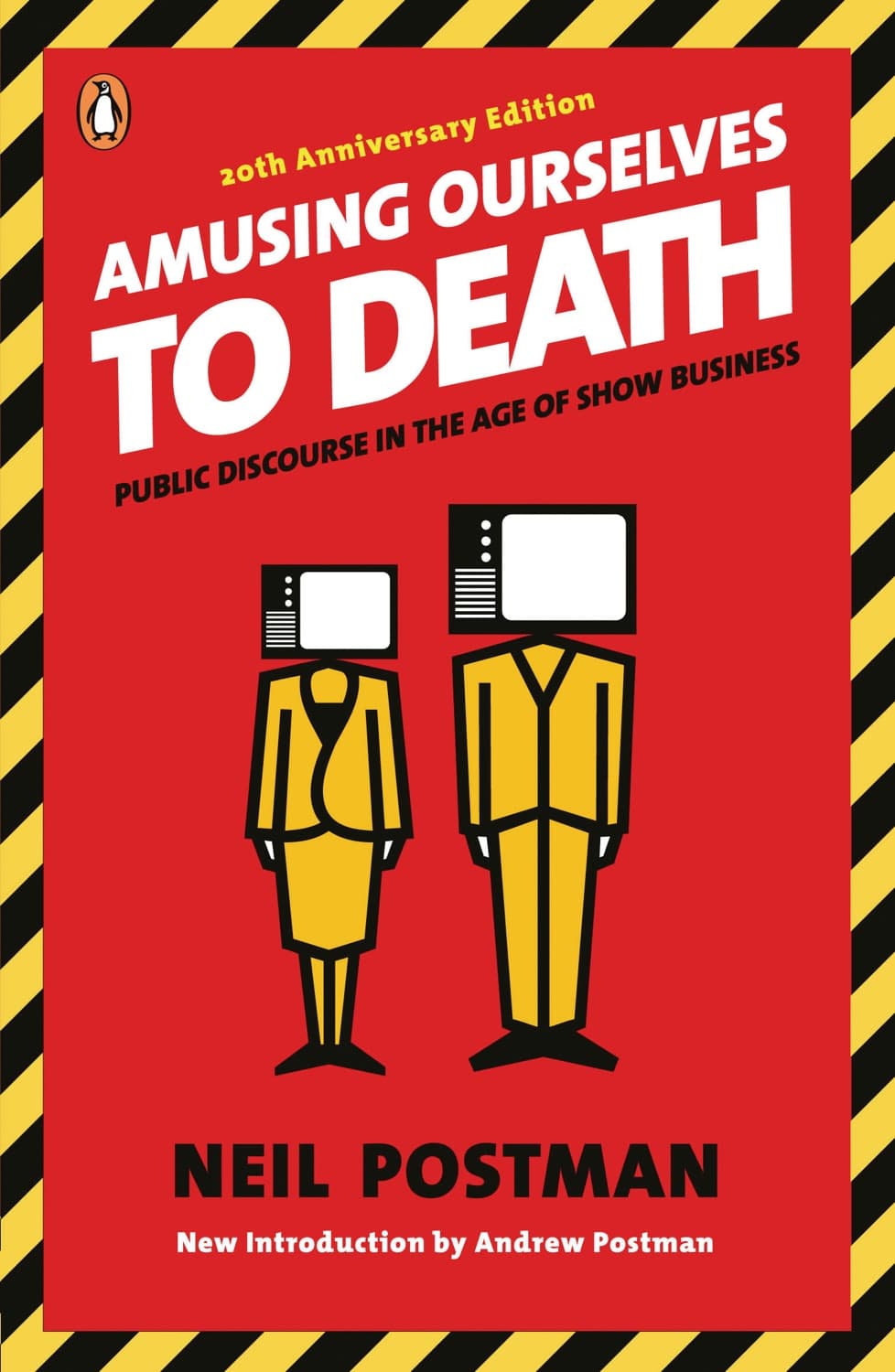
Amusing Ourselves to Death
Neil Postman, Neil Postman
After this, you’ll hear TV logic everywhere: when entertainment becomes the default mode, political judgment gets replaced by spectacle.
Media bias can be cognitive, not merely content-based.
Postman argues media forms change how we think, so political communication mutates at the level of cognition, not just messaging. If your goal is to understand manipulation, it helps you see why some narratives work: they match the medium’s incentives.

The image
Daniel J. Boorstin
Political reality starts to feel like a showroom: publicity and staged “pseudo-events” increasingly substitute for lived outcomes.
Pseudo-events replace events as reality’s source.
Boorstin explains how mediated performances become the standard for what counts as news, turning persuasion into a kind of theater. For media manipulation in politics, it sharpens your ability to distinguish information from manufactured visibility.
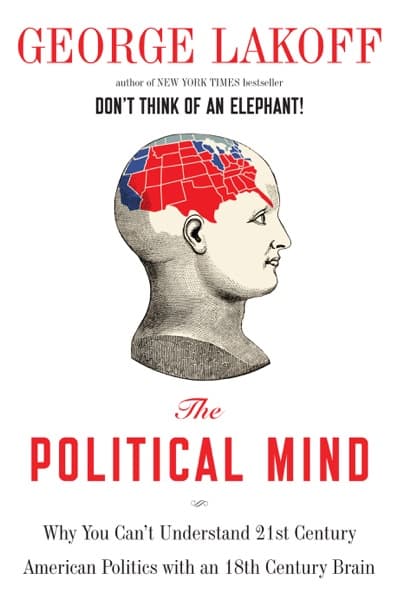
The political mind
George Lakoff
You’ll spot politics as storytelling you do not know you are doing: language nudges the frames your brain uses to interpret events.
Frames activate moral reasoning before facts arrive.
Lakoff makes framing operational, showing how metaphors and moral narratives steer persuasion. For media manipulation, this is useful because it connects rhetoric to cognition, so you can detect when language is steering conclusions.
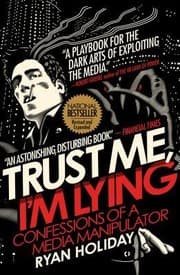
Trust Me, I'm Lying
Ryan Holiday
You’ll see modern influence as a narrative machine: amplification and outrage are engineered, then delivered as if discovered.
Outrage cycles are engineered, not organic.
Holiday demystifies tactics used in online ecosystems, from strategic timing to manufacturing credibility and momentum. For political media manipulation, it gives you a practical map of how narratives travel and why audiences keep engaging.
Public opinion can be engineered through symbols.
Network Propaganda
Yochai Benkler, Robert Faris, Hal Roberts
You’ll learn to measure disinformation as a system: networks, incentives, and content moderation dynamics jointly produce polarization.
Polarization can be engineered through networked incentives.
The authors connect online media ecosystems to coordinated influence and misinformation spread, with attention to how “sharing” functions. For political manipulation, this helps you move from vague distrust to concrete mechanisms and observable patterns.
Spin Dictators
Daniel Treisman, Sergei Guriev
Power often survives without mass terror: leaders can reduce resistance by managing information, not just using force.
Manipulation can stabilize rule through controlled narratives.
This book explains how regimes rely on media control and selective truth to shape perceptions, while maintaining stability. For media manipulation in politics, it broadens the frame beyond democracies and clarifies what “propaganda” achieves strategically.
Age of Propaganda
Anthony Pratkanis, Elliot Aronson
You’ll realize persuasion psychology scales: the same techniques used to sell products can also erode shared political reality.
Persuasion exploits cognitive shortcuts, not just arguments.
It surveys persuasion methods alongside the psychological tricks that make them effective, translating theory into recognizable dynamics. For political media manipulation, it supplies a usable mental toolkit for spotting why audiences comply.
Post-Truth
Lee McIntyre
You’ll come away seeing “post-truth” as an information ecosystem failure: when evidence loses status, politics becomes a contest of narratives.
Misinformation attacks not facts, but trust in evidence.
McIntyre explains how misinformation undermines trust, consensus, and the norms that make public reasoning possible. If you want to understand media manipulation, it shows how the damage works after the tactics land: the shared reality that politics depends on.
Can we tailor this list for you?
Type your question in the bar below and the AI will tailor a fresh set of picks just for you.