Best Books on AI Infrastructure: Chips, Data Centers, and Compute
The AI boom looks like software, but it runs on a physical base: fabs that etch chips, data centers that draw the power of small cities, cables, and rare materials. Models get the headlines; infrastructure decides who can build them. These books trace the stack from the transistor and the GPU to the silicon, copper, and power that set the limits.
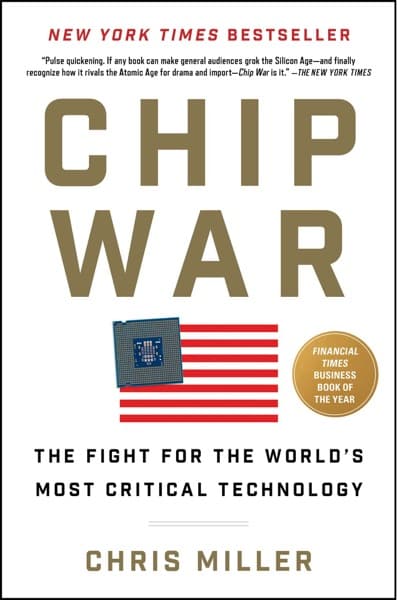
Chip War
Chris Miller, Chris Miller
How chips became the new oil.
Nearly all advanced AI chips are fabricated by a single company in Taiwan; that one dependency shapes global politics.
Miller turns the semiconductor supply chain into a geopolitical thriller, showing how a handful of companies and one Taiwanese foundry came to hold the chokepoint on which every AI ambition now depends. It is the clearest account of why chips are strategic.
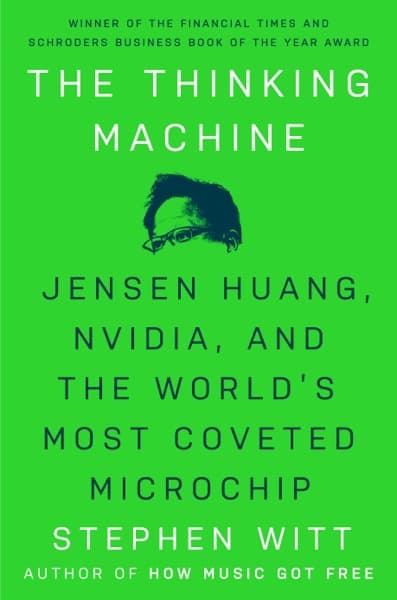
Thinking Machine
Stephen Witt
Nvidia, Jensen Huang, and the chip the boom runs on.
The GPU won because AI training is massively parallel; the chip built for drawing pixels happened to be built for matrix math.
Witt tells how a graphics-card maker became the most valuable supplier of the AI era, and how the GPU went from rendering games to training every large model. It is the story of the specific hardware that turned the AI revolution from theory into product.
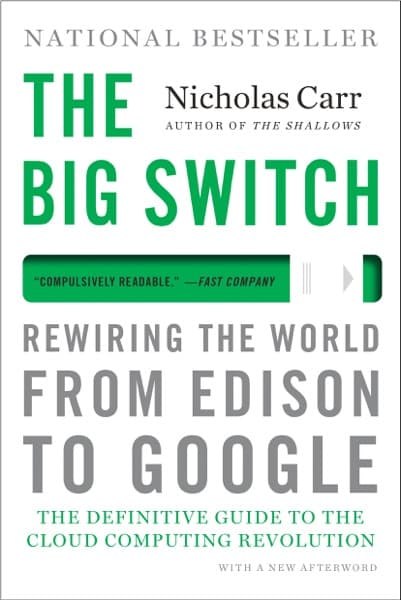
The Big Switch: Rewiring the World, from Edison to Google
Nicholas Carr
Computing became a utility, like electricity.
Just as factories stopped generating their own power, companies stopped running their own servers; compute centralized into giant utilities.
Carr draws the parallel between the rise of the electric grid and the shift to cloud computing, explaining how data centers turned compute into something you rent by the hour. It frames the economic logic that made hyperscale infrastructure inevitable.
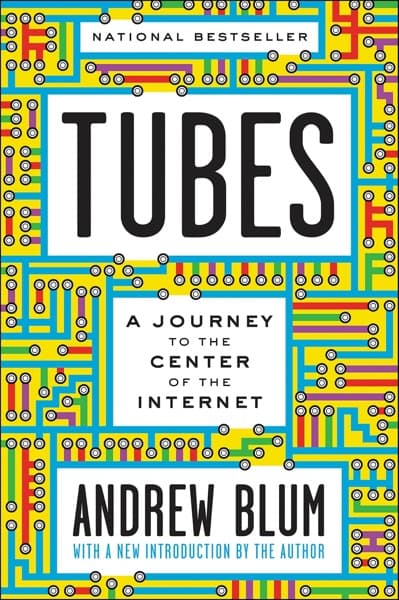
Tubes
Andrew Blum
The internet is a physical place you can visit.
The cloud is someone else's building full of machines; the internet has street addresses, and most traffic passes through a few of them.
Blum goes looking for the actual internet and finds it: the exchange points, the fiber, the unglamorous buildings where networks meet. It makes the invisible infrastructure tangible, which is exactly what most discussion of the cloud leaves out.
The Idea Factory
Jon Gertner
Where the transistor, and modern computing, was born.
The transistor, the building block of every chip, came from a corporate lab that prized patient, undirected research.
Gertner chronicles the Bell Labs era that produced the transistor, information theory, and the silicon foundations every later chip inherited. It shows that today's AI hardware sits on inventions from one extraordinary industrial lab.
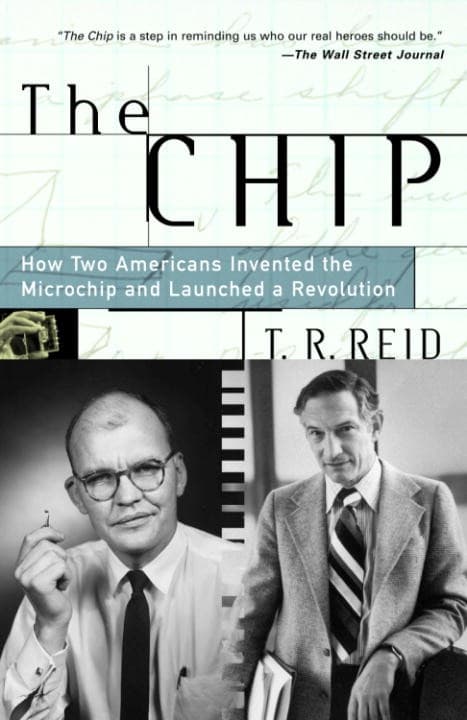
The Chip
T.R. Reid
The invention that made everything else possible.
The integrated circuit was invented twice, almost simultaneously; packing transistors onto one chip is what made Moore's Law possible.
Reid tells how Kilby and Noyce independently invented the integrated circuit, the breakthrough that let engineers pack ever more components onto silicon. It is the origin story behind every increase in computing power since.
The GPU won because AI training is massively parallel; the chip built for drawing pixels happened to be built for matrix math.
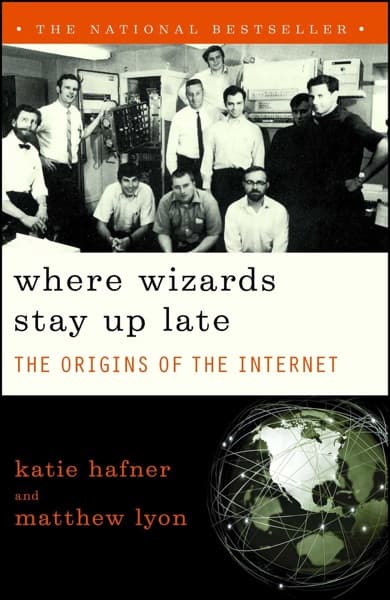
Where Wizards Stay Up Late
Matthew Lyon, Katie Hafner
How the internet was actually built.
The internet was designed to survive losing pieces of itself; packet switching, not central control, is why it scales.
Hafner and Lyon recount the building of ARPANET, the network whose design choices still shape how data moves between every data center today. It explains the plumbing layer that the AI cloud quietly depends on.
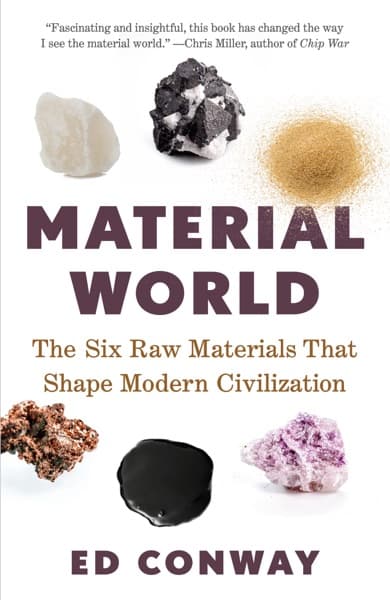
Material World
Ed Conway
The six raw materials behind modern technology.
The silicon in a chip is among the purest substances humans make; the AI economy starts, literally, with refined sand.
Conway follows sand, copper, and four other materials from the ground to the devices they become, including the ultrapure silicon at the heart of every chip. It grounds the digital economy in the physical mining and refining most people never see.

How the World Really Works
Vaclav Smil
The energy and materials reality beneath everything.
Modern civilization runs on a vast, hard-to-replace energy base; data centers compete for that same finite power.
Smil lays out the unglamorous foundations of modern life, energy above all, with a numerate clarity that punctures hype. For AI it answers the question the models ignore: where the enormous power that data centers consume actually comes from.
Can we tailor this list for you?
Type your question in the bar below and the AI will tailor a fresh set of picks just for you.