Best Books on Building Political Coalitions
Coalition-building in presidential and party politics comes into focus through books like Nelson W. Polsby and Aaron B. Wildavsky’s PRESIDENTIAL ELECTIONS and John H. Aldrich’s Why Parties?. The shared thread: how parties solve coalition problems under real constraints.
PRESIDENTIAL ELECTIONS 8TH EDITION
Nelson W. Polsby, Aaron B. Wildavsky
Candidate choice and faction management stop feeling like backstage trivia and start reading like the engine of electoral coalitions.
Coalitions are negotiated through candidate selection and factions.
Polsby and Wildavsky connect party organization to how presidential coalitions actually form, through mechanisms like candidate selection and internal bargaining. That matters for coalition-building because it shows how coalitions get assembled before general-election messaging ever takes over.
Political parties and democracy
E. E. Schattschneider
Parties are not just vessels for voters, they are the system’s organizing weapon that decides which coalitions become thinkable.
Parties define the battlefield for democracy.
Schattschneider reframes parties as instruments for durable coalition-building, not mere labels. For coalition-building, that lens clarifies why coalition strength depends on how parties structure conflict and participation.
Why Parties?
John H. Aldrich
Party formation becomes intelligible as a practical solution to persistent coalition problems, not as an accident of history.
Parties exist to solve coalition and coordination problems.
Aldrich explains why parties arise when they help coordinate competing interests and overcome coordination failures. If the goal is to build political coalitions, this gives you the underlying logic for when coalition partners will agree to play under one banner.
The American Political Tradition
Richard Hofstadter
U.S. political alliances start to look cyclical, because recurring “tradition” patterns quietly shape which coalitions can hold.
Political coalitions follow recurring tradition patterns.
Hofstadter is accessible while staying sharp about how lasting coalition patterns emerge from political culture and recurring alignments. For building coalitions, it offers a historical reality check: your coalition’s boundaries are often inherited before you choose them.
The Party Decides
Marty Cohen, David Karol, Hans Noel, John Zaller
Coalitions stop forming at the podium and start forming in party networks, before voters ever get a clean say.
Party networks coordinate coalitions pre-primary.
Cohen, Karol, Noel, and Zaller trace how party organization coordinates messages and incentives ahead of primaries. That matters for coalition-building because it shows where to intervene: the coalition logic lives in the network that structures who gets heard.

The strategy of conflict
Thomas C. Schelling
Coalition-building reads like bargaining: the real lever is credible threat, not just persuasion.
Credible commitment beats mere demands.
Schelling supplies a strategic framework for how parties coordinate and compete while still landing on shared outcomes. For political coalition builders, it helps translate “alliances” into incentives, commitments, and negotiation moves that prevent breakdown.
Parties define the battlefield for democracy.
Politics Is for Power
Eitan Hersh
Coalition-building becomes operational: you treat influence as something you build through organizing, not something you inherit from ideology alone.
Power comes from organizing, not vibes.
Hersh focuses on how coalitions form through real-world organizing choices and the distribution of political power. That matters for your topic because it translates coalition-building from theory into practical steps for assembling support.
Going Public
Samuel Kernell
Presidential coalitions start looking like public-pressure campaigns that can bypass party channels when incentives shift.
Public pressure can realign presidential coalitions.
Kernell explains coalition formation through public appeals and the use of pressure, especially in the presidential context. For building coalitions, it offers a second pathway: persuade and mobilize directly while reshaping what party actors feel compelled to do.
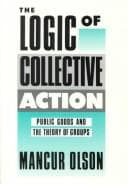
The Logic of Collective Action
Mancur Olson
Coalition formation is hard because shared benefits create free-riding, and the book teaches how groups still overcome that trap.
Selective incentives reduce free-riding in coalitions.
Olson provides the classic problem statement for why coalitions struggle to form and persist. For your goal, it gives you the caution that coalition-building is as much about incentives and enforcement as it is about shared ideals.
Can we tailor this list for you?
Type your question in the bar below and the AI will tailor a fresh set of picks just for you.