Best Books on Retrieval-Augmented Generation (RAG)
RAG lives at the junction of retrieval science and production LLM design. Kleppmann, Büttcher, and Manning build the retrieval foundations, while Chip Huyen and AWS practical guides close the gap to real systems.
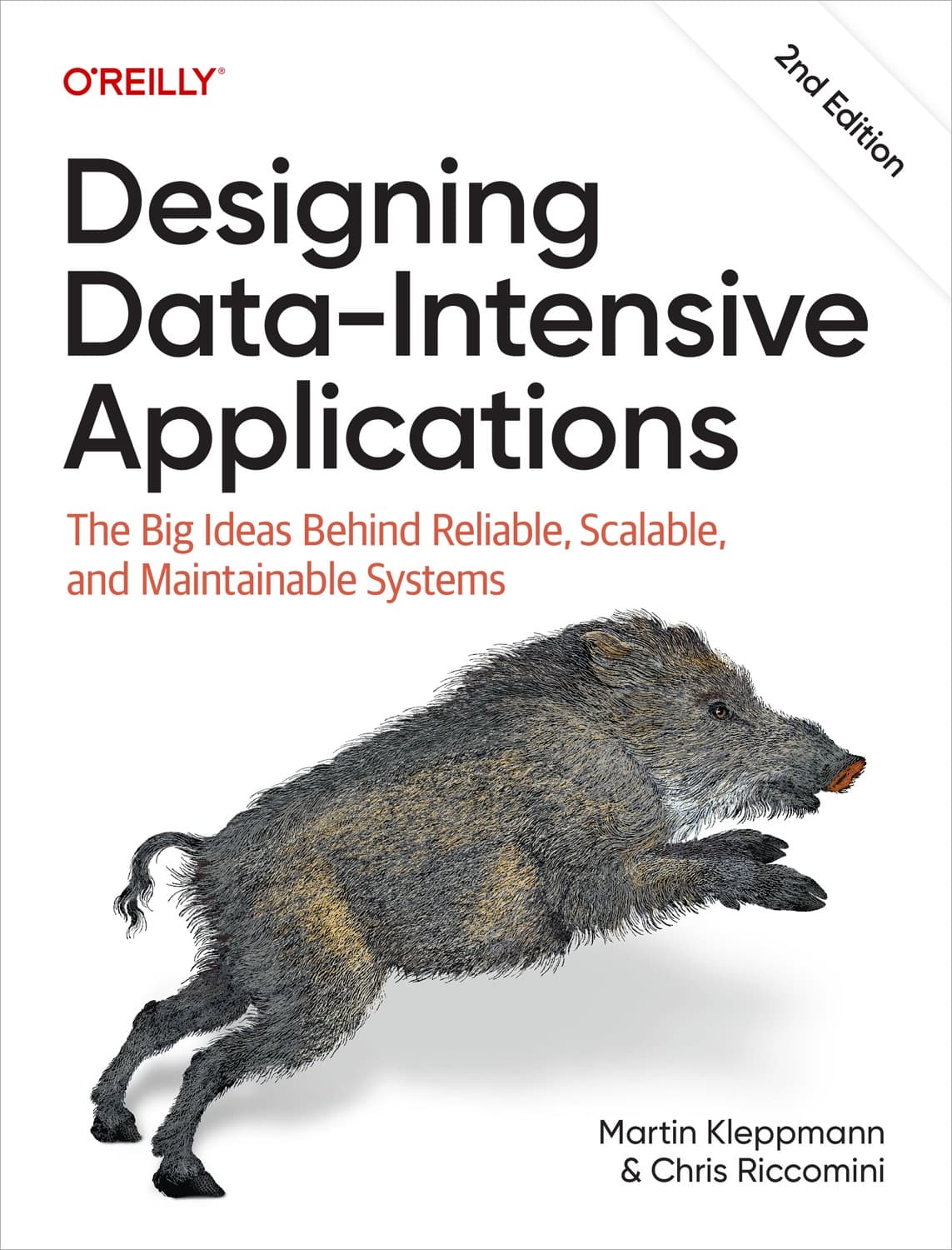
Designing Data-Intensive Applications
Martin Kleppmann
After Kleppmann, you stop treating retrieval like a single component and start designing it as a distributed system with failure modes, latencies, and data contracts.
Treat RAG like a distributed system, not a feature.
It gives RAG-relevant system patterns: indexing and serving pipelines, durability, backpressure, and data modeling decisions. That matters because RAG quality often depends on ingestion and retrieval behavior under real constraints.
Information retrieval
Stefan Büttcher
Büttcher’s framework turns “good search” into measurable retrieval behavior using explicit evaluation methods rather than intuition.
Evaluate retrieval with metrics, not vibes.
RAG inherits the evaluation mindset from classic IR: relevance, ranking, and error analysis. For RAG, that means you can reason about retrieval quality and know what to improve when answers drift.
Introduction to information retrieval
Christopher D. Manning, Prabhakar Raghavan, Hinrich Schütze
Manning, Raghavan, and Schütze give you the math intuition for ranking: you learn why retrieval works, not just that it works.
Use ranking theory to reason about retrieval signals.
RAG replaces or augments parts of classical retrieval with embeddings, but the core ideas behind scoring and term evidence still sharpen your design choices. You will understand where vector retrieval helps, where it fails, and how to debug.
Natural Language Processing with Transformers, Revised Edition
Lewis Tunstall, Leandro von Werra, Thomas Wolf
This book makes transformer mechanics practical enough that you can connect representation learning to retrieval behavior you deploy in RAG.
Understand representations before trusting similarity.
It reinforces how embeddings and transformer outputs relate to similarity and downstream use. That matters when your RAG pipeline depends on choosing models, understanding their limits, and shaping inputs for retrieval and generation.
Generative AI on AWS
Chris Fregly, Antje Barth, Shelbee Eigenbrode
Generative AI on AWS pushes RAG from demo land into an implemented workflow: services, integrations, and practical architecture decisions.
Wire RAG as architecture, not as prompt glue.
It grounds RAG in enterprise deployment patterns, including how retrieval components fit into a larger application. That matters if your goal is a working system with maintainability and operational sanity, not just a model call.
AI Engineering
Chip Huyen
After AI Engineering, you treat RAG as an engineered pipeline you can test, observe, and iterate on, not a one-time integration.
Build feedback loops for retrieval and generation.
It focuses on production LLM system design patterns that map directly to retrieval: evaluation loops, data handling, and reliability thinking. That helps when you need RAG to stay accurate as content, models, and user behavior change.
Evaluate retrieval with metrics, not vibes.
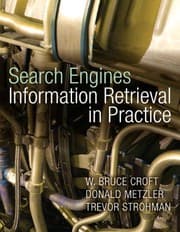
Search Engines
W. Bruce Croft, Donald Metzler, Trevor Strohman
Croft, Metzler, and Strohman show search as engineering: indexing, ranking, and relevance features as a living system rather than a textbook abstraction.
Design retrieval knobs with relevance in mind.
RAG often starts as “search with embeddings,” but classic search-engine design clarifies the knobs: ranking logic, query understanding, and retrieval evaluation. You gain better instincts for improving recall and precision under constraints.
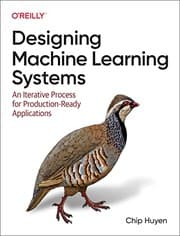
Designing Machine Learning Systems
Chip Huyen
This book helps you model LLM and retrieval systems as end-to-end pipelines where data quality and feedback determine success.
System quality beats model quality for RAG reliability.
It directly supports the kind of thinking RAG needs: how to handle data, define evaluation, and reduce brittleness across training, retrieval, and serving. You will be better equipped to make RAG robust instead of fragile.
Hands-On Large Language Models
Jay Alammar, Maarten Grootendorst
Hands-On Large Language Models turns vector search and embeddings into something you can actually reason about and build with, not just conceptually accept.
Treat embeddings as a retrieval index, not an afterthought.
It provides accessible implementation context that pairs well with classic IR theory when you’re assembling a RAG stack. That matters if you want to connect the retrieval concepts you learn to concrete embedding and similarity workflows.
Can we tailor this list for you?
Type your question in the bar below and the AI will tailor a fresh set of picks just for you.