Best Books on Franchising Red Flags
Franchising Red Flags is best handled with books that teach you to see the sales pitch as data: Franchise Fraud by Robert L. Purvin and The Franchisee Handbook by Mark Siebert focus on warning signs before you sign.
Franchise Fraud
Robert L. Purvin
You learn to recognize franchise fraud as a pattern: deceptive sales tactics, misrepresented support, and abuses that show up long before the dispute.
Verify every promise: support, performance, and training claims.
This book treats red flags as predictable behaviors, not vague “be careful” advice. For franchise red flags, that means you can stress-test claims against how scams typically operate.
The Franchisee Handbook
Mark Siebert
It turns franchise risk into a workmanlike evaluation process you can apply before signing and after joining.
Use documents to test representations, not persuasion.
Rather than lecturing on caution, it emphasizes the due-diligence steps that uncover common franchise pitfalls. That directly supports your red-flag goal: fewer surprises, clearer decision criteria.
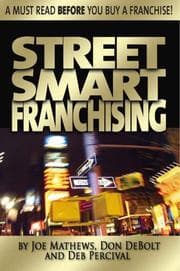
Street Smart Franchising
Joe Mathews
You start viewing a franchise system like a system of incentives, where the wrong incentives create predictable “red flag” outcomes.
Watch incentives: who benefits when revenues disappoint.
This primer helps you assess how franchises really function and where mistakes tend to concentrate. For spotting red flags, it helps you look past branding and ask what the structure rewards.
The Educated Franchisee
Rick Bisio, Mike Kohler
It reframes buying a franchise as matching: fit failures, unclear expectations, and hidden mismatches drive many of the worst outcomes.
A mismatch is a red flag, not “just bad luck.”
The emphasis on practical evaluation makes it easier to identify a “bad opportunity” without relying on hype. If your goal is red flags, this helps you spot mismatch signals early, before they become expensive.
Franchise Bible
Erwin J. Keup
The risks are organized so you can compare what you are told versus where problems usually cluster in franchise buying.
Treat risk areas as categories you can audit.
This broad franchise buying guide gives you warning-area coverage in one place, useful when red flags show up across legal, operational, and financial claims. It is especially handy for building a comprehensive checklist mindset.
So You Want To Franchise Your Business?
Adina M. Genn, Harold Kestenbaum
It helps you spot deal-structure hazards by focusing on legal and financial clarity that fraudsters and sloppy deals avoid.
Clarity in terms reduces opportunities for misrepresentation.
Even though it is about franchising your business, it sharpens your ability to recognize the kinds of terms that lead to disputes and bad outcomes. For red flags, that legal and financial checklist perspective is directly transferable.
Use documents to test representations, not persuasion.
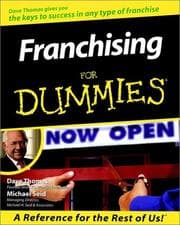
Franchising For Dummies
Michael H. Seid, Dave Thomas
It demystifies franchise evaluation so you can separate understandable marketing from the red-flag parts of the offer.
If you cannot explain the numbers, treat it as a warning.
As an accessible baseline, it helps you learn the evaluation concepts that make warning signs legible. For franchise red flags, that matters because you cannot reliably spot problems you do not know how to ask about.
Can we tailor this list for you?
Type your question in the bar below and the AI will tailor a fresh set of picks just for you.