Best Books for Home Roasters and Coffee Scientists
Home roasting and coffee science come together cleanly in Scott Rao’s The Coffee Roaster's Companion and Jonathan Gagné’s The Physics of Filter Coffee. Pick these for real control: variables, chemistry, and extraction links, not coffee folklore.
The Coffee Roaster's Companion
Scott Rao
Scott Rao’s roasting “companion” turns vague roasting habits into measured cause and effect, so your next batch is designed, not guessed.
Log your RoR and development time, not just the roast color.
It separates controllable variables (time, temperature, airflow, development) from outcomes, then shows how to read patterns in your logs. For home roasters who also want science, it gives a practical lab mindset without losing the craft.
Cultivar
Rob Hoos
Cultivar (the shorter edition) condenses Hoos’s roast-curve logic into a tighter set of decisions you can apply on your next batch.
Development is the lever: manage it to manage flavor.
It keeps the core scientific framing for roast development and defects, with fewer detours. If your goal is “science I can use” for home roasting experiments, this is the same mindset, more immediately deployable.
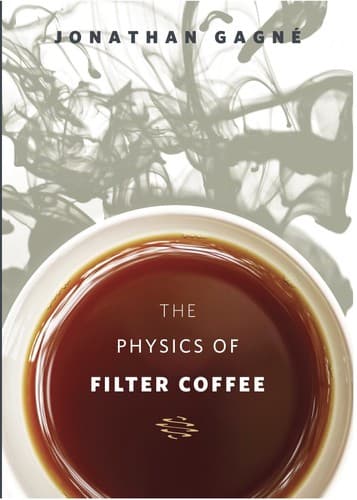
The Physics of Filter Coffee
Jonathan Gagné
Jonathan Gagné treats filter brewing like physics: small parameter changes create predictable extraction shifts you can reason about.
Brew ratio and yield are tied to extraction physics, not taste alone.
This is the extraction book technical coffee people reach for when they want fewer myths and more measurable mechanisms. It helps home roasters and brew hobbyists connect what they roast to how the filter cup responds.
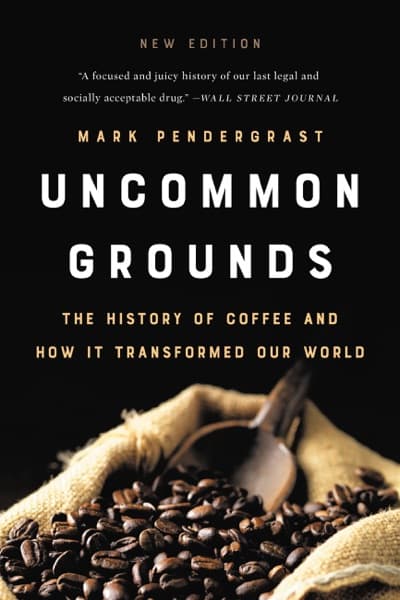
Uncommon grounds
Mark Pendergrast
Uncommon grounds reframes roasting as part of a system: industrial economics, chemistry, and culture shaping what we drink.
Roasting trends track technology and markets, not just taste.
It is a big-picture history that still pays off for technical readers because it explains why certain roasting styles, equipment choices, and industry practices took over. That context helps home roasters stop treating today’s defaults as universal truths.
The World Atlas of Coffee
James Hoffmann
James Hoffmann’s Atlas makes the entire pipeline from origin to brewing feel navigable, so technical decisions have context behind them.
Know processing and roast level to predict brewing behavior.
It’s broad without being hand-wavy: processing, roasting, and brewing concepts connect to real-world styles. For home roasters and coffee scientists, it’s a grounding reference that helps you interpret what to change and why, across the workflow.
Coffee
Robert W. Thurston, Jonathan Morris, Shawn Steiman
Coffee by Thurston, Morris, and Steiman reads like a reference shelf for producers and scientists: chemistry, processing, and production all in one place.
Treat coffee as chemistry plus processing history, not just “fresh roast”.
It spans the domain that home roasters and extraction geeks constantly bounce between, from roasting fundamentals to industry context. When you want to understand how the raw material and process choices constrain what roasting can fix, this helps.
Development is the lever: manage it to manage flavor.
Cultivar
Rob Hoos
Cultivar (the shorter edition) condenses Hoos’s roast-curve logic into a tighter set of decisions you can apply on your next batch.
Development is the lever: manage it to manage flavor.
It keeps the core scientific framing for roast development and defects, with fewer detours. If your goal is “science I can use” for home roasting experiments, this is the same mindset, more immediately deployable.
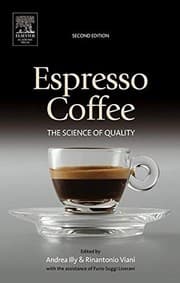
A Coffee Dream
Andrea Illy
A Coffee Dream collects the researchers’ view: the chemistry behind coffee quality is measurable, not just subjective romance.
Quality rests on chemistry and how roasting shapes it.
Illy’s scientific lens helps you understand what quality means chemically and how it links to roasting and extraction. For readers who want coffee science with intellectual credibility, it supports your experiments with better definitions.
Can we tailor this list for you?
Type your question in the bar below and the AI will tailor a fresh set of picks just for you.