Best Books on How Dictators Take Over
Hannah Arendt’s The Origins of Totalitarianism and Robert O. Paxton’s The Anatomy of Fascism explain the mechanisms behind takeover, from mass movements to institutional capture, so authoritarian politics stop feeling mysterious.

The Origins of Totalitarianism
Hannah Arendt
After Arendt, you start noticing how loneliness, panic, and ideology get converted into a system that doesn’t just rule, but remakes reality.
Totalitarianism: ideology plus terror plus mass organization.
Arendt traces how total domination grows from mass movements and a breakdown of ordinary political life, not only from the leader’s will. That lens helps connect dictator takeovers to social conditions and ideological machinery that make people comply.
The Anatomy of Fascism
Robert O. Paxton
Paxton’s framework makes fascism look less like a sudden explosion and more like a set of choices that escalate, opportunistically, into dictatorship.
Fascism advances through a sequence of escalating commitments.
This book distinguishes how fascist movements rise: courting legitimacy, reshaping institutions, and then using power to neutralize rivals. For takeover-focused reading, it gives you a practical map of the steps dictators and their backers normalize over time.
How Democracies Die
Steven Levitsky, Daniel Ziblatt
You finish it seeing democratic backsliding as a process driven by elected officials, rules, and party incentives rather than street violence alone.
Norms are the democracy’s protection system.
Levitsky and Ziblatt explain how democracies erode when leaders exploit formal elections while undermining norms and safeguards. That matters for dictator takeovers that begin inside institutions, using legality as a cover for coercion.

The Road to Unfreedom
Timothy Snyder
Snyder trains your attention on small institutional and information failures that, together, enable large authoritarian outcomes.
Authoritarianism uses propaganda to reorder reality.
Instead of treating authoritarianism as a distant threat, the book explains strategy: propaganda, historical distortion, and the capture of institutions. It sharpens how you recognize an authoritarian roadmap while it is still forming.
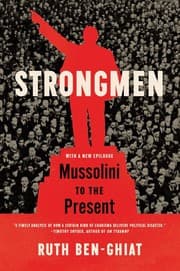
Strongmen
Ruth Ben-Ghiat
Ben-Ghiat makes takeover strategy feel intimate: the personal tactics of image, intimidation, and patronage are part of how dictators become durable.
Strongmen survive through fear plus reward.
The book connects how strongmen gain power to how they keep it, including incentives for collaborators and the role of performance. For dictator takeovers, that matters because survival skills are often more revealing than ideology alone.

The True Believer:Thoughts on the Nature of Mass Movements
Eric Hoffer, Eric Hoffer
After Hoffer, mass movements start to look like a psychological engine: people seek meaning through belonging, discipline, and the promise of total transformation.
The true believer seeks identity through self-surrender.
Hoffer analyzes susceptibility to mass politics and the emotional needs that authoritarian movements exploit. That perspective complements institutional accounts by explaining why people accept dehumanizing programs when ordinary life feels unstable.
Can we tailor this list for you?
Type your question in the bar below and the AI will tailor a fresh set of picks just for you.