Books Like The Power Broker by Robert Caro
Robert Caro's The Power Broker set the standard for the doorstop biography that turns one life into a portrait of how power really works. These books share its ambition: exhaustively researched, propulsively written accounts of the people and institutions that built, and bent, the modern world.
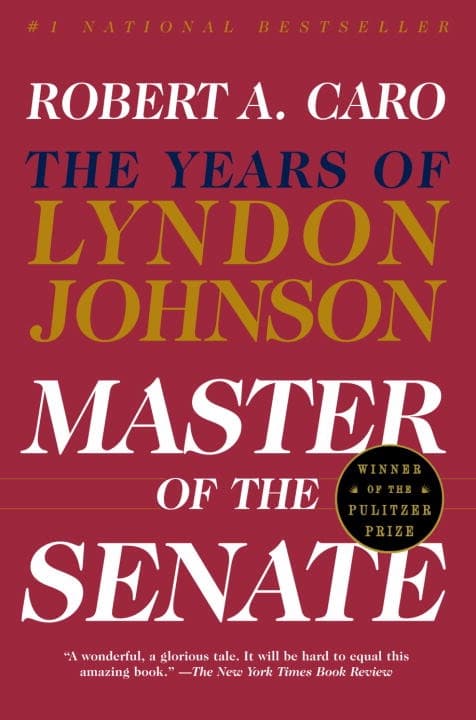
The Years of Lyndon Johnson: Master of the Senate
Robert A. Caro
Caro turns his forensic lens from a city builder to the United States Senate.
Caro spends over a hundred pages on how the Senate works before Johnson even arrives, because you cannot grasp his genius without first seeing the machine he conquered.
The third volume of Caro's LBJ series dissects how Johnson mastered a legislative body designed to resist power, using the same relentless detail that made The Power Broker and delivering the definitive account of how one man bends an institution to his will.
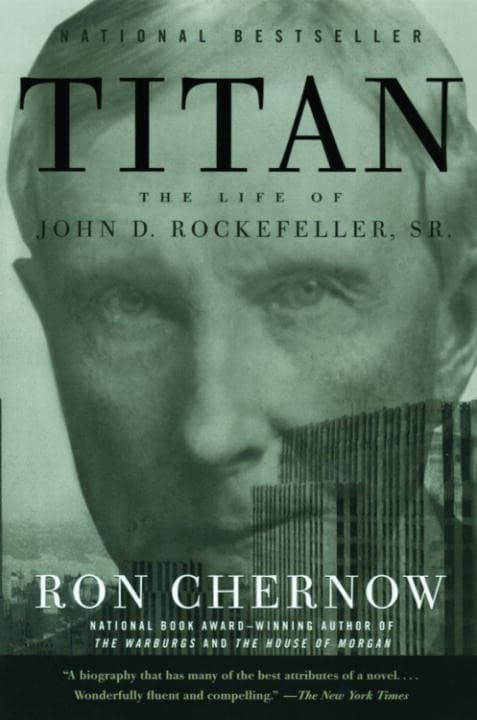
Titan
Ron Chernow
The definitive life of America's first billionaire and its most contradictory.
Rockefeller kept meticulous ledgers of every penny from boyhood, a habit of control that later scaled into the most complete monopoly in American history.
Chernow renders Rockefeller in full, the ruthless monopolist who crushed rivals to build Standard Oil and the devout philanthropist who gave away a fortune, with the archival depth and narrative control that mark the Caro tradition of the total biography.
The Rise of Theodore Roosevelt
Edmund Morris
A sickly boy wills himself into the most vital man in America.
Roosevelt read a book a day, boxed, and ranched before becoming the youngest president, all driven by a father's warning to make his body match his mind.
Morris covers Roosevelt from birth to the presidency with cinematic momentum, showing how relentless self-invention forged a politician of enormous appetite, and earning the Pulitzer for a biography as propulsive and exhaustive as anything Caro wrote.
American Prometheus
Kai Bird, Martin J. Sherwin
The physicist who built the bomb, then was destroyed by the country he armed.
The security hearing that broke Oppenheimer was less a trial than a ritual, staged to make an example of a man who had grown inconvenient to power.
Twenty-five years in the making, this biography traces Oppenheimer from the Manhattan Project to his humiliating security hearing, using vast archival research to show how one man's brilliance collided with the machinery of Cold War power.
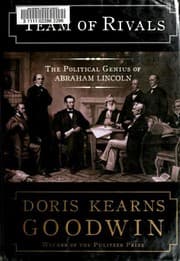
Team of Rivals
Doris Kearns Goodwin
Lincoln builds a cabinet out of the men who wanted his job.
Lincoln deliberately appointed the men who had scorned him, betting that binding rivals close was safer than leaving them outside to plot against him.
Goodwin braids the lives of Lincoln and his rivals into a single narrative, showing how he managed ego, ambition, and crisis to hold the Union together, a study of political skill as granular and character-driven as Caro's own portraits of power.
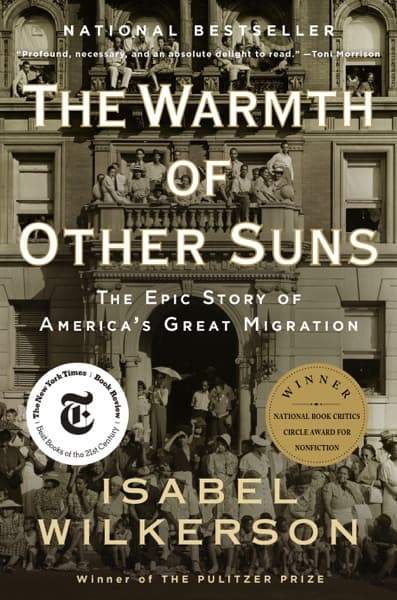
The Warmth of Other Suns
Isabel Wilkerson
Six million people move north, and a country is remade.
By following three ordinary migrants across decades, Wilkerson captures a mass movement no leader directed, yet one that reshaped American cities forever.
Wilkerson spent fifteen years and more than a thousand interviews to tell the Great Migration through three unforgettable lives, proving that Caro-scale ambition can serve a whole people's movement, not only a single powerful man.
Rockefeller kept meticulous ledgers of every penny from boyhood, a habit of control that later scaled into the most complete monopoly in American history.
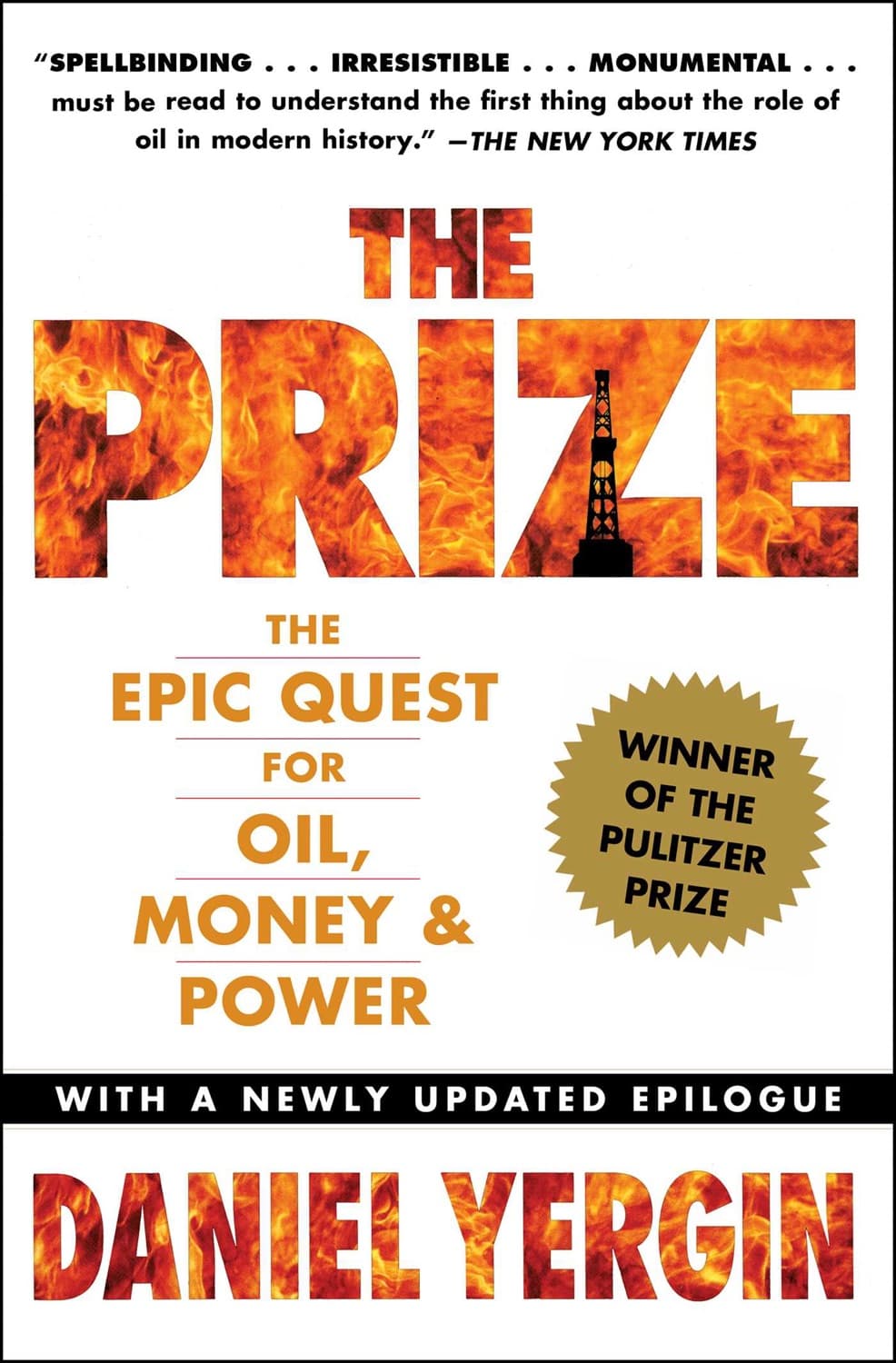
The Prize
Daniel Yergin
The history of the modern world told through oil.
Yergin argues that nearly every major war of the last century turned, somewhere along the line, on the control of oil.
Yergin traces how petroleum shaped economies, wars, and empires from the first wells to the Gulf War, earning the Pulitzer for a sweeping institutional history that shows how a single commodity became the axis of twentieth-century power.
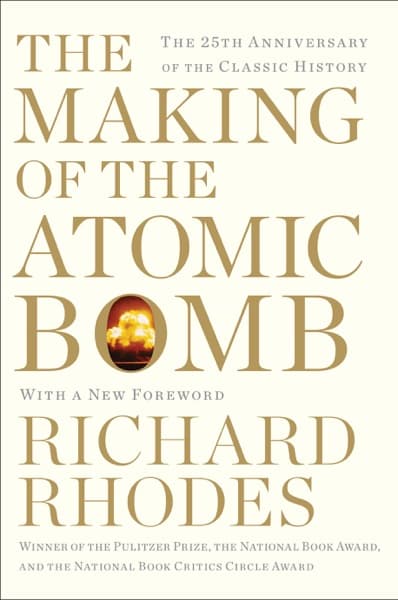
The Making of the Atomic Bomb
Richard Rhodes
The full story of how physics became the most powerful weapon on earth.
Rhodes shows the bomb was thinkable decades before it was buildable, and that the science raced far ahead of anyone's ability to control what it would unleash.
Rhodes fuses science, biography, and politics into one monumental narrative, tracing the bomb from theoretical breakthrough to Hiroshima with the exhaustive research and moral weight that define the Caro school of nonfiction.
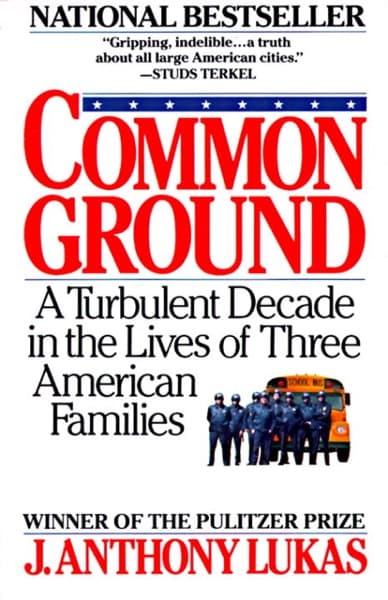
Common Ground
J. Anthony Lukas
Boston's busing crisis told through three families who lived it.
Lukas refuses easy heroes, showing how well-meaning policy and entrenched neighborhoods ground against each other until no one felt like the winner.
Lukas follows a Black, an Irish working-class, and a white professional family through the desegregation battles of the 1970s, building a Caro-like portrait of how race, class, and city politics collide, and winning the Pulitzer for a book too few readers name today.
Can we tailor this list for you?
Type your question in the bar below and the AI will tailor a fresh set of picks just for you.