Best Books on UX writing
UX writing books that move beyond “good copy” to decisions and systems: Strategic Writing for UX by Torrey Podmajersky and Microcopy by Kinneret Yifrah and Jacqui Licht turn words into product design leverage.
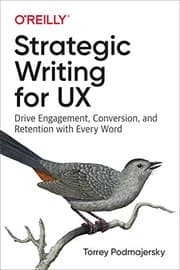
Strategic Writing for UX
Torrey Podmajersky
Finishing Strategic Writing for UX gives you a repeatable way to justify voice, clarity, and hierarchy as product decisions, not opinions.
Write with a governance mindset, not a style moodboard.
It grounds UX writing in principles, a working process, and governance so teams can ship consistent content across features. That helps when your UX writing work keeps getting treated as polish instead of a core part of the user experience.

Writing Is Designing
Michael J. Metts, Andy Welfle, Nick Madden
Writing Is Designing reframes interface copy as a design material you shape alongside layout, flow, and behavior.
Interface text is interaction design, not decoration.
It ties UX writing to product design practice, helping you collaborate with designers and understand what the words are doing in the system. That shift is especially useful when UX writing feels siloed from the rest of design work.
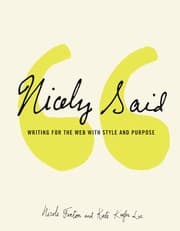
Nicely Said
Nicole Fenton, Kate Kiefer Lee
Nicely Said helps you craft digital content that reduces friction by making meaning instantly legible.
Clarity is a UX outcome, not a writing virtue.
It focuses on clarity across interfaces and flows, giving language and reasoning you can apply to real UX screens. When your goal is better comprehension at the point of decision, its guidance supports consistent, humane writing.

Content Strategy for the Web
Kristina Halvorson, Melissa Rach
Content Strategy for the Web gives UX writing the long-range context to scale from one screen to an entire product ecosystem.
Model content needs like any other product asset.
It’s foundational for aligning content work with audiences, governance, and ongoing operations. That matters when UX writing is expanding across product surfaces and you need a durable approach, not a patchwork of conventions.
The Content Fuel Framework
Melanie Deziel
The Content Fuel Framework changes brainstorming into a repeatable system that consistently produces user-centered content ideas.
Fuel ideas with user needs and constraints.
It helps you generate and prioritize content by connecting topics to user needs, which strengthens the upstream work UX writing depends on. If you struggle to translate research into what to write next, this adds structure to the pipeline.
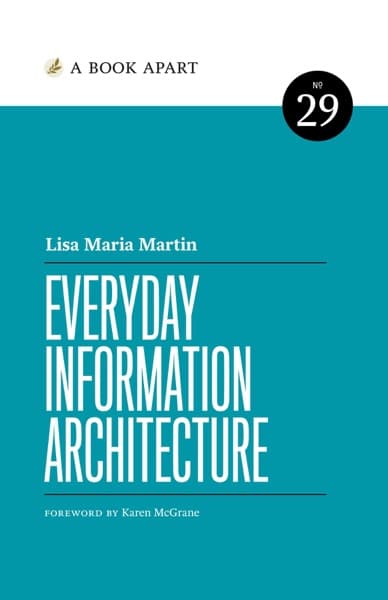
Everyday Information Architecture
Lisa Maria Marquis
Everyday Information Architecture helps you see labels, navigation, and structure as part of the writing problem.
Good labeling depends on shared user understanding.
It grounds UX copy in how people find and interpret information, which makes your micro and UI writing align with the overall structure. That connection matters when “good words” still fail because the underlying information model is unclear.
Can we tailor this list for you?
Type your question in the bar below and the AI will tailor a fresh set of picks just for you.