Best Books for UX researchers
UX researcher training books like Observing the User Experience and Interviewing Users turn “asking people” into evidence, with methods you can run, synthesize, and defend. The through-line: turning research into decisions, not opinions.
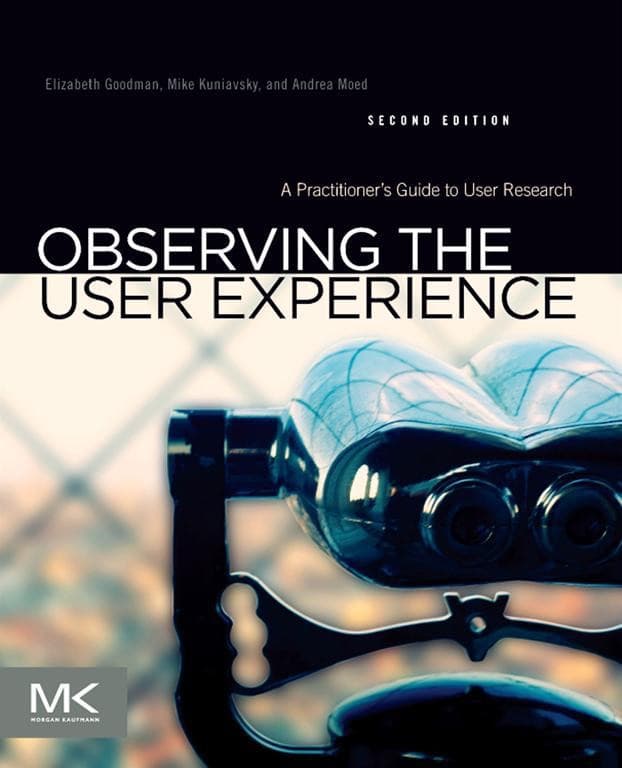
Observing the User Experience
Elizabeth Goodman, Mike Kuniavsky
Good research starts before the first session: you leave with a plan, a recruitment approach, and a synthesis method that holds up to scrutiny.
Synthesize into themes, not transcripts.
This field guide treats research as a system: planning, conducting, and turning observations into findings. It fits UX researchers who need repeatable process and credible outputs for product teams.
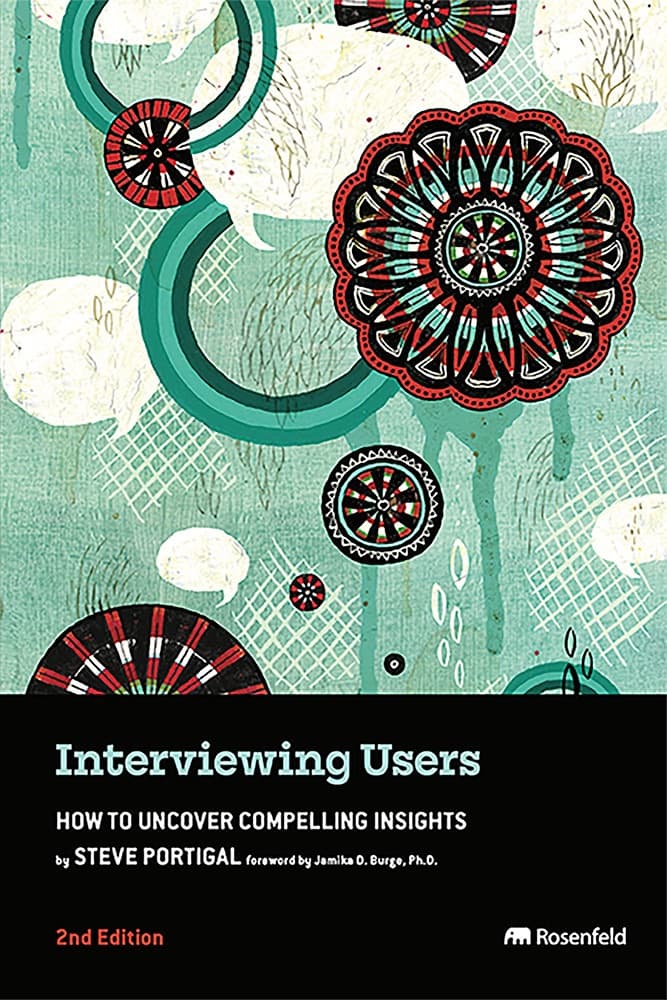
Interviewing Users
Steve Portigal
Interviewing becomes controllable: you learn how to probe for reality while reducing the “what we think you mean” problem.
Ask for specifics, then ask for meaning.
Portigal focuses on the craft of eliciting useful stories, not generic advice. If you want better UX research interviews, you get techniques for prompting, follow-ups, and turning sessions into usable narratives.
Just Enough Research
Erika Hall
You stop treating research as a big project and start using “just enough” methods to de-risk decisions without drowning the team in process.
Match method effort to decision risk.
Hall maps lightweight techniques to common product questions. That matters when UX research has to fit real timelines and limited resources while still producing actionable evidence.
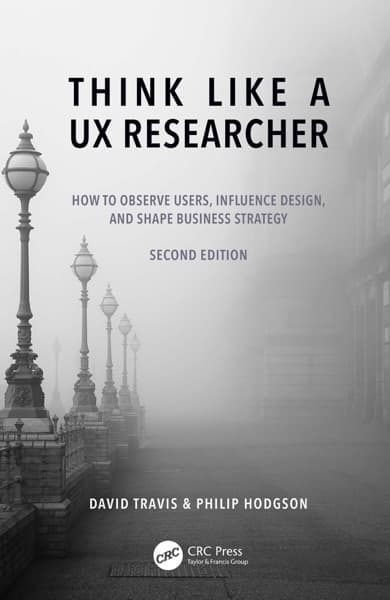
Think Like a UX Researcher
David Travis, Philip Hodgson
The mindset shift is the method: you learn to translate messy user evidence into decisions the organization can actually use.
Turn observations into decisions.
This book helps researchers and partners connect research work to organizational impact. It suits teams that want clarity on what a UX researcher does beyond running studies.
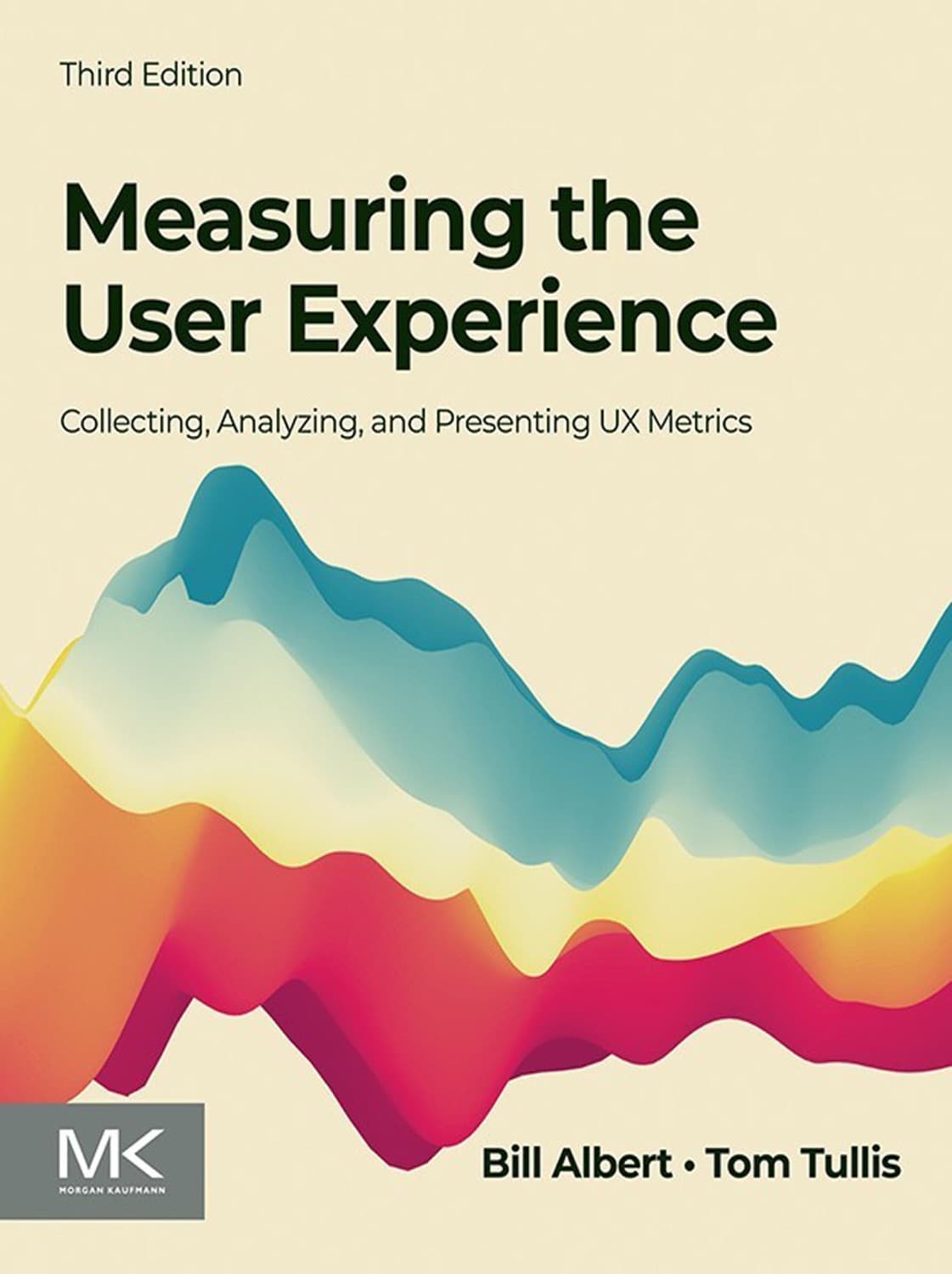
Measuring the User Experience
Bill Albert, Tom Tullis
You get measurement literacy: surveys, benchmarks, and performance metrics stop feeling arbitrary and start feeling defensible.
Measure what you can interpret.
Albert and Tullis give a standard reference for quantitative UX evidence, including how to design and interpret measures. It fits UX researchers who need to combine user data with trustworthy metrics.
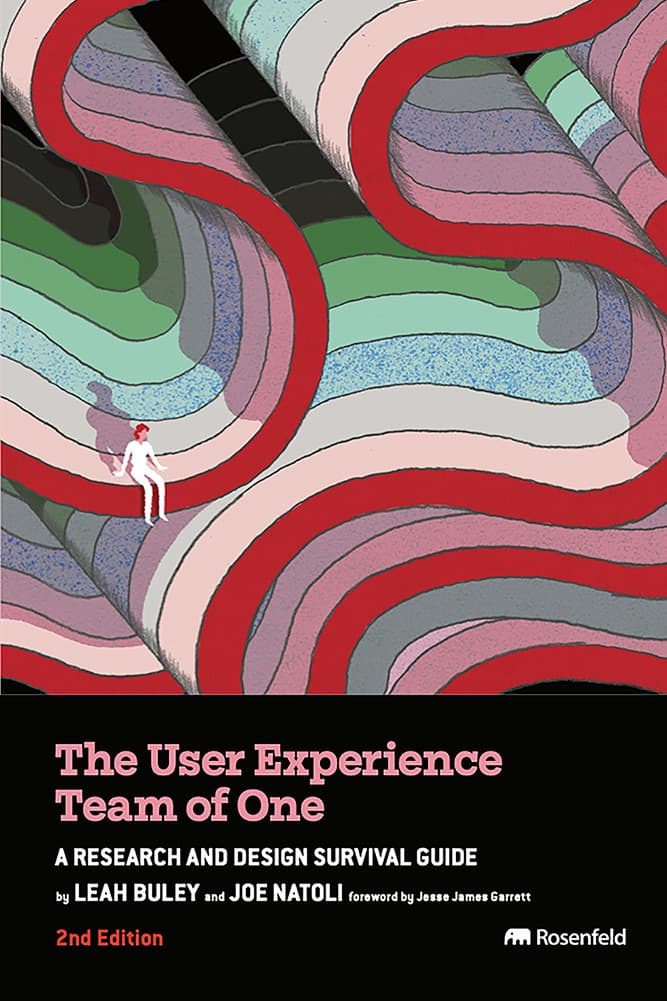
The User Experience Team of One
Leah Buley
You learn how to be the research engine: set up a pipeline of studies that creates influence even when you are the only UX researcher.
Create a research intake and prioritize decisions.
Buley tackles integration in lean product teams where research must compete for time and attention. If you need practical ways to run UX research and build buy-in, this is directly aligned.
Ask for specifics, then ask for meaning.
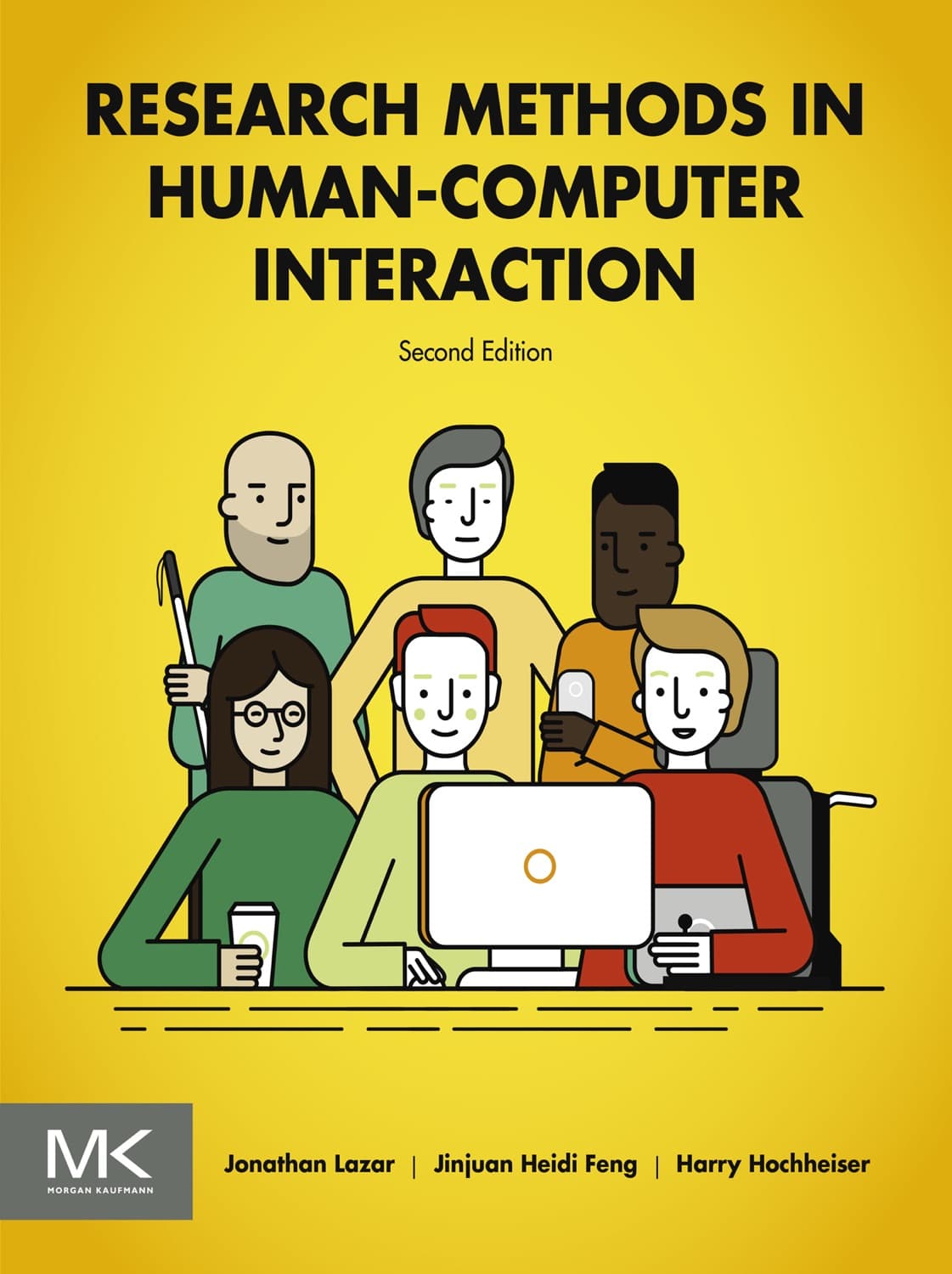
Research Methods in Human-Computer Interaction
Jonathan Lazar, Jinjuan Heidi Feng, Harry Hochheiser
Method choice becomes a learned skill: you understand trade-offs so your study design fits the question, not just tradition.
Pick methods based on the question and constraints.
This authoritative reference spans qualitative and quantitative approaches and grounds them in HCI research practice. It helps UX researchers deepen methodological options when interview or usability test plans are not enough.
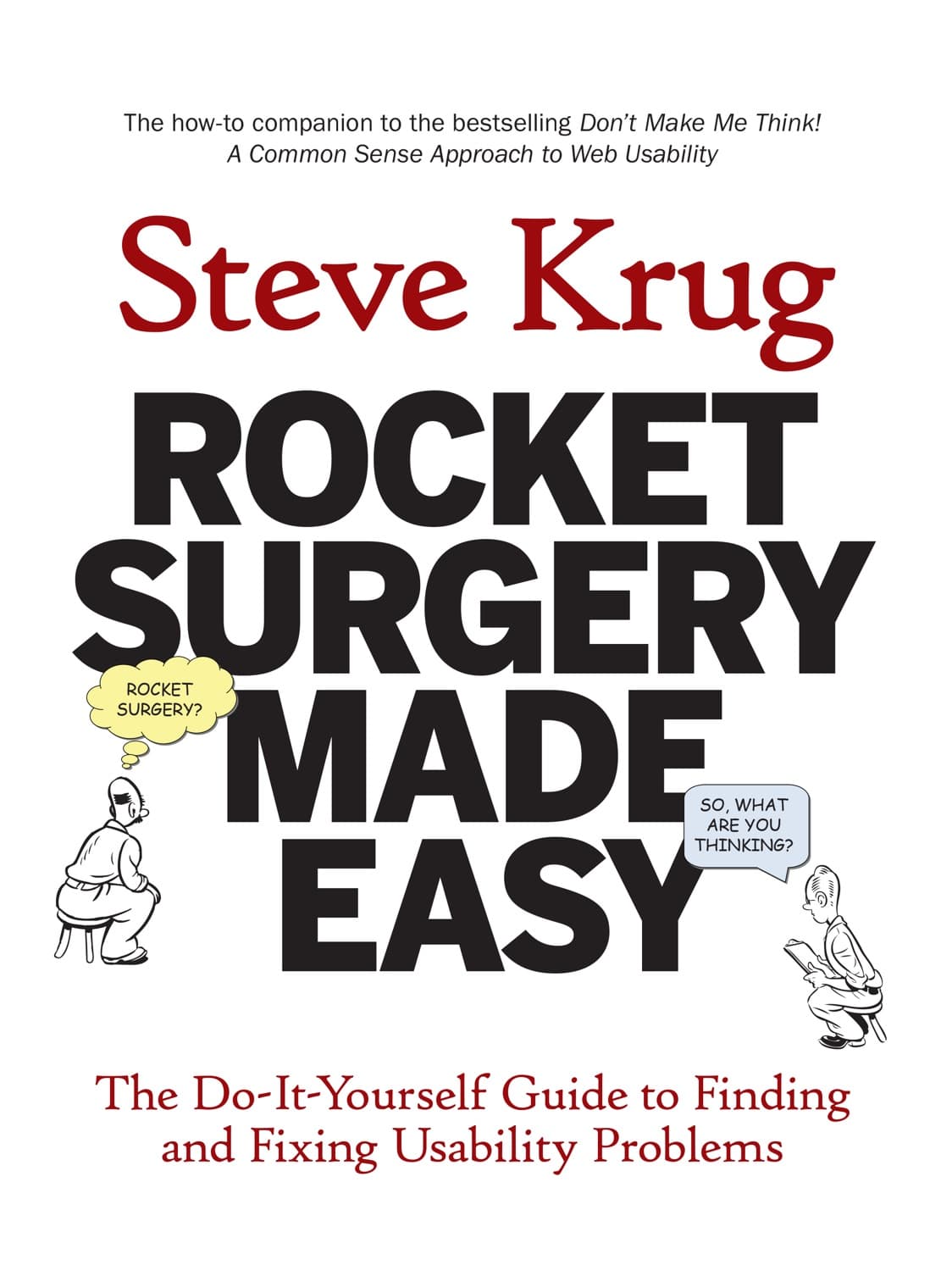
Rocket Surgery Made Easy
Steve Krug
Usability testing stops being intimidating: you use a lightweight script and quick synthesis to find the issues that matter.
Fix the obvious user failures first.
Krug provides a beginner-friendly process for usability testing that yields practical findings fast. It fits UX researchers who want a dependable way to run tests and share results without heavy overhead.

Validating Product Ideas
Tomer Sharon
You stop guessing and start validating with experiments that reveal what must be true for a product to work.
Test assumptions with falsifiable experiments.
Sharon applies evidence-driven discovery to product decisions, not just research activities. For UX researchers supporting early ideation, it provides a practical framework for turning hypotheses into learnable tests.
Can we tailor this list for you?
Type your question in the bar below and the AI will tailor a fresh set of picks just for you.