Best Books on Weather and Meteorology books for Student Pilots
Student pilots can go from “weather feels random” to confident briefing with Aviation Weather by Peter F. Lester and Aviation Weather Services by the FAA: practical judgment first, decoding second, hazards always.

Aviation Weather
Peter F. Lester
You learn how to turn weather observations into go/no-go thinking, not just definitions you can recite.
Translate cloud, visibility, and winds into flight risk.
This is built around the real questions pilots face: what matters, what changes, and what your decisions should follow. It pairs especially well with student pilots who need weather fundamentals tied to operational judgment.
Aviation Weather Services
Federal Aviation Administration (N/A)
METAR and TAF language becomes usable: you stop treating reports like code and start treating them like inputs to a decision.
METARs are structured snapshots; TAFs are forecasts.
As the FAA’s canonical reference, it anchors how official aviation weather products are structured and interpreted. That matters when student pilots want reliable, standardized meaning for the things they read on briefing tools.
The AMS Weather Book
Jack Williams
Forecasts feel less mystical once you can name the mechanisms that shape storms and bring weather trends.
Weather is dynamics: pressure, moisture, and lift.
This book bridges meteorology concepts and aviation-relevant hazards with clear pilot-friendly explanations. It helps student pilots build intuition that makes aviation weather products easier to interpret.
Weather Flying, Fifth Edition
Robert N. Buck
Weather judgment improves when you learn to plan for uncertainty instead of hoping it goes away.
Good weather decisions come from margins, not certainty.
A classic for practical in-the-real-world weather thinking, it focuses on how pilots should assess conditions and manage risk. That fits student pilots who want the “how to decide” layer beyond textbook meteorology.
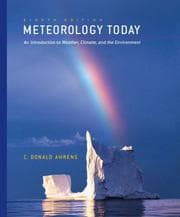
Meteorology today
C. Donald Ahrens
The atmosphere stops being memorization once you understand why pressure patterns and moisture drive what you see from the cockpit.
In weather, gradients explain motion and change.
As an introductory meteorology textbook, it strengthens the concepts underneath aviation weather interpretation. For students who struggle with the “why,” it makes later cockpit decoding feel logical rather than arbitrary.
Canadian Aviation Weather
Doug Morris
Canadian aviation weather guidance connects concepts to cockpit decisions with practical, student-friendly framing.
Learn the local reporting logic behind cockpit calls.
It ties meteorology to flight-relevant judgments in a way that matches how students actually study and practice. If you fly in or near Canada, it also helps normalize local products and expectations.
METARs are structured snapshots; TAFs are forecasts.
The USA Today Weather Book
Jack Williams
Everyday weather stories become usable understanding when you map them to core processes like fronts and instability.
Fronts and instability explain a lot of “random” weather.
This is a clear, beginner-forward meteorology primer that builds foundational knowledge quickly without losing accuracy. It suits student pilots who need a calmer on-ramp before tackling aviation-specific weather products.
Can we tailor this list for you?
Type your question in the bar below and the AI will tailor a fresh set of picks just for you.