Best Books on MBAs Entering Consulting
Consulting case prep for MBAs is a mix of frameworks and communication: Marc Cosentino’s Case in Point and Victor Cheng’s Case Interview Secrets help you think like an interviewer, while Barbara Minto’s The pyramid principle makes your recommendations land.
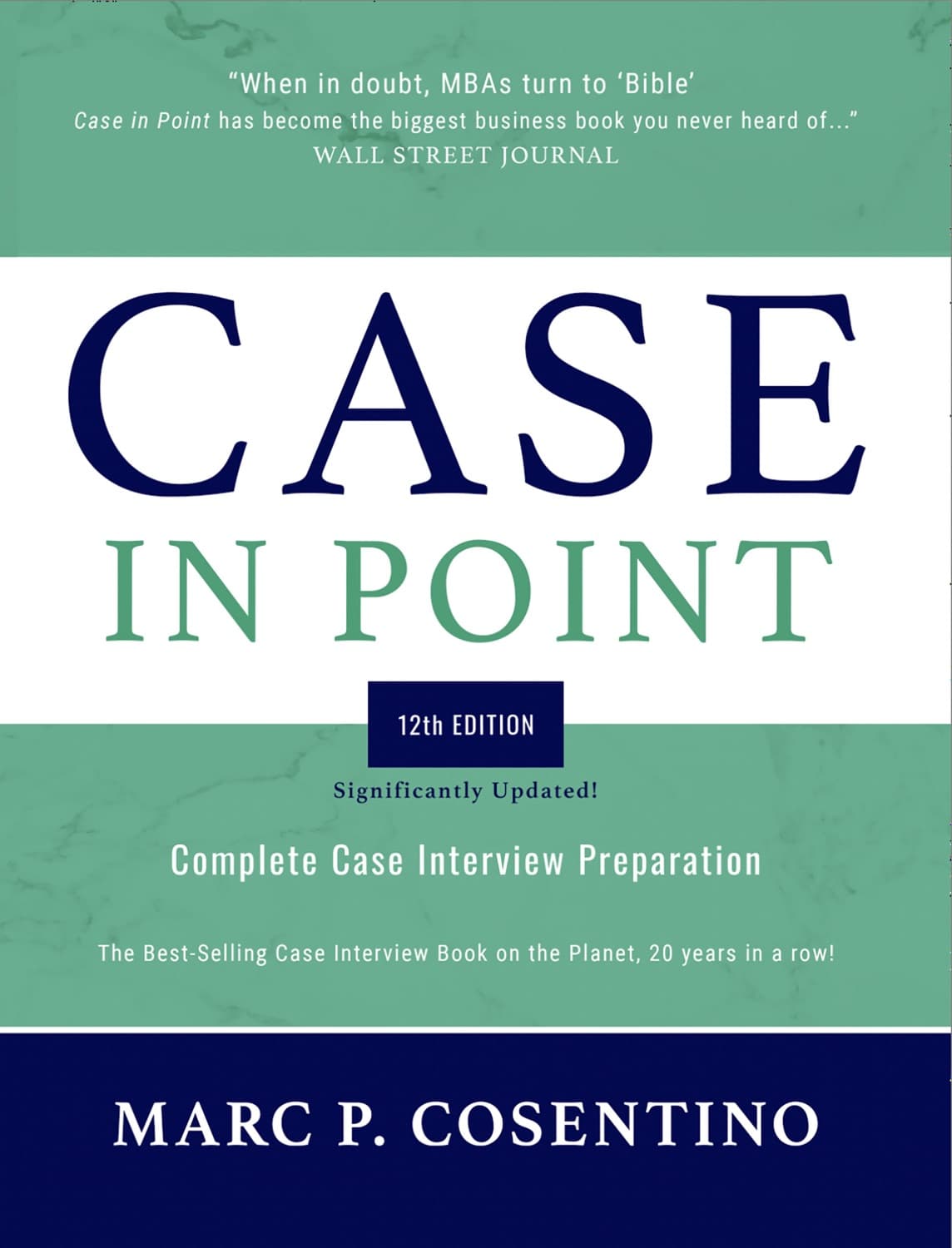
Case in Point
Marc Cosentino
Case in point brings Case in Point’s case-practice mindset into a tighter form, focusing on repeat drills that build interview fluency.
Turn observations into a ranked set of next questions.
If you already recognize the need for frameworks, this helps you keep the practice centered on execution: structuring quickly, choosing the right test, and moving the case forward. For MBAs entering consulting, that execution focus helps translate knowledge into performance.
Case Interview Secrets
Victor Cheng
Case Interview Secrets changes your mindset from memorizing answers to performing judgment: clarifying questions, structuring fast, and staying in control.
Always drive to a hypothesis, then refine.
It teaches how interviewers actually evaluate candidates: whether you can guide the conversation, reason out loud, and adapt when the case shifts. For MBAs entering consulting, that shift from “get the right answer” to “run a strong process” often determines the outcome.
Crack the Case System
David Ohrvall
Crack the Case System makes case practice measurable by forcing you to run a repeatable sequence every time, even when you feel stuck.
Practice the system, not the scenario.
Unlike advice books that stay abstract, it emphasizes a structured system for practicing cases so your approach becomes consistent. For an MBA moving into consulting, that consistency helps you maintain clarity across different industries and prompt styles.
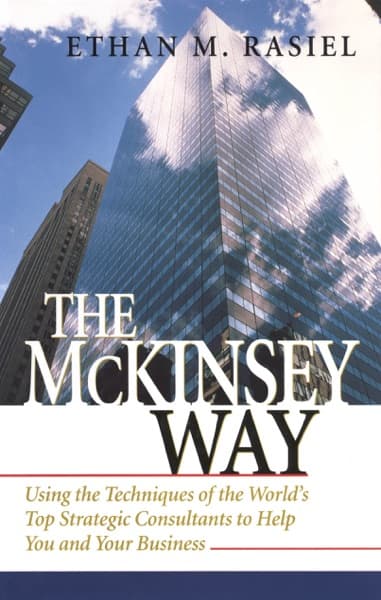
The McKinsey way
Ethan M. Rasiel
The McKinsey way trains you to think in “issues and answers” so your work product looks like real consulting: crisp logic, not scattered analysis.
Start with a MECE issue tree, then prove it.
It translates consulting-style problem solving into a method MBAs can apply immediately, including how teams frame work and derive conclusions. When you’re entering consulting, that framing skill is what turns your analysis into something that clients and interviewers can trust.
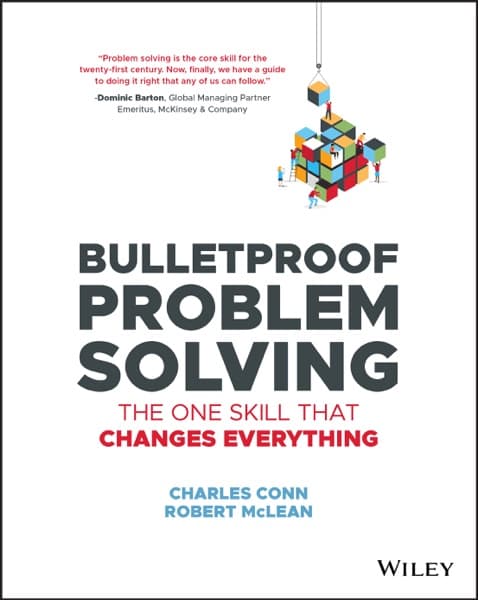
Bulletproof Problem Solving
Charles Conn, Robert McLean
Bulletproof Problem Solving reframes problem solving as a sequence of decisions: define the real problem, generate options, then pressure-test assumptions.
Use assumption testing to avoid false certainty.
Its strength is bringing “consulting-grade” rigor to preparation for MBAs entering consulting, not just giving case talk tracks. That matters because many candidates miss points on how they decide, not what they conclude.
The pyramid principle
Barbara Minto
The pyramid principle disciplines your thinking so every recommendation comes from a clear top-down logic, not a meandering explanation.
Lead with the answer, then support.
Consulting interviews and early consulting work reward communication that is instantly readable by busy stakeholders. This book helps MBAs convert analysis into structured recommendations, which is exactly how consultants build credibility quickly.
Always drive to a hypothesis, then refine.
The Trusted Advisor
David H. Maister, Charles H. Green, Robert M. Galford
The trusted advisor reframes consulting success as trust built through reliability, value, and the management of client expectations.
Earn trust by exceeding expectations consistently.
For MBAs entering consulting, technical competence gets you in the room, but relationship judgment keeps you there. This book sharpens how you earn credibility, especially in the moments where clients feel uncertainty.
The Lords of Strategy
Walter Kiechel
The Lords of Strategy makes strategy consulting feel concrete: you see how big ideas were built, sold, and sometimes demolished.
Strategy consulting is an industry, not just a toolkit.
It gives the historical context behind the firms and methods MBAs hear about in recruitment, so you understand what you’re stepping into beyond interview prep. That context helps new consultants interpret the culture and incentives driving how strategy work gets done.
Case in point
Marc Cosentino
Case in point brings Case in Point’s case-practice mindset into a tighter form, focusing on repeat drills that build interview fluency.
Turn observations into a ranked set of next questions.
If you already recognize the need for frameworks, this helps you keep the practice centered on execution: structuring quickly, choosing the right test, and moving the case forward. For MBAs entering consulting, that execution focus helps translate knowledge into performance.
Can we tailor this list for you?
Type your question in the bar below and the AI will tailor a fresh set of picks just for you.