
- The Digital Desert and the SPRIND Paradox
- Essential Readings on the Industrial Twilight
- The Titan: The Rise and Fall of the Great Powers
- The Hidden Gem: A Short History of Germany
- The Practical Match: The Euro and the Battle of Ideas
- The Fiscal Straitjacket: A Secular Religion
- The Strategic Outlook: From Bridge to Buffer
- Key Takeaways for Leaders:
In the spring of 1948, Ludwig Erhard acted with an audacity that would be unthinkable in today's Berlin. Without the permission of Allied authorities, he abolished price controls and introduced the Deutsche Mark. Overnight, black markets vanished. Shop windows filled. This was the birth of the Wirtschaftswunder, an economic miracle that transformed a bombed-out shell into a global industrial powerhouse. For seventy years, the global economy relied on a simple axiom: Germany builds it, the world buys it, and the profits fund a stable social democracy.
That axiom is currently disintegrating. In 2023, Germany earned the distinction of being the only G7 economy to contract. GDP shrank by 0.3 percent. This was not a temporary glitch; it was the sound of a structural model hitting a brick wall.
I spent the last several months examining the literature of national decline, specifically Wolfgang Münchau's provocative new work, Kaput: The End of the German Miracle. We often treat economies as permanent features of the landscape, like mountains. In reality, they are fragile ecosystems. Germany's ecosystem was built on three dependencies that have turned toxic simultaneously: cheap Russian energy, insatiable Chinese demand, and a security umbrella provided by the United States.
To grasp this shift, one has to look past the headlines and into the texts that predicted this institutional rigor mortis. If the world's most disciplined industrial nation can lose its edge in a decade, no business is safe from obsolescence. [Find your next book at bookstoread.ai]

The Digital Desert and the SPRIND Paradox
There is a recurring joke among tech founders in Berlin: if you want to get something done in the government, you better have a working fax machine. It sounds like hyperbole, but Germany's ranking in the Digital Economy and Society Index (DESI) tells a grimmer story. This digital lag is a symptom of a deeper "Hardware Soul."
In Kaput, Münchau highlights a telling attempt to bridge this gap: SPRIND (The Federal Agency for Disruptive Innovation). As Münchau points out, the name is a fundamental oxymoron. True disruption is chaotic and decentralized. Attempting to manage "disruption" through a centralized federal agency is like trying to bottle lightning while following a three-volume safety manual. It highlights the fundamental German struggle: a desire for radical change, but only if it can be achieved through a regulated administrative process.
Essential Readings on the Industrial Twilight
To understand the magnitude of the shift Münchau describes, you need to revisit the pillars of industrial strategy.
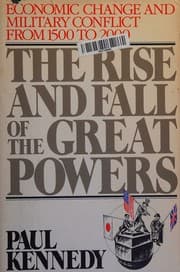
The Titan: The Rise and Fall of the Great Powers
By Paul Kennedy
- The Hook: A sweeping analysis of how economic shifts and military overstretch dictate the fate of nations.
- The Why: This is the definitive foundational masterpiece for understanding the European malaise. Kennedy's thesis (that power is a direct function of industrial capacity relative to rivals) is the backdrop for the current crisis. Germany is a classic case of a power clinging to the triumphs of the previous technological era.
- The Golden Nugget: Wealth and power are relative. Even if you are growing, you are falling behind if your rivals are innovating at twice your speed.
The Hidden Gem: A Short History of Germany
By James Hawes
- The Hook: An unconventional, fast-paced history explaining how geography dictates Germany's destiny.
- The Why: This is the book for those who want to understand the "why" behind the "what." To understand why Berlin is paralyzed today, you have to understand the deep-seated cultural fear of chaos. Hawes provides the context for the "German Anxiety" that leads to the fiscal rigidity Münchau critiques.
- The Golden Nugget: Germany's greatest strength (regional industrial clusters) is also its weakness (a fragmented system that struggles with radical, top-down change).
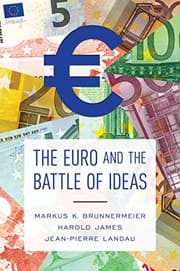
The Practical Match: The Euro and the Battle of Ideas
By Markus Brunnermeier, Harold James, and Jean-Pierre Landau
- The Hook: A deep dive into the philosophical rift between French and German economic views.
- The Why: This is the actionable guide for understanding policy gridlock. It explains the "ordoliberal" philosophy that prioritizes rules over flexibility. It is essential for understanding why Germany refuses to abandon fiscal constraints even as its bridges literally crumble.
- The Golden Nugget: Economic policy is never purely mathematical; it is always a reflection of a nation's collective historical trauma.

The Fiscal Straitjacket: A Secular Religion
The most controversial aspect of the current decline is the Schuldenbremse (the debt brake). This constitutional amendment limits the federal structural deficit to just 0.35 percent of GDP. To the German voter, this is the "Swabian Housewife" philosophy: you don't spend more than you earn.
But a nation is not a household. If a household roof leaks, you fix it. In Germany, the infrastructure (rail, cables, power grids) is leaking, but the debt brake forbids the loan to fix it. This has created an investment backlog estimated at over 400 billion euros. "Fiscal discipline" has become "capital starvation." Germany is essentially liquidating its national assets to maintain a balanced budget. [Find your next book at bookstoread.ai]
The Strategic Outlook: From Bridge to Buffer
The invasion of Ukraine in 2022 destroyed the policy of Wandel durch Handel (change through trade). Trade did not democratize autocrats; it gave them the leverage to blackmail Berlin. Germany is no longer a "bridge" between East and West. It is a buffer.
The story of Germany's decline is a warning. Success breeds rigidity. Rigidity breeds fragility. Wolfgang Münchau's Kaput is a eulogy for a way of life that forgot a crucial rule: every miracle eventually requires a new act. The bureaucratic attempt to "schedule" innovation is currently stifling the very rebels Germany needs to survive.
Key Takeaways for Leaders:
- The Triple Dependency is Dead: Cheap energy and open Chinese markets are gone.
- Software is Eating the Engine: Hardware excellence is no longer a sufficient moat.
- Under-investment is a Choice: The debt brake preserves the budget but destroys the future.
- Systems Over Personas: Don't let your "successful" rituals become your cage.
What is the best book to understand Germany's economic decline?
Kaput: The End of the German Miracle is the best place to start because it explains why Germany's old model stopped working now, not someday in theory. The Rise and Fall of the Great Powers is the stronger second read if you want the bigger pattern of industrial decline and strategic overstretch.
Why is Germany struggling economically after decades of success?
The short answer is that the old formula broke. Kaput: The End of the German Miracle argues Germany depended on cheap Russian gas, export demand from China, and U.S. security cover, while The Euro and the Battle of Ideas shows how rigid fiscal thinking made adaptation slower and harder.
Which books explain Germany's debt brake and fiscal conservatism?
The Euro and the Battle of Ideas is the clearest guide to the ideas behind Germany's debt brake and rule-first economic culture. Pair it with A Short History of Germany if you want the historical reason that fear of disorder runs so deep in German politics.
Books mentioned in this article
Want more books like these?
Tell us what you're in the mood for and get 3 perfect picks.
Discover your next read→