- 1. The Geopolitical Epic: Chip War by Chris Miller
- 2. The Current Gospel: The NVIDIA Way by Richie Santosdiaz
- 3. The Strategy of Failure: The Innovator's Dilemma by Clayton M. Christensen
- 4. The Strategy of the Giants: The Intel Trinity by Michael S. Malone
- 5. The Origin of the Idea: The Idea Factory by Jon Gertner
- 6. The Insider's View: Troublemakers by Leslie Berlin
- 7. The Existential Warning: The Coming Wave by Mustafa Suleyman
- The Silicon Paradox of 2026
The global economy is currently undergoing a radical re-shaping around a single, microscopic axis: the nanometer. For decades, we operated under the illusion that the semiconductor industry was a triumph of borderless capitalism. We believed that as long as the designs came from California and the machines from the Netherlands, it didn't matter where the silicon was actually baked. In 2026, that illusion has vanished.
The "Chip War" is no longer just a headline: it is the fundamental friction of our time. We are witnessing a desperate race against the limits of Moore's Law while simultaneously trying to "de-risk" a supply chain that passes through the most contested waters on Earth. If you want to understand why a single company in Taiwan, TSMC, holds more geopolitical leverage than most G7 nations, you have to look deeper than the daily stock tickers.
I have curated this selection for the reader who is tired of superficial takes. These seven books provide the intellectual scaffolding needed to navigate a world where compute is the new oil.
1. The Geopolitical Epic: Chip War by Chris Miller
Chris Miller's work is the definitive starting point for understanding the weaponization of the transistor. This is a masterpiece of geopolitical analysis that connects the vacuum tubes of the 1940s to the extreme ultraviolet (EUV) lithography of today.
What makes Miller's work so vital is his description of the "Lithography Bottleneck." He makes the reader realize that the entire modern world depends on a handful of machines made by one company, ASML, which use explosions of molten tin to create light at the atomic scale. It is a miracle of engineering that is also a terrifying single point of failure. If you want to understand why the U.S. is spending billions on the CHIPS Act, Miller explains the existential fear driving those policies.
The Golden Nugget: Military superiority since the 1970s was built on a "lead in precision" that the Soviet Union could not replicate. The Cold War was won in the clean room as much as the war room.

2. The Current Gospel: The NVIDIA Way by Richie Santosdiaz
In 2026, Jensen Huang is arguably the most influential CEO on the planet, but his rise was anything but inevitable. Richie Santosdiaz's book is the most comprehensive look at how a graphics card company became the backbone of the AI revolution.
I'll be honest: most people think NVIDIA got lucky with the ChatGPT boom. Santosdiaz proves otherwise. He explores the concept of "Anticipatory Engineering," showing how NVIDIA spent over a decade building the CUDA software stack before the market for generative AI even existed. My personal takeaway from this book was the realization that NVIDIA isn't just a hardware company: it is a software and networking company that happens to sell silicon. It is a masterclass in high-stakes corporate betting that actually paid off.
3. The Strategy of Failure: The Innovator's Dilemma by Clayton M. Christensen
To understand the semiconductor landscape of today, you have to understand why the leaders of yesterday often fall. Clayton Christensen's theory is the only way to make sense of Intel's long, painful struggle to catch up with the foundry model.
Intel was the victim of its own success. They were so good at making high-margin PC chips that they ignored the "lower quality" but highly efficient mobile and AI architectures until it was too late. I often return to Christensen's concept of "Resource Allocation." It explains why a brilliant CEO can still lead a company into a ditch: because the internal logic of a successful business often forbids investing in the very technology that will eventually replace it. This is essential reading for anyone trying to predict which of today's AI startups will actually survive the next decade.
4. The Strategy of the Giants: The Intel Trinity by Michael S. Malone
To fully appreciate Christensen's dilemma, you need to see the "Trinity" at their peak. Michael Malone's deep dive into Robert Noyce, Gordon Moore, and Andy Grove is the definitive account of how a company builds a silicon empire.
Malone focuses on the "Corporate DNA" of Intel. He explains the friction between Noyce (the visionary), Moore (the scientist), and Grove (the relentless executioner). This book is essential because it illustrates the transition from a laboratory culture to an industrial powerhouse. It provides the necessary context for why Intel's current struggle is so tragic: they are fighting decades of their own internalized success. It is a dense, high-level history that every tech manager should own.
5. The Origin of the Idea: The Idea Factory by Jon Gertner
Every chip in the world can trace its lineage back to Bell Labs. Jon Gertner's book is the definitive account of how a single institution managed to invent the transistor, the laser, and the solar cell.
This book is crucial because it explores an R&D model that no longer exists in our quarterly-earnings-obsessed world. It asks the question: how do you manage a group of geniuses to produce something that won't be profitable for twenty years? For anyone looking at the current "AI arms race," Gertner's history is a sobering reminder that true breakthroughs require a kind of patience and institutional support that is increasingly rare in 2026.

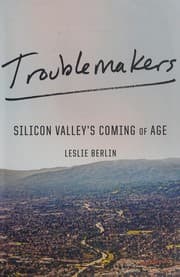
6. The Insider's View: Troublemakers by Leslie Berlin
If you want a book that isn't a global bestseller but is revered by industry veterans, Troublemakers is the one. Leslie Berlin focuses on the 1970s and 80s, the era when the semiconductor industry moved from a niche experiment to the center of global power.
Berlin profiles seven people who were at the heart of this transition, including Sandra Kurtzig and Mike Markkula. The book is particularly valuable because it covers the rise of the venture capital model that funded the chip boom. It explains the "cultural soup" of Santa Clara County in a way that feels visceral. It shows that the "Chip War" was won not just by engineers, but by the financiers who realized that silicon was the most valuable commodity on Earth.
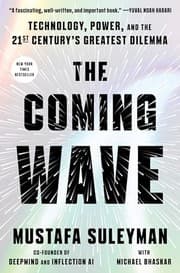
7. The Existential Warning: The Coming Wave by Mustafa Suleyman
Mustafa Suleyman, co-founder of DeepMind, provides the closing argument for this library. He connects the hardware we've discussed to the "Coming Wave" of AI and synthetic biology.
His most chilling point is about "Containment." As chips become more powerful and more distributed, we lose the ability to control the technology. If a high-end AI chip can be smuggled or bought on a secondary market, the barrier to creating something truly dangerous drops to near zero. Suleyman's book is a call for a new kind of global governance that treats "Compute" not as a commodity, but as a regulated utility.
The Silicon Paradox of 2026
Semiconductors are the most complex objects ever built by humanity. We are now at a point where we use AI to design the chips that will, in turn, train the next generation of AI. It is a closed loop of accelerating intelligence.
For the strategists and the deep-thinkers, these seven books offer a map of the territory. They show that the Chip War isn't just about money or borders: it is about who controls the substrate of the future.
What is the best book to understand the chip war?
Chip War is the best place to start because it ties semiconductors to military power, supply chains, and state policy without losing the engineering stakes. If you want the AI-era sequel, pair it with The Coming Wave.
Which book explains why NVIDIA became so important in AI?
The NVIDIA Way gives the sharpest answer. It argues NVIDIA won because it built CUDA and the software stack long before generative AI made GPUs the center of the market.
Why did Intel fall behind in the semiconductor race?
The Innovator's Dilemma gives the framework, and The Intel Trinity gives the history. Together they show how a company built to dominate one era can become trapped by its own incentives in the next one.
Books mentioned in this article

Want more books like these?
Tell us what you're in the mood for and get 3 perfect picks.
Discover your next read→