The Essential Spanish Syllabus: Three Books Every Language Learner Should Own
In the 1960s, the linguist Paul Pimsleur identified a fundamental paradox in language acquisition. He observed that while students spend years laboring over grammar tables and conjugations, the human brain is biologically hardwired to absorb language through sound long before it ever encounters the written word. Today, this biological reality aligns with modern digital convenience. As of 2026, the global language learning market has grown to exceed 100 billion dollars. A significant portion of this growth is not found in traditional night schools but in cars, on treadmills, and during morning commutes via high-quality audio platforms.
Choosing the right narrator is often the difference between fluency and frustration. Most learners fail because they treat language like a mathematical problem to be solved, when in reality, Spanish is a landscape to be inhabited. By selecting high-signal audio content, you are not merely memorizing vocabulary: you are training your brain to recognize the music of the language. Learning Spanish is about more than utility; it is about accessing the expressive detail of a language that currently boasts nearly 600 million speakers worldwide.
The goal of this guide is to move you past the plateau of gamified apps and into real, rhythmic comprehension. I have identified the most effective linguistic strategies for beginners. These are not dry lessons; they are narrative experiences designed to help you find your voice.

The Architecture of the Listening Mind
Before exploring specific recommendations, consider a historical curiosity. Approximately 8% of the Spanish vocabulary originates from Arabic, a linguistic inheritance from the 700 years of Moorish presence in the Iberian Peninsula. This explains why words like ojalá (I hope or God willing) sound so distinct from their Latin counterparts. When you listen to a Spanish audiobook, you are not just hearing a Romance language: you are hearing a historical tapestry.
Effective audio learning relies on "comprehensible input." If the content is too dense, the brain tunes out; if it is too simple, growth stalls. The following selections have been chosen specifically for their ability to occupy the ideal threshold of linguistic challenge.
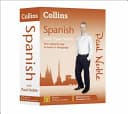
Learn Spanish with Paul Noble for Beginners This is a foundational masterpiece for the absolute beginner. Noble's approach is the antithesis of the stressful high school classroom, as it avoids rote memorization and note-taking entirely. He breaks the language into building blocks that allow you to construct complex sentences almost immediately. By focusing on cognates (words that share commonalities between English and Spanish), he makes the language feel familiar rather than foreign. It is perhaps the most accessible entry point available today.
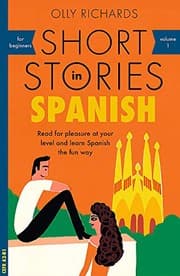
Short Stories in Spanish for Beginners For those tired of the repetitive, simplistic sentences found in many textbooks, Richards utilizes a story-first methodology. By listening to actual plots, the brain begins to absorb grammar and high-frequency vocabulary through context, mimicking the way we acquired our first language. The narration is paced specifically for beginners, ensuring you hear the distinct phonetic nature of Spanish without being overwhelmed by speed. Learning is most effective when the "affective filter" is low: if you are engaged by the story, your brain absorbs the language with significantly less effort.
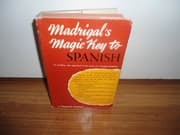
Madrigal's Magic Key to Spanish (Audio Adaptations) This is a timeless classic. While the original book by Margarita Madrigal is a legend in the polyglot community, modern audio adaptations bring her "magic key" to life. She focuses on the past tense earlier than most courses, which is a strategic advantage. Because most daily conversations involve retelling events (what we did, saw, or said), mastering this early allows you to move from being a student to a storyteller.
The Strategic Advantage of Audio Discovery
The primary barrier to language learning is often the cost of expensive courses that eventually go unused. This is why the Audible ecosystem serves as a clever entry point. By utilizing an Audible trial , you can access these high-value bundles (some of which exceed 13 hours in length) at no initial cost. It is a low-risk move. If the Paul Noble method does not align with your specific cognitive style, you have lost nothing. If it does, you have acquired a skill that can significantly increase your professional value in fields ranging from healthcare to international business.
The Nuance of the Phonetic Ear
One of the most compelling aspects of Spanish is that it is a phonetic language. Unlike English, words are almost always pronounced exactly as they are spelled. There are no silent letters to cause confusion, with the notable exception of the "h."
This makes audiobooks an incredibly powerful tool. In English, a learner might see the word "colonel" and struggle with its pronunciation. In Spanish, once you learn the five vowel sounds (A, E, I, O, U), you can pronounce almost any word in the language. Listening to a native narrator allows you to map these sounds in real time. You are not just learning what the words mean: you are learning exactly how they should resonate.
The Cultural Dividend
When you learn Spanish through stories rather than drills, you encounter vital cultural nuances. You will learn the distinction between Te quiero (for friends and family) and Te amo (for romantic partners). You will also discover that a text translated from English to Spanish usually increases in length by roughly 20% because Spanish is a more descriptive and poetic language.
This is the true value of the audiobook. It provides the soul of the language that a grammar book often lacks. You hear the passion in a narrator's voice, the specific lilt of different regional accents, and the natural phrasing that makes you sound like a local.
The journey to bilingualism is built on consistent, small auditory deposits. By utilizing these audiobooks during the "dead time" of your day, you turn a mundane commute into a sophisticated language lab. Consider how your perspective on your next trip might change if you could finally understand the story being told in the seat next to you.
What is the best audiobook to learn Spanish for complete beginners?
Learn Spanish with Paul Noble for Beginners is the best place to start. It teaches through spoken building blocks and cognates, so you begin forming sentences quickly without getting buried in grammar rules.
Are Spanish short story audiobooks good for beginners?
Yes, if the pacing is controlled and the vocabulary is high-frequency. Short Stories in Spanish for Beginners works because the stories keep you engaged while the repetition and context do the teaching.
Should I use Paul Noble or Madrigal's Magic Key to Spanish first?
Start with Learn Spanish with Paul Noble for Beginners if you want the easiest audio-first entry point. Move to Madrigal's Magic Key to Spanish after that if you want a stronger grasp of sentence structure and earlier practice with the past tense.
Books mentioned in this article
Want more books like these?
Tell us what you're in the mood for and get 3 perfect picks.
Discover your next read→