- The Stakeholder Symphony: Leading Without Authority
- Product Sense and the Data Delusion
- The Roadmap as a Living Document
- 1. Inspired by Marty Cagan
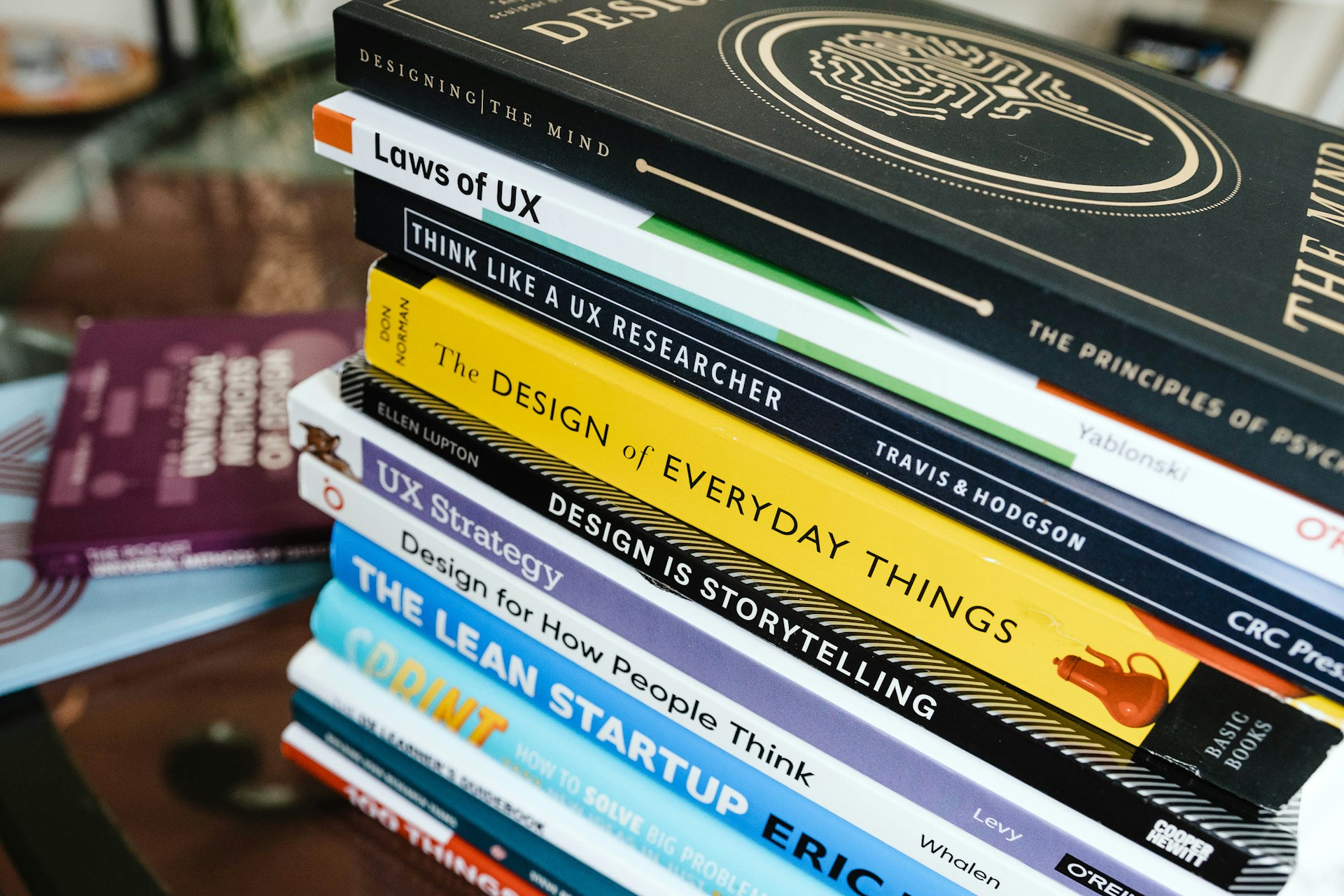
- 2. The Design of Everyday Things by Don Norman
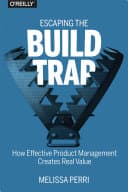
- 3. Escaping the Build Trap by Melissa Perri
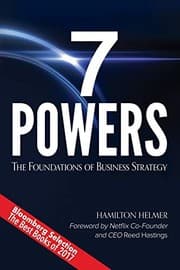
- 4. 7 Powers: The Foundations of Business Strategy by Hamilton Helmer
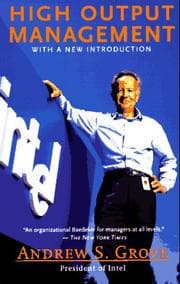
- 5. High Output Management by Andrew Grove
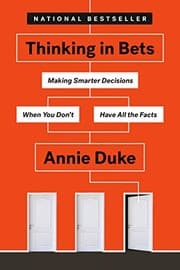
- 6. Thinking in Bets by Annie Duke
- 7. Radical Candor by Kim Scott
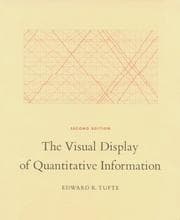
- 8. The Visual Display of Quantitative Information by Edward Tufte
- 9. The Infinite Game by Simon Sinek
- 10. Thinking, Fast and Slow by Daniel Kahneman
- The Long Game of Product Mastery
- Key Takeaways for Aspiring PMs
On May 13, 1931, a young advertising manager at Procter & Gamble named Neil McElroy sat down and wrote a three-page internal memo. He wasn't trying to reinvent the corporate world: he just wanted more "Brand Men" who would take full responsibility for a product's success (from the supply chain to the marketing copy). That memo didn't just sell more Camay soap; it gave birth to the modern discipline of Product Management. Today, the role has migrated from the soap aisle to the silicon valleys of the world, becoming the most sought-after title in tech.
The weight of this role is immense. A Product Manager (PM) is essentially a conductor who must also know how to build the violin. It is a career that demands a rare blend of technical literacy, business acumen, and psychological resilience. But behind the prestige lies a relentless grind of decision-making under extreme uncertainty. This guide serves as a cognitive toolkit designed to help you survive the first time you have to tell a room full of engineers that their favorite feature didn't survive the latest A/B test.
The allure of a PM role at Meta or Google acts as a gravity well for ambitious talent, representing a dream for millions of young professionals who want to sit at the center of the tech universe. However, the internal reality is rarely about issuing commands from a corner office. You are the connective tissue between disparate groups: the engineers who build, the designers who dream, and the legal teams who protect. Your daily life involves navigating the friction between these stakeholders while steering a roadmap through the turbulence of shifting market demands. It is a constant exercise in soft power. You must justify every priority with a rigorous mix of KPIs and product sense, knowing that even your best ideas might be discarded if they fail a critical A/B test. It is a job of high stakes and zero formal authority.
The Stakeholder Symphony: Leading Without Authority
Success in this field depends on your ability to synthesize conflicting incentives into a coherent vision. If you fail to build consensus, your product roadmap becomes a Frankenstein's monster of disconnected ideas. Consider the launch of the original Amazon Fire Phone in 2014; it was a device packed with features that stakeholders thought were "cool," yet it lacked a clear value proposition for the actual customer. It was a failure of leadership, not technology. You must master the art of soft power to survive.

Product Sense and the Data Delusion
Everyone talks about being "data-driven," but data is often a lagging indicator. By the time your KPIs (Key Performance Indicators) tell you that users are churning, the damage is already done. This is where "product sense" comes in. It is the ability to intuition-check a feature before a single line of code is written.
A/B testing is a powerful tool, but it is a local maximum finder. It can tell you which shade of blue gets more clicks, but it won't tell you if you should be building a blue button at all. Great PMs use data to validate hypotheses, not to find them. They understand the "why" behind the "what." This requires a deep, almost obsessive empathy for the user's pain points. Without it, you are just a project manager with a fancier title.
The Roadmap as a Living Document
A roadmap is not a promise: it is a set of current hypotheses about the future. The moment an aspiring PM treats a roadmap like a fixed contract is the moment the product starts to die. In a fast-moving market, the ability to pivot based on new information is your greatest asset.
This requires a ruthless prioritization of the "moat." What is the one thing your product does that no one else can replicate? If you don't know the answer, your roadmap will eventually be dictated by your competitors rather than your customers. You must learn to focus on outcomes (solved problems) rather than outputs (shipped features).
1. Inspired by Marty Cagan
The Hook: This is the definitive manual that defined the "Product Discovery" era for the modern SaaS world.
The Why: If you want to understand why some companies ship features that people actually love while others just ship "bloatware," this is your starting point. It moves the conversation away from project management and toward actual product leadership.
The Golden Nugget: Innovation is not about a lone genius: it is about a cross-functional team (product, design, and engineering) solving problems in ways that are both valuable and viable.
2. The Design of Everyday Things by Don Norman
The Hook: A deep dive into why you struggle to open certain doors and how that same frustration applies to mobile apps.
The Why: Aspiring PMs often overlook the "affordance" of their designs. This book teaches you to see the world through the eyes of a frustrated user, which is the most important perspective you can have.
The Golden Nugget: When people fail to use a product correctly, it is usually a failure of the design, not the user.
3. Escaping the Build Trap by Melissa Perri
The Hook: A blunt look at how "feature factories" kill companies and how to stop the cycle.
The Why: Many PMs fall into the trap of measuring success by the number of tickets closed or the frequency of deployments. This book provides the antidote, focusing on "outcomes" over "outputs." It is a practical guide for anyone working in a messy corporate environment.
The Golden Nugget: Value is only created when a customer's problem is solved in a way that also helps the business achieve its goals.
4. 7 Powers: The Foundations of Business Strategy by Hamilton Helmer
The Hook: A rigorous framework for understanding what actually creates a competitive advantage in a digital economy.
The Why: You cannot be a great PM if you don't understand "moats." This book breaks down strategy into seven specific powers (such as scale economies and switching costs), giving you a vocabulary to defend your product's roadmap to executives.
The Golden Nugget: Counter-Positioning is the most powerful tool for a startup, allowing you to adopt a new business model that an incumbent cannot mimic without hurting their existing business.
5. High Output Management by Andrew Grove
The Hook: Written by the man who built Intel, this is the masterclass on high-leverage leadership.
The Why: Since you lead through influence rather than authority, you must maximize the output of your entire organization. Grove explains how to focus on high-leverage activities like training and decision-making.
The Golden Nugget: A manager's output is the output of the various organizations under his or her supervision or influence.
6. Thinking in Bets by Annie Duke
The Hook: A professional poker player teaches you how to embrace uncertainty and stop obsessing over "resulting."
The Why: Products fail for reasons outside of your control all the time. This book helps you separate the quality of your decision-making process from the actual outcome of the launch, which is vital for maintaining your sanity.
The Golden Nugget: Don't confuse the quality of a decision with the quality of its outcome: sometimes you can do everything right and still lose.
7. Radical Candor by Kim Scott
The Hook: A guide to being "fiercely honest" while still being a human being people actually want to work with.
The Why: The PM role is 90% communication. You will have to tell people "no" constantly. This book teaches you how to do that without destroying the psychological safety of your team.
The Golden Nugget: "Ruinous Empathy" is what happens when you care so much about someone's feelings that you fail to tell them the truth they need to hear to improve.
8. The Visual Display of Quantitative Information by Edward Tufte
The Hook: Learn why your PowerPoint charts are probably lying to you and how to fix them.
The Why: PMs live and die by data. If you can't communicate your KPIs clearly to stakeholders, you've already lost the argument. This book is a masterclass in the honest representation of complex information.
The Golden Nugget: Excellence in statistical graphics consists of complex ideas communicated with clarity, precision, and efficiency.
9. The Infinite Game by Simon Sinek
The Hook: A philosophical exploration of business as a game with no finish line.
The Why: Most PMs treat a product launch like a finite game. But building a great company is an infinite game. This shift in mindset changes how you think about competition and long-term roadmap planning.
The Golden Nugget: Finite players play within rules; infinite players play with rules.
10. Thinking, Fast and Slow by Daniel Kahneman
The Hook: Understanding the two systems that drive the way we think and, more importantly, the way your users click.
The Why: If you don't understand "loss aversion" or the "anchoring effect," you are designing for a human that doesn't exist. This book provides the psychological map of your user's brain.
The Golden Nugget: We are far more motivated to avoid a loss than we are to achieve a comparable gain.
The Long Game of Product Mastery
Landing a PM role at a top-tier company is a marathon, not a sprint. The "product sense" required to succeed isn't something you are born with; it is something you build through a thousand small observations and a lot of reading.
And remember, the most successful PMs are the ones who never stop being students. They treat their own careers as a product, constantly iterating and looking for the "bugs" in their own skill sets. Whether you are obsessed with the technical details of an A/B test or the high-level vision of a five-year roadmap, your ability to synthesize information will always be your greatest strength.
Key Takeaways for Aspiring PMs
- Manage Outcomes, Not Outputs: Shipping a feature is useless if it doesn't move your KPIs.
- Master Soft Power: Your success depends on your ability to lead stakeholders without formal authority.
- Develop Product Sense: Use books and observation to build an intuition for what users actually need.
- Embrace Uncertainty: Treat every roadmap item as a hypothesis to be tested, not a certainty.
What are the best books for aspiring product managers?
Start with Inspired and Escaping the Build Trap. They teach the core job: finding real customer value and refusing to confuse shipping with success.
Which product management book should I read first?
Inspired should be first for most people. It gives you the operating model for modern product teams, while books like High Output Management and Thinking in Bets make more sense once you already understand the role.
How do product managers learn strategy and product sense?
Read The Design of Everyday Things for user intuition and 7 Powers: The Foundations of Business Strategy for competitive advantage. Add Thinking, Fast and Slow if you want a better read on how users and stakeholders actually make decisions.
Books mentioned in this article





Want more books like these?
Tell us what you're in the mood for and get 3 perfect picks.
Discover your next read→