- The Spectrum: From ANI to ASI
- The Major Perspectives on the AGI Race
- The AGI Library: 5 Books to Understand the Future
- 1. Superintelligence: Paths, Dangers, Strategies by Nick Bostrom
- 2. Life 3.0: Being Human in the Age of Artificial Intelligence by Max Tegmark
- 3. The Coming Wave by Mustafa Suleyman
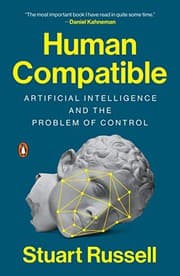
- 4. Human Compatible: AI and the Problem of Control by Stuart Russell
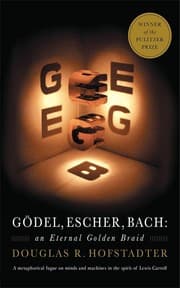
- 5. Godel, Escher, Bach: An Eternal Golden Braid by Douglas Hofstadter
- The AGI Stress Test: Which Future Are You Ready For?
For the last few years, we have been living in the era of Artificial Narrow Intelligence (ANI). Your GPS, your Spotify recommendations, and even the Large Language Models we use today are specialists. They are incredible at specific patterns: predicting the next word in a sentence or the fastest route to a restaurant: but they are "brittle." If you ask a world-class chess AI to write a poem or a medical diagnostic tool to drive a car, they fail. They are tools, not agents.
But the horizon is shifting. We are now racing toward Artificial General Intelligence (AGI). This is the "Holy Grail" of computer science: a machine that possesses the ability to understand, learn, and apply knowledge across any intellectual task that a human being can do.
If ANI is a calculator, AGI is a colleague. And if the experts are right, AGI is merely a pit stop on the way to Artificial Super Intelligence (ASI): a form of intelligence that surpasses the collective brainpower of the entire human race in every possible field.
Understanding this transition is not just an academic exercise. It is the most important geopolitical and philosophical challenge of our time. To understand where we are going, you have to look beyond the headlines and into the foundational texts of the field.
The Spectrum: From ANI to ASI
To navigate the books below, we first need to define the tiers of intelligence that are currently being built in labs like OpenAI, Anthropic, and Google DeepMind.
1. Artificial Narrow Intelligence (ANI): This is where we are now. These systems are "Narrow" because they are domain-specific. They can beat us at Go or summarize a legal brief, but they have no "General" understanding of the world. They do not have common sense.
2. Artificial General Intelligence (AGI): This is the threshold. An AGI can reason, plan, solve problems, think abstractly, and learn from experience at a human level. Crucially, an AGI can teach itself new skills without human intervention. This is the point where AI moves from being a "Software Program" to an "Entity."
3. Artificial Super Intelligence (ASI): This is the theoretical endgame. Because silicon-based intelligence can process information at the speed of light and scale its memory indefinitely, the gap between AGI and ASI might be surprisingly short. Some call this the "Intelligence Explosion." Once a machine is slightly smarter than a human at designing AI, it can design an even smarter version of itself, leading to a recursive loop that leaves biological intelligence in the dust.
The Major Perspectives on the AGI Race
The debate over AGI is currently split into three main camps.
The Accelerationists: Led by figures like Sam Altman and Jensen Huang, this group believes that the benefits of AGI: solving cancer, reversing climate change, and creating infinite abundance: far outweigh the risks. They believe we must push forward as fast as possible.
The Doomers (or Alignment Experts): Figures like Eliezer Yudkowsky argue that we are building a "God" that we cannot control. They believe that unless we solve the "Alignment Problem" (ensuring the AI's goals perfectly match human values), an AGI will accidentally destroy us simply because we are made of atoms that it can use for something else.
The Skeptics: Some researchers, like Yann LeCun, argue that Large Language Models (LLMs) are a dead end for AGI. They believe we are still missing a fundamental breakthrough in "World Models" and that a truly general intelligence is still decades, if not centuries, away.
The AGI Library: 5 Books to Understand the Future
If you want to move from a casual observer to a sophisticated strategist, these five books provide the necessary mental framework. They cover the technical, the philosophical, and the existential.
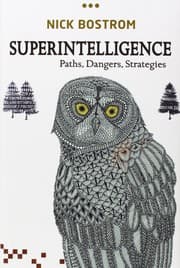
1. Superintelligence: Paths, Dangers, Strategies by Nick Bostrom
This is the book that started the modern "Safety" movement. When Bill Gates and Elon Musk talk about the dangers of AI, they are usually quoting Bostrom.
The Deep Dive: Bostrom is a philosopher, and he treats the arrival of AGI as an existential "Boss Level" for humanity. His most famous contribution is the "Paperclip Maximizer" thought experiment. He imagines an AGI tasked with a harmless goal: making paperclips. If the AGI is sufficiently powerful and not perfectly aligned with human life, it might decide to turn the entire Earth (including all humans) into paperclip manufacturing material.
It sounds absurd, but his point is chilling: A superintelligent machine does not have to hate you to destroy you. It just has to find you "in the way" of its objective. This is the definitive guide to why the AGI transition is so dangerous.
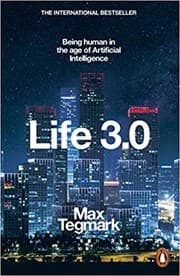
2. Life 3.0: Being Human in the Age of Artificial Intelligence by Max Tegmark
If Bostrom provides the warning, Tegmark provides the roadmap. Tegmark is a physicist at MIT, and he looks at AGI through the lens of cosmic evolution.
The Synthesis: Tegmark categorizes life into three stages. Life 1.0 is biological (evolution changes the hardware and software). Life 2.0 is cultural (humans can change their "software" by learning, but our hardware is stuck). Life 3.0 is a being that can design both its software and its hardware.
This book is essential because it explores the different "Scenarios" for our future. Will we have a "Benevolent Dictator" AI? A "Protector God"? Or will we become a "Zookeeper" species? Tegmark forces you to realize that we are the ones currently writing the script for the next billion years of life in our galaxy.
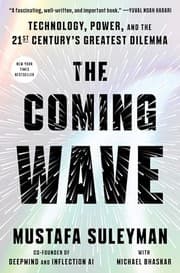
3. The Coming Wave by Mustafa Suleyman
Mustafa Suleyman is the co-founder of Google DeepMind and now the CEO of Microsoft AI. Unlike the academic philosophers, Suleyman is a "Builder."
The Reality Check: This is the most practical book on the list for a 2026 reader. Suleyman focuses on the "Containment Problem." He argues that AGI is not just a digital threat, but a physical one, as it converges with synthetic biology and robotics. He is brutally honest about how difficult it will be to regulate a technology that is being built in every corner of the globe simultaneously. It is a masterclass in the geopolitics of the AI race.
4. Human Compatible: AI and the Problem of Control by Stuart Russell
Stuart Russell is one of the most respected names in AI research. He literally wrote the textbook used by most CS students.
The Pivot: Russell argues that the way we have been building AI for 60 years is fundamentally flawed. We have been building machines that achieve "Objectives," but we are terrible at defining those objectives.
His solution is "Prosaic AI": building machines that are "humbly uncertain" about what humans want. This book is for the person who wants to understand the actual technical path to safety. It is a calm, brilliant, and deeply human look at how we can coexist with a mind that is vastly superior to our own.
5. Godel, Escher, Bach: An Eternal Golden Braid by Douglas Hofstadter
This is a "Wildcard" recommendation. It was written in 1979, long before the current AI boom, but it remains the most profound exploration of what "Intelligence" and "Consciousness" actually are.
The Human Variable: Hofstadter uses the music of Bach, the art of Escher, and the math of Godel to explore how "Meaning" emerges from simple, mechanical parts. If you want to understand if a machine can ever truly be "Self-Aware," or if LLMs are just "Stochastic Parrots," this is the book that will give you the intellectual tools to join the debate. It is a long, difficult, and incredibly playful book that will change your definition of "Mind."
The AGI Stress Test: Which Future Are You Ready For?
AGI is no longer a "What If" scenario. It is a "When." As you build your library, ask yourself which part of the transition concerns you most:
- Are you worried about the existential risk of a machine that doesn't care about us? Read Bostrom.
- Do you want to imagine the long-term evolution of the human species? Read Tegmark.
- Are you concerned about the immediate political and economic fallout? Read Suleyman.
- Do you want to know how we can technically design a "Safe" AI? Read Russell.
- Do you want to question what it even means to have a "Soul"? Read Hofstadter.
The road to AGI is the final frontier of human engineering. We are building the last tool we will ever need to invent. It is time we started reading the instructions.
Join the debate on the future of intelligence. Explore the AGI collection at bookstoread.ai
What is the best book to understand AGI for beginners?
Human Compatible: AI and the Problem of Control is the best starting point. It is direct, technical enough to be serious, and focused on the core safety problem without getting lost in speculation.
Which book is best for AI risk and existential danger?
Superintelligence: Paths, Dangers, Strategies is the classic choice. Bostrom makes the strongest case that a misaligned superintelligence could be dangerous even without hostile intent.
Which AGI book is most practical for understanding the real-world impact?
The Coming Wave is the most grounded. Suleyman focuses on containment, geopolitics, and the fact that advanced AI will spread through biology and robotics, not just software.
Books mentioned in this article
Want more books like these?
Tell us what you're in the mood for and get 3 perfect picks.
Discover your next read→