Best Books for Stratechery Readers
Stratechery works because Ben Thompson reads technology through durable strategy rather than news: business models, network effects, and where power actually accumulates. These books build that same lens, from disruption theory and competitive positioning to the economics of platforms and the chip supply chains that now decide who wins.
The Innovator's Dilemma
Clayton Christensen
Why great companies fail by doing everything right.
The customers who make you money today are the reason you ignore the technology that kills you tomorrow.
Christensen's disruption theory is the single idea Ben Thompson leans on most, explaining how incumbents lose to cheaper, worse products that quietly improve until they own the market.
Good Strategy Bad Strategy
Richard Rumelt
Most strategy is just ambition with slides.
If a plan does not name the obstacle and choose what not to do, it is not a strategy.
Rumelt strips strategy back to a diagnosis, a guiding policy, and coherent action, giving you a blunt test for telling real strategy from a list of goals dressed up as one.
7 Powers
Hamilton Helmer
The seven durable sources of a real moat.
Power is not being ahead; it is a condition that makes it unprofitable for rivals to catch up.
Helmer names the only seven advantages that let a business keep its profits, from scale economies to network effects, and it maps almost perfectly onto how Stratechery dissects tech winners.
Understanding Michael Porter
Joan Magretta, Don Hagen, Erik Synnestvedt
Porter's competitive strategy, finally made readable.
Competing to be the best pulls everyone to the same middle; competing to be unique is the only durable game.
Magretta distills decades of Porter into a short, clear guide to the five forces and positioning, handing you the vocabulary that sits underneath most serious business-strategy writing.
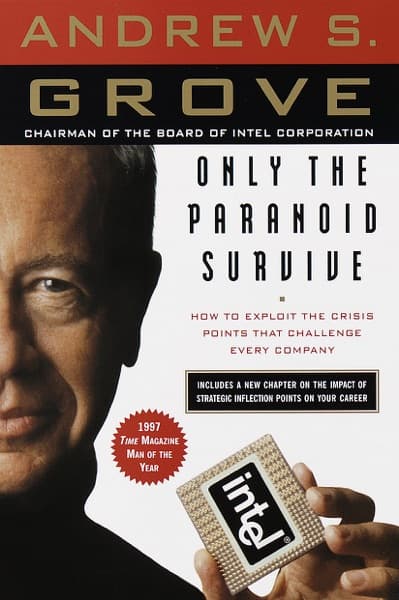
Only the Paranoid Survive
Andrew S. Grove
How to spot the moment your industry changes forever.
The signal that your world has changed usually arrives as data your best people are trained to dismiss.
Grove ran Intel through a near-death pivot and named the strategic inflection point, the 10x force that quietly makes an old business model obsolete before management will admit it.
Information Rules
Carl Shapiro, Hal R. Varian
The 1998 book that predicted the platform economy.
Technology changes constantly; the economic laws governing information goods barely move.
Shapiro and Varian laid out network effects, lock-in, and the economics of zero-cost copies years before big tech, and it still explains aggregation better than most recent titles.
If a plan does not name the obstacle and choose what not to do, it is not a strategy.
The Master Switch
Tim Wu
Every information empire opens, then closes.
Every liberating new medium eventually gets captured by the monopoly it once threatened.
Wu traces telephone, radio, film, and the internet through a recurring cycle from open innovation to consolidated control, handing you a pattern to test today's platforms against.

The Everything Store
Brad Stone
Amazon's strategy, reported from the inside.
Willingly earning nothing for years can be the most aggressive competitive move available.
Stone's reporting shows how Bezos traded margins for scale and relentless reinvestment, making it the best case study of the flywheel logic Stratechery returns to again and again.
Chip War
Chris Miller, Chris Miller
The whole tech economy sits on one supply chain.
Whoever controls the most advanced chip fabs holds leverage over every other technology industry.
Miller tells the geopolitical history of the semiconductor, showing how a single Taiwanese company became the chokepoint that now decides the balance of power in AI and computing.
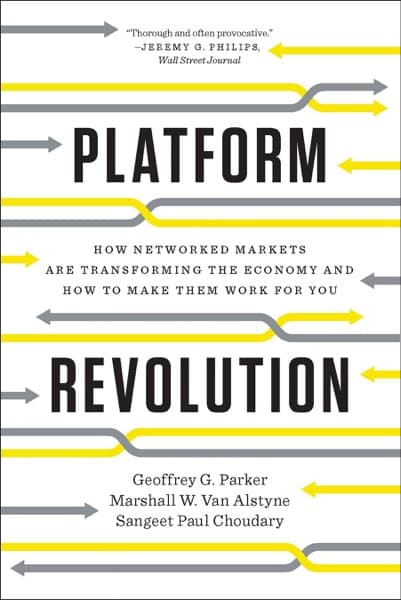
Platform Revolution
Geoffrey G. Parker, Marshall W. Van Alstyne, Sangeet Paul Choudary
How platforms beat products, made systematic.
A platform's job is not to build value itself but to orchestrate value created by others.
The authors turn platform dynamics into an operating manual covering network effects, governance, and matching, the mechanics behind the aggregators Stratechery analyzes every week.
Can we tailor this list for you?
Type your question in the bar below and the AI will tailor a fresh set of picks just for you.