The Legal Reality of High-Stakes Dissent
In early 2026, a courtroom in London became the theater for a new kind of institutional heresy. Sarah Wynn-Williams, a former high-ranking executive at Meta, stood before a gallery of attorneys to defend her memoir, Careless People. The legal battle is not merely over royalties: it is over the very nature of the Non-Disclosure Agreement (NDA). Her publisher recently revealed that every negative sentence in her manuscript could theoretically incur a $50,000 fine under her original severance contract. This is the modern cost of a conscience in Palo Alto.
The common thread among these accounts is the brutal trade-off: a seven-figure stock option for the permanent status of an industry pariah. While Silicon Valley presents itself as a transparent engine of progress, these texts suggest a structure maintained by enforced silence. Whistleblowers act as the necessary friction in an industry that otherwise lacks external oversight. Their testimony is often chaotic and professionally toxic, yet it remains the only window into the black box of modern tech leadership.
The Architecture of the Digital Muzzle
The tech industry has utilized legal frameworks to suppress moral objection under the guise of protecting intellectual property. Since the passage of California's Silenced No More Act (and the 2026 push for federal equivalents), we have seen a minor shift in corporate secrecy. However, the psychological barriers remain substantial. Whistleblowing is rarely a single moment of cinematic heroism; it is a slow realization that the system's incentives are fundamentally misaligned with public safety.
The "Right to Warn" movement that gained momentum throughout 2025 exemplifies this shift. Former researchers from major labs did not just leak documents: they challenged the core premise of frontier model development. They argued that the pursuit of advanced artificial intelligence was being conducted without basic guardrails for biological risks or catastrophic loss of control. Their testimony before the Senate Judiciary Committee highlighted a stark reality: the individuals building the future are often the ones most concerned about its direction.
The Algorithmic Panopticon
The transition from "software that helps" to "software that manipulates" is the central theme of the most impactful whistleblower memoirs. We see this in the documentation of how engagement metrics are prioritized over mental health or democratic stability. The scale of data harvesting is immense. When Christopher Wylie revealed how Cambridge Analytica accessed the data of 87 million Facebook users, he was describing the weaponization of psychology at a population level.
There is a fundamental asymmetry of information in these narratives. Corporations possess the logs, the A/B test results, and the predictive models. The worker possesses only their memory and whatever screenshots they managed to secure before their access was revoked. This creates a gap in power that only the most dedicated dissenters can bridge. Reading these books provides a necessary intellectual defense against the relentless hype cycles of Big Tech.
Essential Reading for the Tech Critic
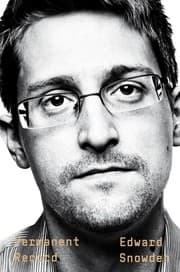
Permanent Record by Edward Snowden
The Hook: A systems administrator discovers that the "cloud" is not a metaphor for storage, but a euphemism for a global surveillance apparatus.
The Why: This is the definitive masterpiece of the genre because it bridges the gap between private tech and state surveillance. Snowden explains the technical plumbing that makes mass monitoring possible, moving the conversation from vague policy concerns to concrete architectural realities.
The Golden Nugget: Arguing that you do not care about the right to privacy because you have nothing to hide is no different than saying you do not care about free speech because you have nothing to say.
The Power of One by Frances Haugen
The Hook: An algorithmic specialist leaks tens of thousands of documents proving that Meta prioritized profit over the safety of teenagers.
The Why: This is the practical guide for anyone looking to understand corporate malfeasance. Haugen does not rely on anecdotes: she relies on the company's own internal A/B testing, proving that the harm was documented and then ignored by leadership.
The Golden Nugget: We must regulate "product design," not just "content." It is the difference between trying to catch every raindrop and simply fixing the hole in the roof.
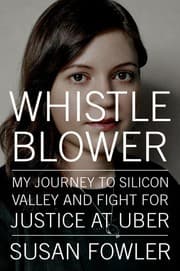
Whistleblower by Susan Fowler
The Hook: A site reliability engineer writes a blog post that topples a multi-billion dollar empire and changes the conversation around Silicon Valley culture.
The Why: Fowler's account of the systemic harassment and indifference at Uber is essential for understanding the "move fast and break things" era. It proves that toxic internal culture is a fundamental risk factor for both investors and the public.
The Golden Nugget: Fowler details the concept of "institutional betrayal," the specific trauma that occurs when the system designed to protect you is the one that facilitates your harm.
Mindfck by Christopher Wylie
The Hook: A data scientist reveals how the "Like" button was transformed into a tool for psychological warfare.
The Why: This book is the definitive psychological post-mortem of the Cambridge Analytica scandal. It explains how tech infrastructure was used to fragment reality for specific voter segments, leading to the breakdown of democratic norms.
The Golden Nugget: The firm was not just selling advertisements: they were selling a "perception of reality" tailored to the specific anxieties and neuroses of each user.
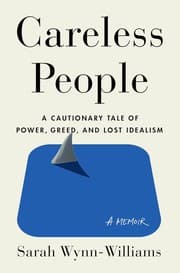
Careless Peopleby Sarah Wynn-Williams
The Hook: A former public policy director exposes how a global tech giant cooperated with authoritarian regimes to suppress dissent in exchange for market access.
The Why: This is the essential text capturing the 2026 zeitgeist of geopolitical influence. Wynn-Williams explores the "complacency of the elite," describing a culture so insulated by wealth that it loses touch with the human consequences of its products.
The Golden Nugget: She introduces the concept of "ethical arbitrage," where companies move their most controversial product testing to regions with the weakest labor and privacy protections.
The Cost of Conscience
Whistleblowing is a high-risk endeavor that often results in financial ruin. The SEC's whistleblower program has paid out nearly $2 billion since its inception, yet very little of that goes to the tech workers who report social harms rather than financial fraud. We are currently seeing a push for a "federal shield law" for tech employees who report algorithmic risks to the public.
Until such laws exist, these books are our primary source of truth. They represent a collective audit of an industry that refuses to audit itself. When we read these memoirs, we are participating in a necessary democratic process. We are finally seeing the mechanics behind the curtain. [Find your next book at bookstoread.ai].
Key Takeaways
- Whistleblowing is Systemic: It is a response to misaligned incentives in product design, not just "bad people" in leadership.
- The Architecture of Silence: Legal threats (such as the massive fines faced by Sarah Wynn-Williams) remain the primary tool for suppressing dissent in 2026.
- Data as Influence: The real battle is over the psychological and algorithmic control of reality.
- The NDA Shift: The California Silenced No More Act is beginning to dismantle the era of secret settlements, but cultural barriers persist.
- Product over Content: Effective reform must focus on the underlying infrastructure of tech products rather than the impossible task of policing individual posts.
What are the best books by tech whistleblowers?
Permanent Record, Careless People, and Mindfck* are the strongest picks. They cover state surveillance, Meta’s internal culture, and the Cambridge Analytica scandal without softening the damage.
Which whistleblower memoir should I read first?
Permanent Record is the best first read. It gives you the clearest framework for how surveillance systems work, which makes The Power of One and Careless People hit harder.
Is there a book about the Uber harassment scandal?
Yes. Whistleblower by Susan Fowler is the key book on Uber’s toxic culture and the institutional failure that let it persist.
Books mentioned in this article


Want more books like these?
Tell us what you're in the mood for and get 3 perfect picks.
Discover your next read→